
Dryer Vent Cleaning in San Jose, CA
Tell us about your home, and a licensed contractor who covers Santa Clara County will get in touch.
Tell us about the job
It takes about a minute.
Step 1 of 3: Equipment

Cold vent, wet lint, slower drying
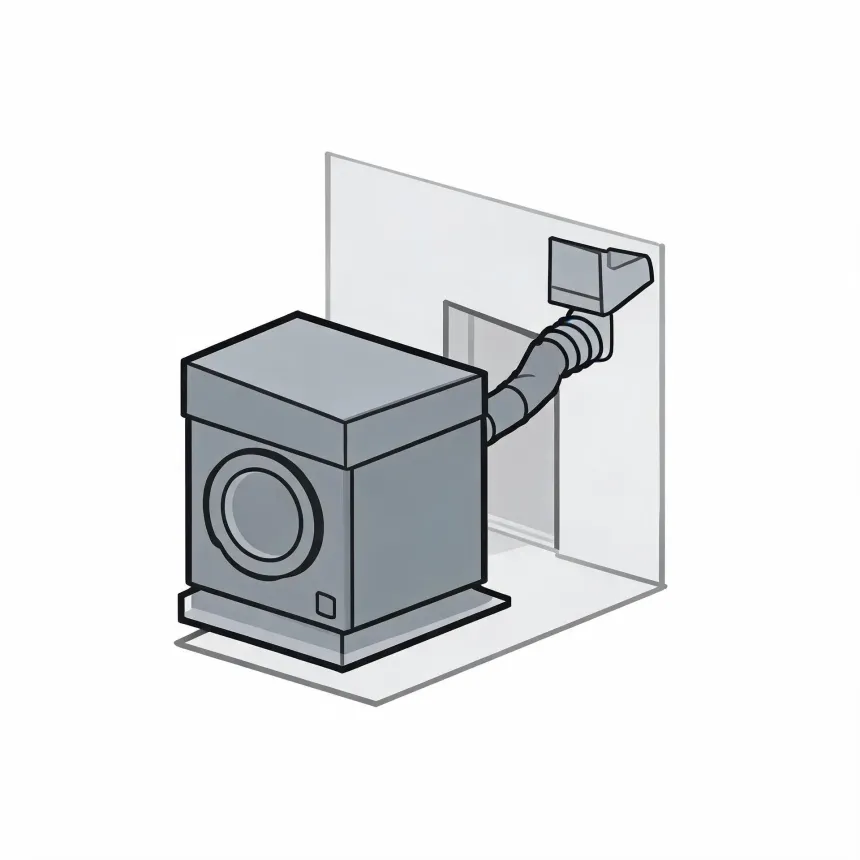
Your dryer pushes out warm, damp air every time it runs. On a cold night, once the outside temperature drops toward 39°F, that air cools fast as it moves through the vent. The moisture in it condenses on the inside of the duct, and the lint traveling through sticks to those wet walls instead of blowing out the vent hood.
That buildup narrows the vent a little more with each load. Air moves slower, so the next load takes longer to dry, and the moisture problem feeds itself. A vent that stays wet longer holds even more lint.
- 39°F
- the average winter night, and cold vents catch damp lint
- 7 months
- November through May, the vent stays cold
Jan
Feb
Mar
Apr
May
Jun
Jul
Aug
Sep
Oct
Nov
Dec
NOAA nClimDiv, 1991–2020 normals
- How often should a dryer vent be cleaned?
- Once a year, at minimum. If the vent run is long or has several turns, or if you dry a lot of loads for a big household, check it more often. A vent that stays clear lets your dryer push air outside without straining, and it lowers the chance of lint catching fire near the motor or heating element.
- Can I clean my dryer vent myself?
- You can clean the part you can reach, usually the first few feet from the back of the dryer. A vent brush kit will pull lint out of that section well enough. What you cannot see is the rest of the run through the wall or roof, and that is where lint tends to pack tightest, so a full cleaning usually means bringing in someone with the right length of rod and a camera to check the work.
- What are the signs of a clogged dryer vent?
- Clothes that take two cycles to dry, a dryer that runs hot to the touch on the outside, or a burnt smell partway through a load. Check the outside vent hood too. If the flap barely moves or you see lint caught around it while the dryer is running, air is not getting through like it should.