Heat Pump Repair in Fresno, CA
Homes here need heat from October through May and cooling from June through September. If your system quits, tell us what it's doing and a licensed contractor who covers Fresno County will get in touch.
Tell us about the job
It takes about a minute.
Fresno asks your heat pump to run almost year round
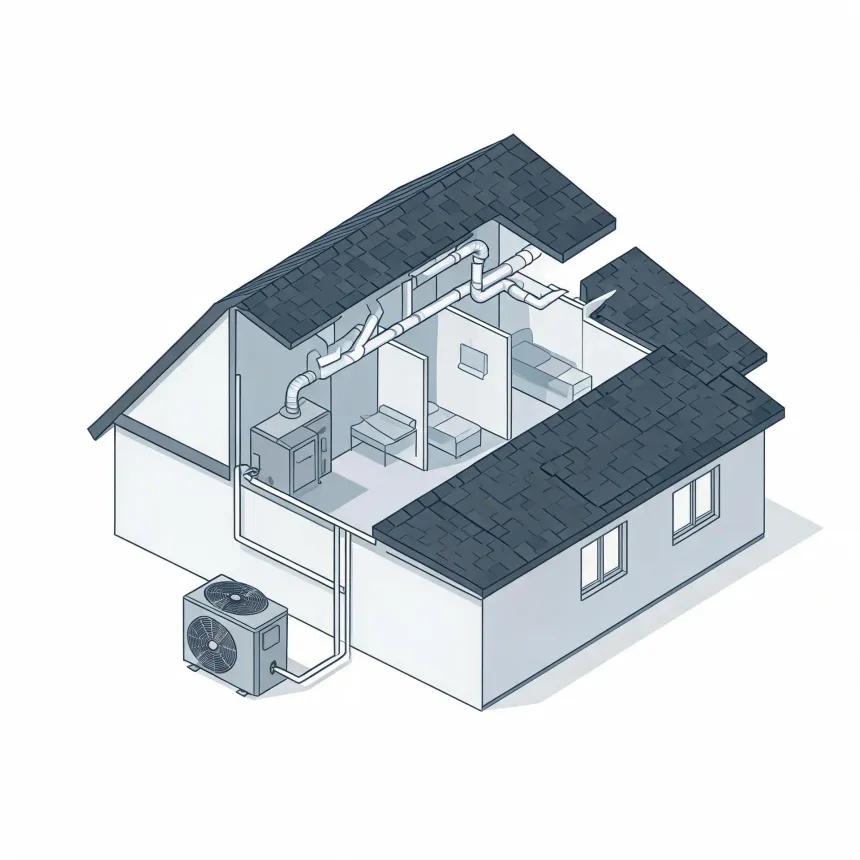
Your heat pump works from October through May to keep the house warm, then switches over and runs June through September to cool it. That is close to twelve months of use, with barely a break between seasons for the system to rest. Winter nights averaging 32°F mean the unit runs its defrost cycle often, and summer afternoons near 86°F push the compressor hard on the cooling side.
That kind of year round load wears on the reversing valve, the part that switches the system between heating and cooling. It also puts real hours on the compressor and the outdoor coil. When the reversing valve starts to stick, you will notice the system blowing cold air when it should be heating, or warm air when it should be cooling. Fresno County's storms, with 189 winter storms and 179 damaging wind events recorded over the past ten years, add power interruptions to the mix. Most heat pumps restart on their own once power is back, but a surge during a storm can still trip a system that was already working hard.
- 8 months
- October through May, your system heats
- 4 months
- June through September, it cools
- 32°F
- the average winter night it heats against
- 86°F
- the average summer afternoon it cools against
NOAA nClimDiv, 1991–2020 normals
California requires HVAC contractors to hold a state license.
The license is issued to the contractor, not to the job, so it does not expire or get rechecked between one repair and the next. The Contractors State License Board tests and records the person or business holding it, and that record is what stands behind the work done under it.
A heat pump repair often means opening the refrigerant side of the system, and federal law requires whoever does that to hold EPA Section 608 certification, no matter what state they work in. That certification is separate from the California license. The license says the contractor is on record with the state. The certification says the technician is cleared to handle refrigerant.
Sources: California Legislative Counsel · Contractors State License Board
- Why is my heat pump blowing cold air?
- In heating mode, a heat pump puts out air that feels cool next to your skin even when it is working right, because the air coming out is warmer than the room but still cooler than your body. If the air is actually cold, or the system runs nonstop without warming the house, check that the thermostat is set to heat and not fan only, since fan only just moves room air through the vents. If the setting is right and the air still is not warming the house, the system may be low on refrigerant or stuck in defrost, and a contractor licensed by the Contractors State License Board can check the charge and the reversing valve.
- Why is there ice on my heat pump?
- Some frost on the outdoor unit during winter is normal. Your heat pump defrosts itself on a cycle, melting that frost off every hour or so before it builds up. Ice that stays thick, covers the coil completely, or forms even when the weather is not near freezing points to a problem, often weak airflow from a dirty coil or filter, a fan that is not turning, or low refrigerant. Winter nights here average 32°F, so frost is common, but a coil that stays iced over needs a contractor to look at it.
- Why is my heat pump running but not cooling?
- If the unit is running but the house is not cooling, start with the filter and the outdoor unit. A clogged filter or a coil packed with leaves and dirt cuts off the airflow the system needs to move heat out of your house. On a 86°F afternoon, that alone can keep a house from cooling down even though the compressor sounds fine. If the filter is clean and the outdoor coil is clear and it is still not cooling, the refrigerant charge may be low or the reversing valve may be stuck in heating mode, and either needs a licensed contractor to diagnose.