
Why your furnace rattles in California
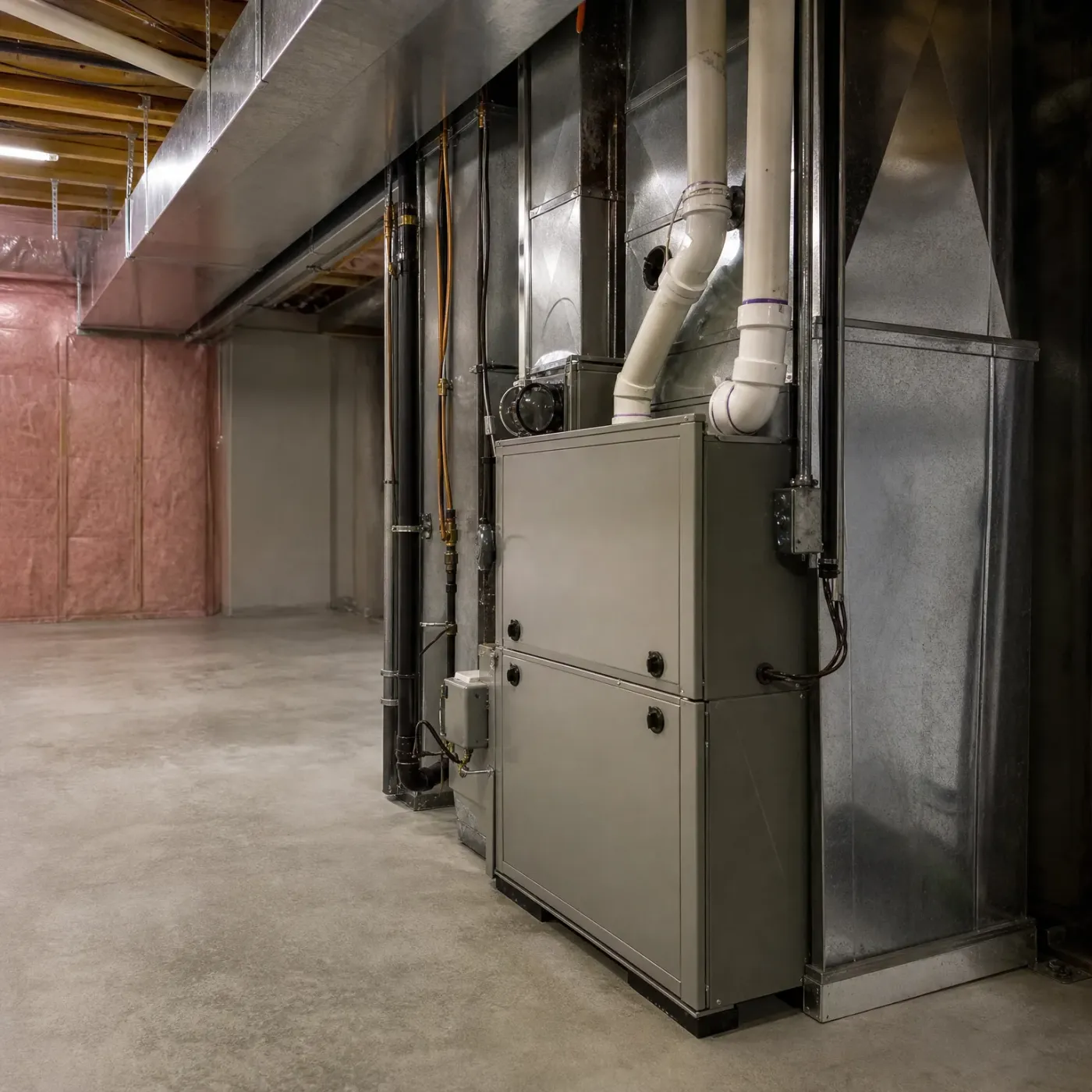
A rattle usually means something inside the furnace has come loose. Blower wheels work themselves loose over time, and a loose one will knock or rattle every time the blower starts and stops. Loose panels do the same thing. The metal cabinet around a furnace expands slightly as it heats up, and if the screws holding a panel have backed out, that panel buzzes or rattles against the frame. A cracked heat exchanger can also rattle as it flexes with heat, and that one matters more, since it can let exhaust mix into the air your furnace blows through the house. Worn bearings in the blower motor are another cause, and they tend to get louder, not quieter, the longer you leave them. Since most homes in California heat with gas, the furnace is doing real work most winter mornings and evenings, and a loose or worn part gets exercised every time it runs. A tech who opens the cabinet can tell you in minutes which of these it is.


The blower wheel rides on the motor shaft, held in place by one or two setscrews. Every time the furnace cycles, that motor heats up and cools back down, and over enough cycles those setscrews work loose. Once the wheel has play in it, it knocks against the housing each time the blower starts, and goes quiet the second it shuts off. That timing is the tell. A tech pulls the panels and runs the blower bare so the noise has nowhere to hide, then checks the burner compartment panel separately, since a loose screw there sounds a lot like a loose wheel. Older systems sometimes have flex gas connectors near the cabinet too, and those can buzz once the blower's airflow gets the ductwork shaking. Resetting a setscrew only takes a minute. But if the wheel has been loose long enough to wear a groove into the shaft, tightening it won't hold, and the wheel itself needs to come out.
What's Actually Loose In There
- The blower wheel sits on a motor shaft held by one or two small setscrews, and those loosen as the motor heats and cools every cycle.
- A rattle that starts right when the blower kicks on and stops when it shuts off almost always traces back to that wheel or its shaft.
- The burner compartment has its own sheet metal panel, and a tech checks that one separately since a loose panel there can mimic a blower noise.
- Flex connectors on older gas lines can also buzz against the cabinet when the blower's airflow shakes the ductwork near the furnace.
- Tightening a setscrew is quick, but if the wheel has already worn an oval into the shaft, the wheel usually needs replacing rather than just resetting.
- A tech will run the blower with the panels off first to hear exactly where the noise comes from before touching anything.


Skip calling around
Your request goes to one pro, not a list of companies.
One form replaces the calls you'd make to find a furnace pro.
Asking costs nothing, and the choice to hire stays yours.
Wait It Out or Call Someone
Rattle you can live with for now
- A rattle that only happens on startup and goes quiet once the blower is running steady is usually just a panel screw working loose, not a safety issue.
- If the sound comes and goes with the weather, a loose panel is flexing a little more on cold mornings, and that's cosmetic rather than mechanical.
- A rattle that hasn't changed in pitch or gotten louder over a few weeks means whatever's loose hasn't moved much yet.
- You can run the furnace through a mild stretch of weather without it getting worse, since a stable rattle isn't usually a sign of something failing.
- Tightening an accessible panel screw yourself can quiet it down, if you can reach it safely with the furnace off.
Rattle that needs a tech now
- A rattle that's gotten louder or changed to a knock over a few days means the blower wheel has shifted further on the shaft and is closer to hitting the housing.
- If the sound is a scrape or a metal-on-metal grind instead of a rattle, the wheel is already making contact and running the furnace longer risks the motor or the housing itself.
- A rattle paired with the blower cycling on and off more than usual points to the motor working harder against something physically in its way.
- With gas furnaces running most homes here, a tech who's in and out of these units every winter can tell a loose panel from a wheel on the shaft without guessing.
- Getting one licensed local contractor out for it means not explaining the rattle over the phone to three different companies before anyone looks at it.
- If the setscrew has backed all the way out, the wheel can come fully off center, and that's not something to wait on.




Winter nights average 40°F statewide
Nights here average around 40°F through December, January and February, so your furnace isn't running flat out like it would somewhere colder. It cycles on and off more than it runs steady, and that stop-start pattern is exactly when a loose blower wheel or panel starts to rattle.
NOAA nClimDiv 1991-2020 county normals weighted by homes
What the Rattle Tells You
- A rattle almost always traces back to a loose blower wheel or a cabinet panel that's worked free of its screws.
- California furnaces cycle on and off more than they run steady, and that stop-start pattern is what loosens these parts over time.
- A tech who services furnaces here all winter knows to check the blower setscrew and panel screws before anything else.
- Catching a loose wheel early means a tightened setscrew instead of a motor shaft or blower housing that's worn from the knocking.
- One licensed, local contractor can look at the rattle, tell you what's loose, and fix it in a single visit.
The rattle has one of two sources. Either the blower wheel has worked loose on its shaft, or a cabinet panel has worked loose from its screws. Both happen for the same reason: your furnace starts and stops all winter instead of running steady, and every start and stop is a chance for a setscrew or a panel screw to back out a little further. Nights here don't get cold enough to keep it running long, so it gets more of these cycles than a furnace somewhere colder would.
Left alone, a loose blower wheel wears against the housing it's knocking into, and what started as a setscrew tightening turns into a shaft or housing that needs replacing. Caught early, it's a five-minute fix.
A contractor who works on furnaces in your area all winter has heard this rattle before and knows to check the blower setscrew and the panel screws first, rather than working through a longer list of less likely causes. That's the kind of thing you want from whoever shows up, someone who can place the sound before they've even opened the cabinet.
You get matched with one licensed, local contractor for this, not a handful of companies competing for the job. That means one call to make, one person to describe the rattle to, and no stack of quotes to sort through afterward. They come out, find the loose part, and tighten or replace it. The sound you've been hearing has an answer, and it's usually a simple one to fix once someone's standing in front of the furnace.
Describe it once
The pro who reaches out is licensed in California.
No fee to send it, and nothing to sign.