
AC Repair in San Francisco, CA
If your air conditioner quits, tell us what it's doing and a licensed contractor who covers San Francisco County will get in touch.
Tell us about the job
It takes about a minute.

San Francisco summers don't ask much of an air conditioner
Summer afternoons here average 70°F. Most homes don't run cooling at all, and the ones that have a system often use it just a handful of days a year.
That light use changes what usually goes wrong. Instead of a unit that wears out from long hours, you're more likely dealing with one that's sat idle, with a capacitor that's weakened from age rather than use, or refrigerant that's slipped out slowly over the years. When you finally do need it on a warm afternoon, that's when a problem that's been sitting quietly finally shows up.
- 70°F
- the average summer afternoon it cools against
- 10 hail events
- in ten years, and hail bends the fins on outdoor coils
- 50 wind events
- in ten years, and wind drives debris into outdoor units
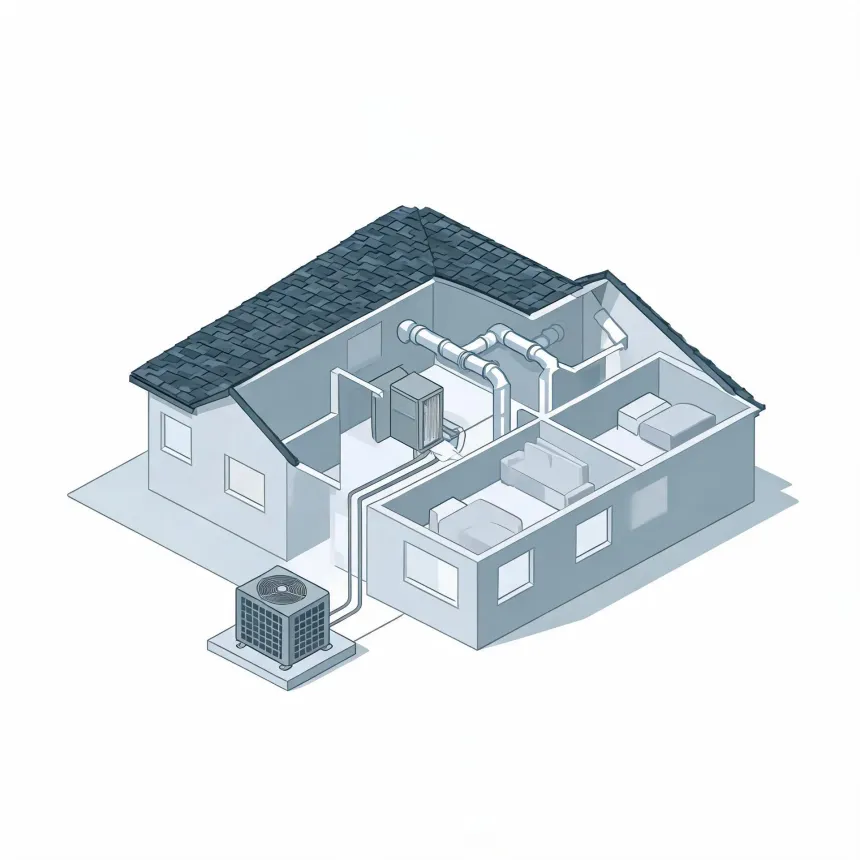
NOAA nClimDiv, 1991–2020 normals
A new air conditioner would save little on running costs in San Francisco County, so the repair decision comes down to the unit's condition.
Estimates for a typical San Francisco County home, compared with an older unit built to the previous federal minimum, from EIA household energy data, California fuel prices and NOAA climate normals. Your home will differ.
Repair makes sense when a part like a capacitor or contactor has failed.
Replacement makes sense when the compressor has failed or the system uses R-22 refrigerant, which is no longer made.
California requires HVAC contractors to hold a state license.
California licenses HVAC contractors through the Contractors State License Board. That license belongs to the contractor, not to any single job, so the same license that covers a furnace install covers this repair.
Opening up an air conditioner to repair it almost always means opening the refrigerant side, and federal law requires whoever does that to hold EPA Section 608 certification, no matter what state they work in. In California, that certification sits alongside the state license rather than in place of it, so the person working on your air conditioner answers to both.
Sources: California Legislative Counsel · Contractors State License Board
- Why is my AC not blowing cold air?
- The most common cause is low refrigerant from a leak somewhere in the line set or coil, but a dirty air filter or a failing compressor can cause the same thing. Check the filter first since that's the one thing you can rule out yourself. If it's clean and air still comes out warm, a contractor will need to check refrigerant pressure and the compressor.
- Why is my AC leaking water?
- Usually the condensate drain line is clogged, or the drain pan has rusted through and water is finding a new way out. Algae and dust build up inside that line over time and eventually block it, so water backs up and drips wherever it can. A frozen evaporator coil that's thawing can also cause a sudden puddle. Shut the system off if you see water pooling, since running it with a blocked drain can lead to more damage.
- Why won't my AC turn on?
- Start with the thermostat batteries and the breaker before assuming the worst. A tripped breaker, a blown fuse, or a thermostat set wrong will stop the system cold and none of those need a contractor. If power is reaching the unit and it still won't start, the capacitor or the contactor has likely failed, and those need a licensed technician to test and replace. Any contractor doing that work in California has to hold a license through the Contractors State License Board.