
Duct Cleaning in Oakland, CA
Tell us about your home, and a licensed contractor who covers Alameda County will get in touch.
Tell us about the job
It takes about a minute.

Six months of heating pushes the same air through your ducts
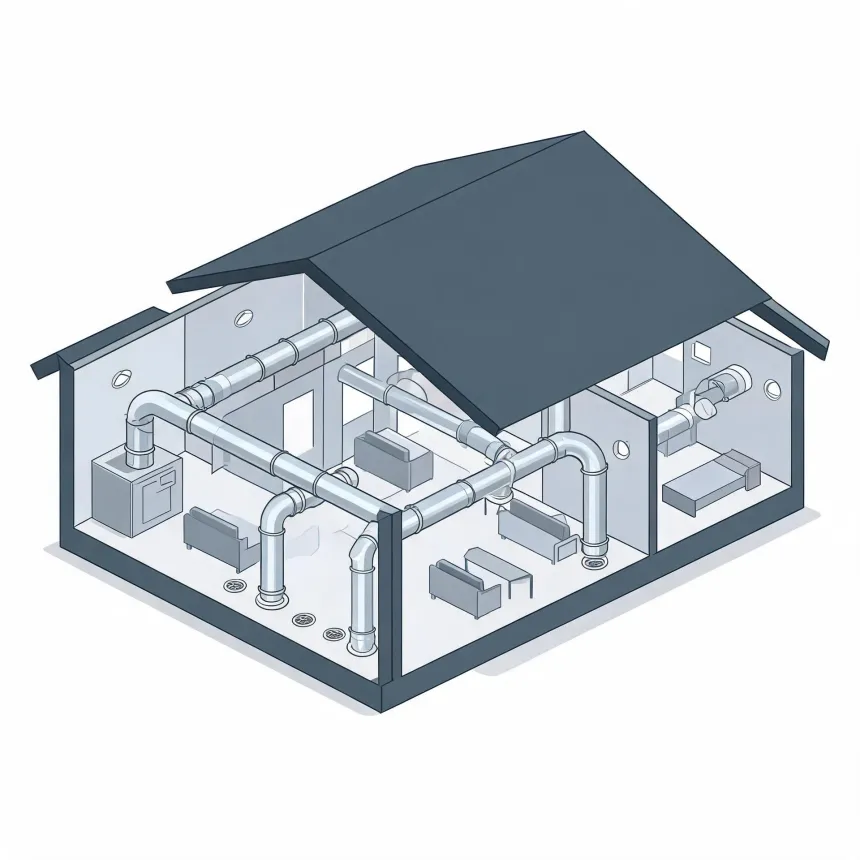
Your furnace runs November through April here, six months of the year. Every one of those months, it's pulling air through the same ductwork and pushing it back out into your rooms. Dust and pet hair get drawn in and circulated night after night, and it settles in the bends and joints where the air slows down.
Winter nights average 41°F from December through February, cold enough that the furnace cycles on and off through the night to hold the house steady. Each cycle moves more air, and whatever is riding in it, through the same runs. Six months of that adds up inside the ducts even though you never see it happen.
- 6 months
- November through April, your furnace pushes air through your ducts
- 3 months
- July through September, your air conditioner does the same
NOAA nClimDiv, 1991–2020 normals
- How often should air ducts be cleaned?
- There's no fixed schedule that fits every home, since it depends on what's going on inside the ducts. If someone in the house has allergies, or you've had a rodent problem, water damage, or a renovation that kicked up drywall dust, that's a reason to have them checked. Ducts that look fine from the vent cover can still be carrying dust into every room each time the furnace or AC runs. A contractor can look inside and tell you whether cleaning would actually help.
- Is air duct cleaning worth it?
- It's worth it when there's a real reason for it, like dust coming out of the vents, a musty smell when the air kicks on, or work that was just done on the ductwork itself. It's less about a set schedule and more about what's actually happening in your home. A contractor can look at the ducts and tell you whether cleaning will make a difference, or whether the dust is coming from somewhere else, like a dirty filter.
- What does air duct cleaning involve?
- A contractor connects a vacuum system to the ductwork, then uses brushes or air tools to knock loose dust and debris from inside so it gets pulled out instead of blown into your rooms. Every supply and return vent gets covered, and the registers themselves get cleaned too. On a forced-air system, this usually includes the coil and blower compartment near the furnace, since dust collects there as well.