Mini Split Installation in Oakland, CA
A new system here will heat from November through April and cool from July through September every year. Tell us about the house, and a licensed contractor who covers Alameda County will get in touch.
Tell us about the job
It takes about a minute.
Oakland asks a mini-split to run most of the year
Homes here need heat or cooling nine months a year. Winter nights average 41°F from December through February, mild enough that a heat pump can carry the heating load on its own. Summer afternoons average 82°F, so the cooling side isn't working against extreme heat either. A mini-split installed here still has to be sized to run from November through April on the heat side, and July through September on the cooling side.
A new mini-split has to meet federal minimums either way. Units built from January 1, 2023 on must hit 14.3 SEER2 for cooling and 7.5 HSPF2 for heating, the same split-system standard that applies to any ductless heat pump.
- 6 months
- November through April, your system heats
- 3 months
- July through September, it cools
- 41°F
- the average winter night it heats against
- 82°F
- the average summer afternoon it cools against
NOAA nClimDiv, 1991–2020 normals
California requires HVAC contractors to hold a state license.
The license is issued to the contractor's business, not to this particular job. California's Contractors State License Board tests the contractor and keeps a record of that license, and it covers the company across every job it takes on rather than being reissued each time.
For a mini-split, that license is what stands behind the person doing the install. Beyond that, most cities and counties in California require a permit for this kind of installation, and an inspection once the work is done, which checks it against the local building office's own standards rather than anything the state license covers.
Sources: California Legislative Counsel · Contractors State License Board
- Is a mini split worth it?
- For most Oakland homes, yes, especially if you're heating with something old or don't have ducts at all. Winters here are mild, with nights averaging 41°F, and summers stay around 82°F, both well within what a mini split handles without strain. Homes here need heat or cooling nine months of the year, so a system that does both from one unit covers most of the year. A contractor can look at your house and tell you whether it makes more sense than replacing what you have now.
- How many rooms can a mini split cover?
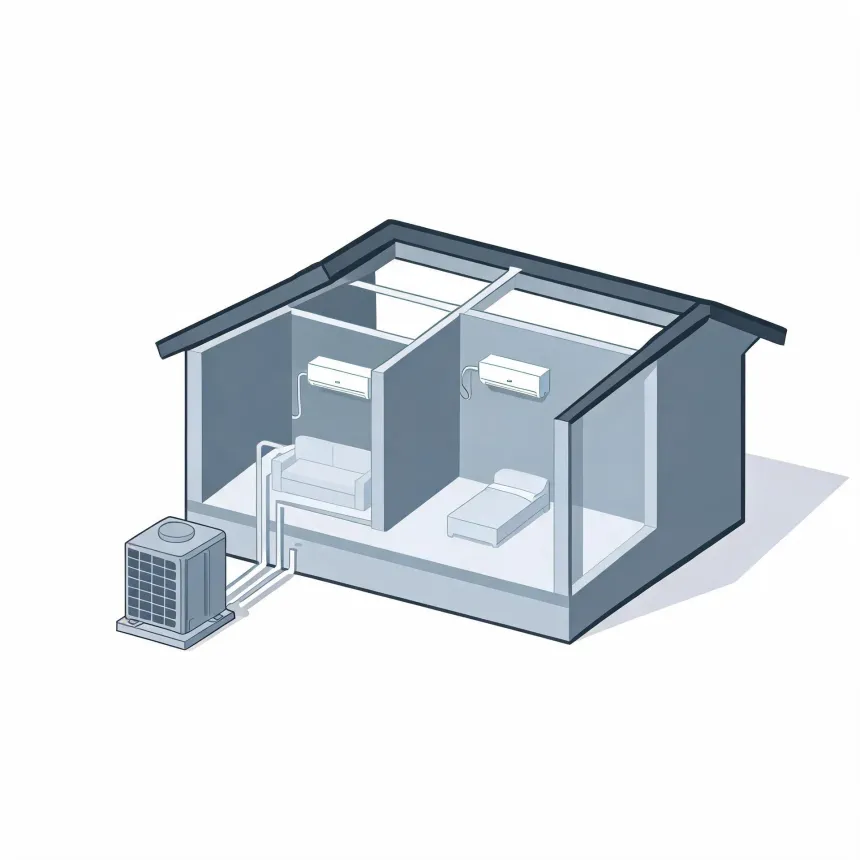
- That depends on how many indoor heads the outdoor unit supports. Each indoor unit heats and cools one room or open area, so a single outdoor condenser can run multiple zones as long as it has the capacity for them. Room size, windows, and layout all affect how many a given house needs. A contractor will size this to your house rather than guess at a number that fits every home.
- Can a mini split heat a whole house?
- It can, if it's sized and placed for that. A multi-zone system with enough indoor heads reaching every room can do it, and with winter nights here averaging 41°F, that's well within what a mini split is built to handle. The key is getting enough heads in the right rooms, since closed doors or unusual layouts can leave some areas short. A contractor can walk the house and tell you what it would take to cover it fully.