Mini Split Installation in Concord, CA
A new system here will heat from November through April and cool from June through September every year. Tell us about the house, and a licensed contractor who covers Contra Costa County will get in touch.
Tell us about the job
It takes about a minute.
Concord asks for ten months of run time a year
Your mini-split will run from November through April for heat and June through September for cooling. That's 10 months a year with only a short break in spring and another in fall. Winter nights average 41°F here, mild compared to colder places, and summer afternoons average 85°F, so the system isn't fighting extremes in either direction. It's the length of the season that matters more than how hard any single day pushes it.
A unit manufactured on or after January 1, 2023 has to meet the federal minimum for split-system heat pumps. That means 14.3 SEER2 for cooling and 7.5 HSPF2 for heating. Most homes here still heat with gas, so a mini-split is often doing double duty. It adds cooling where a house didn't have it and backs up the furnace on the mild nights that make up most of winter here.
- 6 months
- November through April, your system heats
- 4 months
- June through September, it cools
- 41°F
- the average winter night it heats against
- 85°F
- the average summer afternoon it cools against
NOAA nClimDiv, 1991–2020 normals
California requires HVAC contractors to hold a state license.
The Contractors State License Board tests and records the contractor, not the job. A license number on file means that person or business met the state's requirements to hold it, but the board does not review what happens at your house.
The license is what stands behind the person doing the work. For the mini-split installation itself, most cities and counties in California also require a permit from the local building office, with an inspection once the work is done. That inspection is what checks the installation, not the license.
Sources: California Legislative Counsel · Contractors State License Board
- Is a mini split worth it?
- For a lot of homes here, yes. Concord needs heat from November through April and cooling from June through September, so a system that handles both jobs is doing work most of the year. A mini split moves heat instead of burning gas or running strip heat, and it cools too, so it covers both seasons with one piece of equipment. It works best when it matches what the room actually needs, so have a contractor size it to the space rather than guess.
- How many rooms can a mini split cover?
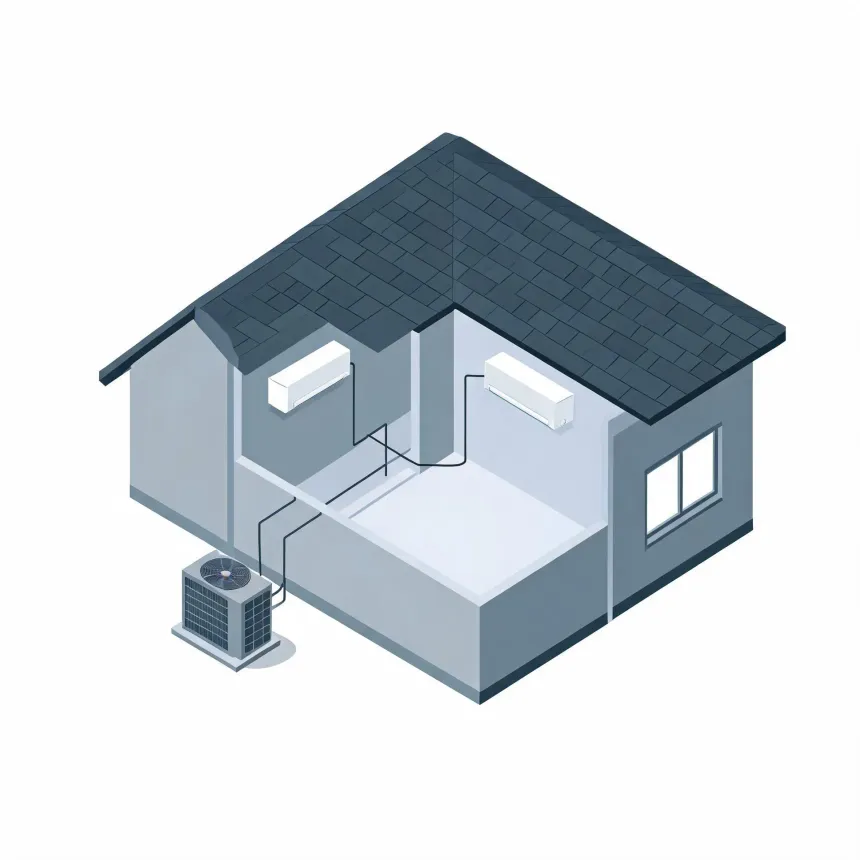
- A single outdoor unit can run one indoor head or several. Each indoor head heats and cools the room it's mounted in, so a multi-zone setup covers as many rooms as it has heads. The right number depends on the size and layout of the rooms, which is why a contractor works that out room by room rather than off a rule of thumb.
- Can a mini split heat a whole house?
- It can, if it's sized and laid out for that. A multi-zone mini split with enough indoor heads placed in the right rooms can carry the whole house through a Concord winter, where nights average 41°F from December through February. Whether one system does the job or the house needs a second outdoor unit depends on the square footage and how the rooms are arranged, so that call is best made by a contractor who's walked the house.