Mini Split Installation in San Mateo, CA
Tell us about the house, and a licensed contractor who covers San Mateo County will get in touch.
Tell us about the job
It takes about a minute.
San Mateo asks more of the heating side than the cooling side
Winter nights here average 43°F from December through February. Homes need heat from November through May, seven months a year. Summer afternoons average 73°F, mild enough that a mini-split spends most of its life heating, not cooling.
A new mini-split still has to clear the federal minimum for split-system heat pumps. That means 14.3 SEER2 for cooling and 7.5 HSPF2 for heating. With seven months of heating and almost none of the year spent cooling, the HSPF2 number is the one that matters most here.
- 7 months
- November through May, your system heats
- 43°F
- the average winter night it heats against
- 73°F
- the average summer afternoon it cools against
California requires HVAC contractors to hold a state license.
The license is issued to the contractor as a business, not to each job they do. It covers the contractor, and the state tested and keeps a record of them before they were allowed to take on work like this.
For this job, that license is the thing standing behind the work. Installing a mini-split also needs a permit from the local building office in most California cities and counties, with an inspection once the work is done.
Sources: California Legislative Counsel · Contractors State License Board
- Is a mini split worth it?
- For most San Mateo homes, yes. Homes here need heat from November through May, seven months of the year, and a mini split heat pump handles that heating load without strain. Winter nights average 43°F, well within what these systems are built for. You get cooling as well, though summer afternoons average a mild 73°F so it sees light use. Each indoor head has its own thermostat, so you heat the room you're in instead of the whole house.
- How many rooms can a mini split cover?
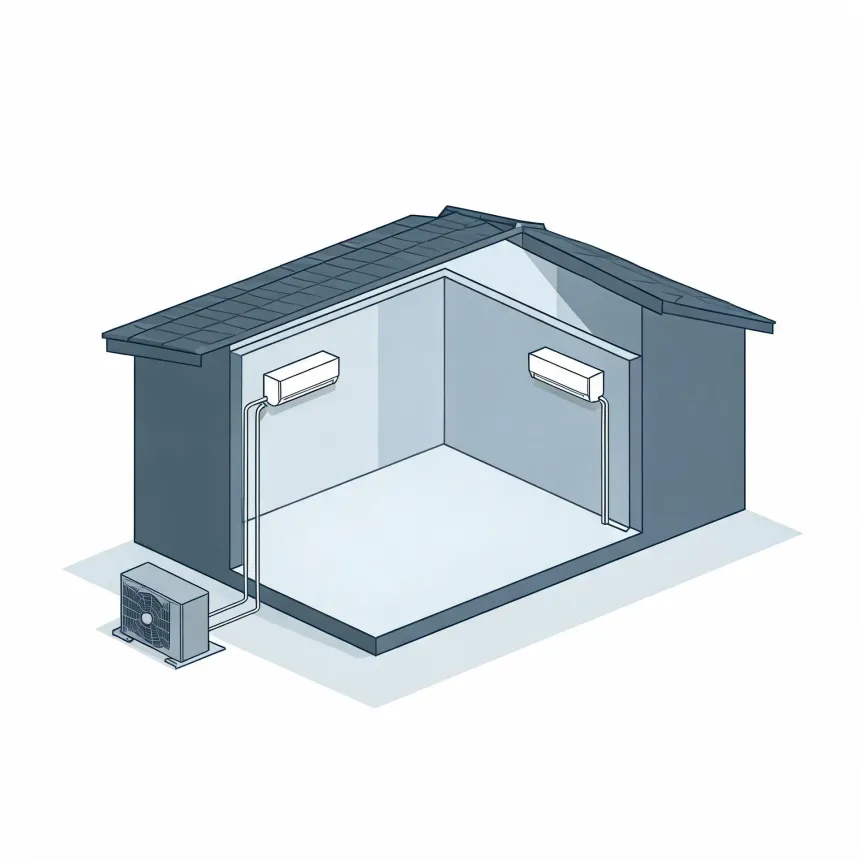
- A single outdoor unit can run multiple indoor heads, each one serving its own room or zone. A contractor will look at the square footage and layout of your home to decide how many heads you need and where they go. Larger homes sometimes need a second outdoor unit to cover every room.
- Can a mini split heat a whole house?
- It can, if it's sized and placed for that job. A multi-zone system with a head in each main room will heat the whole house. Winter nights here average 43°F, which is well within what a mini split heat pump is built for. The part that matters most is coverage. A single head in one room will heat that room well but won't carry heat through closed doors or down a hallway. A contractor can work out how many zones your house needs to heat it fully.