Heat Pump Repair in Anaheim, CA
Homes here need heat from December through March and cooling from June through October. If your system quits, tell us what it's doing and a licensed contractor who covers Orange County will get in touch.
Tell us about the job
It takes about a minute.
Nine months of work a year, most of it cooling
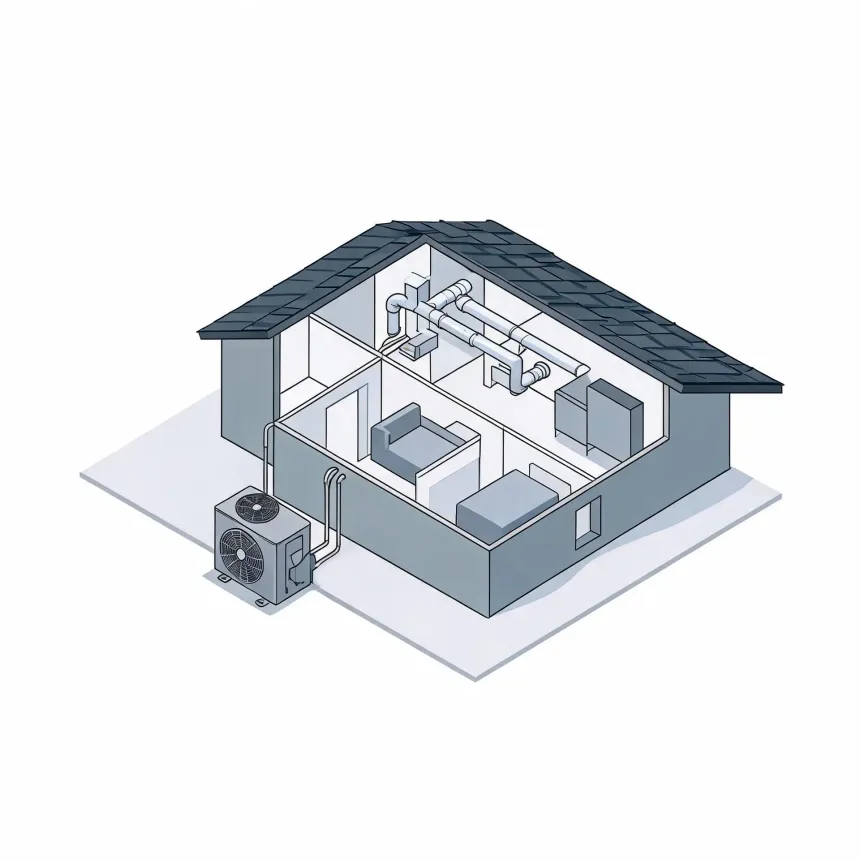
Your heat pump in Anaheim runs almost year round. It covers cooling from June through October, when afternoons average 82°F, then switches over for heat from December through March, on nights that average 47°F. That switchover is a moving part in itself, the reversing valve, and it only gets exercised a few times a year, which is exactly when a valve is likely to stick.
Most of its work here is on the cooling side, so the compressor and the outdoor coil carry the load. When the system won't switch modes, or blows air that isn't the temperature you asked for, that valve or the compressor is usually why.
- 4 months
- December through March, your system heats
- 5 months
- June through October, it cools
- 47°F
- the average winter night it heats against
- 82°F
- the average summer afternoon it cools against
NOAA nClimDiv, 1991–2020 normals
California requires HVAC contractors to hold a state license.
The Contractors State License Board tests and records the contractor, not the individual job, so the license on file is for the business taking your call, and it stays on record with the state whether this repair is small or large.
A heat pump repair almost always means opening the refrigerant side of the system, and federal law requires anyone who does that to hold EPA Section 608 certification, regardless of what state they work in. That certification is separate from the state license. One tells you the contractor is registered with California, the other tells you the person touching the refrigerant lines is certified to do it.
Sources: California Legislative Counsel · Contractors State License Board
- Why is my heat pump blowing cold air?
- In heat mode, air coming out of the vents will feel cool even when the system is working right, since it's warmer than the room but still well below body temperature. If the air feels truly cold, check that the thermostat is set to heat and not fan only, since the fan will run and move unheated air if that setting is wrong. A dirty outdoor coil or a low refrigerant charge can also stop the unit from pulling in enough heat, and both need a contractor to check.
- Why is there ice on my heat pump?
- A heat pump builds a light layer of frost during cold, damp weather and clears it on its own through a defrost cycle. Ice that stays or keeps building means that cycle isn't working, or airflow across the outdoor coil is blocked. A dirty coil, a failed defrost control, or a fan that isn't turning all stop the unit from shedding that ice, and running it iced over can damage the compressor.
- Why is my heat pump running but not cooling?
- If the outdoor unit and indoor fan are both running but the air isn't cold, the system likely isn't moving heat out of the house the way it should. A refrigerant leak is a common cause, since the system needs the right charge to cool at all. A dirty filter or a blocked outdoor coil can also cut airflow enough to stop cooling, and a contractor will need to check the refrigerant level and clean or clear whatever's restricting airflow.