
HVAC Installation in Anaheim, CA
A new system here will heat from December through March and cool from June through October every year. Tell us about the house, and a licensed contractor who covers Orange County will get in touch.
Tell us about the job
It takes about a minute.

Anaheim asks for nine months of heat or cooling a year
Winter nights here average 47°F, and homes need the furnace running from December through March. Summer afternoons average 82°F, and homes need the air conditioner from June through October. Add it up and a heating and cooling system is doing real work for 9 months of the year, not sitting idle waiting for one season.
Most homes here heat with gas, so the furnace side of a new system matters as much as the air conditioner side. Storms are not the main concern in this area, but 17% of California households lost power for 24 hours or more in 2024, and a new system should come back on by itself once the power does.
- 4 months
- December through March, your system heats
- 5 months
- June through October, it cools
- 47°F
- the average winter night it heats against
- 82°F
- the average summer afternoon it cools against
NOAA nClimDiv, 1991–2020 normals
California requires HVAC contractors to hold a state license.
The CSLB tests and records the contractor before issuing that license, so the state has already checked the qualifications of whoever ends up doing your installation. The license belongs to the contractor, not to this particular job, so it covers the business rather than serving as a one-time sign-off on your new system.
For an installation like this, that license is what stands behind the work. It is not the only check, though. In most cities and counties, installing a new furnace, air conditioner or heat pump also needs a permit from the local building office, along with an inspection once the work is done.
Sources: California Legislative Counsel · Contractors State License Board
- When should I replace my HVAC system?
- Once your furnace or air conditioner needs repairs more than once a year, or can't keep up on the hottest or coldest days, it's time to start pricing a replacement. An older system working that hard is telling you something, even if it hasn't failed outright. With 9 months of the year here needing either heat or cooling, a system on its last legs doesn't get much of a break to recover between seasons. If you're facing a major repair on an older unit, get a contractor to look at both the repair cost and what a new system would run before you decide.
- Should I replace my furnace and air conditioner at the same time?
- If they're close in age, replacing both together is usually worth considering, even if only one has failed. A furnace and AC installed at the same time tend to wear out around the same time, so fixing one now often just means facing the other one's failure next year. They also share the same ductwork and, in many systems, the same thermostat and airflow setup, so matching them can mean better performance than pairing an old unit with a new one. That said, if your furnace or AC is much newer than the other, replacing just the failed unit makes more sense. A contractor can tell you whether your two systems are mismatched enough to matter.
- What happens during an HVAC installation?
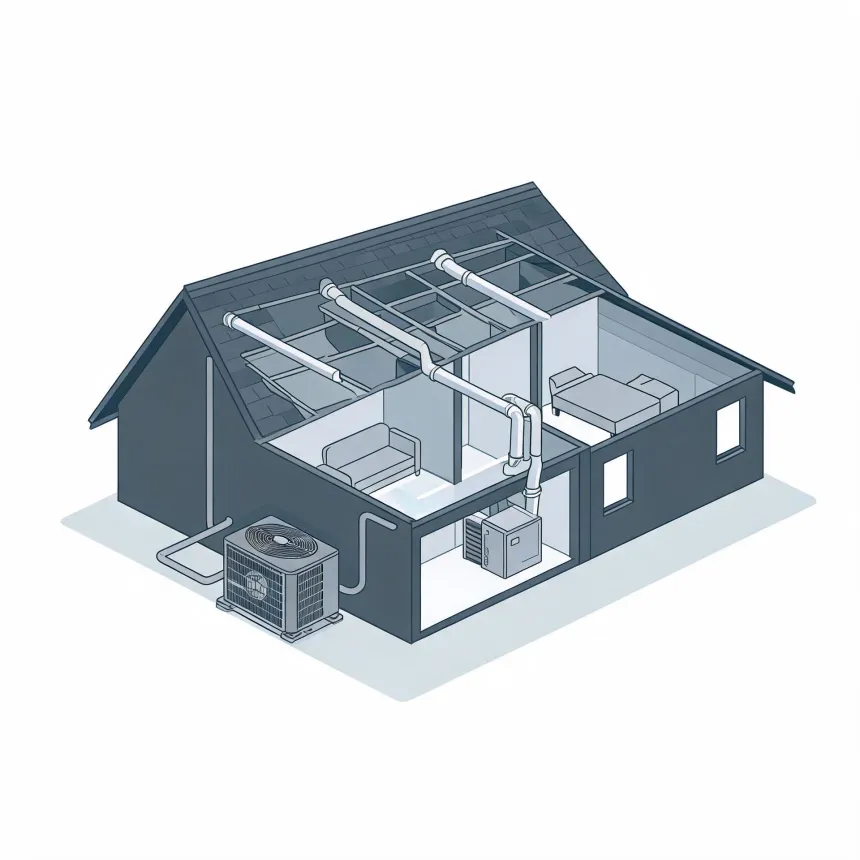
- A contractor starts by removing the old equipment, then sets the new furnace, air conditioner, or both in place, whether that's in a closet, attic, garage, or on a pad outside. From there, they connect it to your existing ductwork, run the refrigerant lines and electrical connections, and tie in the thermostat. Once everything's connected, they check refrigerant charge, airflow, and gas pressure, and run the system through a full heating and cooling cycle before calling the job done. If your ductwork is old, undersized, or leaking, a contractor may recommend addressing that as part of the job, since it affects how well the new equipment performs.