HVAC Installation in San Diego, CA
A new system here will heat from November through April and cool from June through September every year. Tell us about the house, and a licensed contractor who covers San Diego County will get in touch.
Tell us about the job
It takes about a minute.

San Diego asks for both, most of the year
Ten months out of the year, a San Diego home needs either heat or cooling. Winter nights average 41°F from December through February, and the furnace runs from November through April. Summer afternoons average 89°F from June through September, four months of steady cooling before the system gets a break.
A new system here has to handle both jobs well, not just one. Just over half of homes in the area heat with gas, so the furnace side still matters in a place known for mild winters. Power is not always guaranteed either. The area has seen 31 winter storms and 370 damaging wind events over the past ten years, and statewide, 17% of households went at least 24 hours without power in 2024.
- 6 months
- November through April, your system heats
- 4 months
- June through September, it cools
- 41°F
- the average winter night it heats against
- 89°F
- the average summer afternoon it cools against
NOAA nClimDiv, 1991–2020 normals
California requires HVAC contractors to hold a state license.
The CSLB tests contractors before they get that license and keeps a record of who holds one. It's tied to the contractor, not to any single job, so the same license covers the next homeowner's installation too.
For a job like this, most cities and counties require a permit from the local building office, with an inspection once the new system is in. That permit and inspection are separate from the state license. They're how the local building office confirms the installation itself was done right.
Sources: California Legislative Counsel · Contractors State License Board
- When should I replace my HVAC system?
- Replace it when repairs start coming often, when the unit is old, or when it can't keep the house comfortable anymore. An aging furnace or air conditioner works harder to do the same job, even if it still runs. If a contractor is quoting a major repair on an older unit, that's usually the point where replacing makes more sense than fixing again. Homes here need heat or cooling 10 months out of the year, so a system that's struggling doesn't get much of a break.
- Should I replace my furnace and air conditioner at the same time?
- If they're close in age, yes, it's worth doing together. A furnace and air conditioner installed at the same time are matched to work as one system, and pairing an old unit with a new one can mean the new one never runs the way it's rated to. It also means one visit and one disruption instead of two, later on. If one unit is noticeably newer than the other, a contractor can tell you whether it's worth waiting on that one.
- What happens during an HVAC installation?
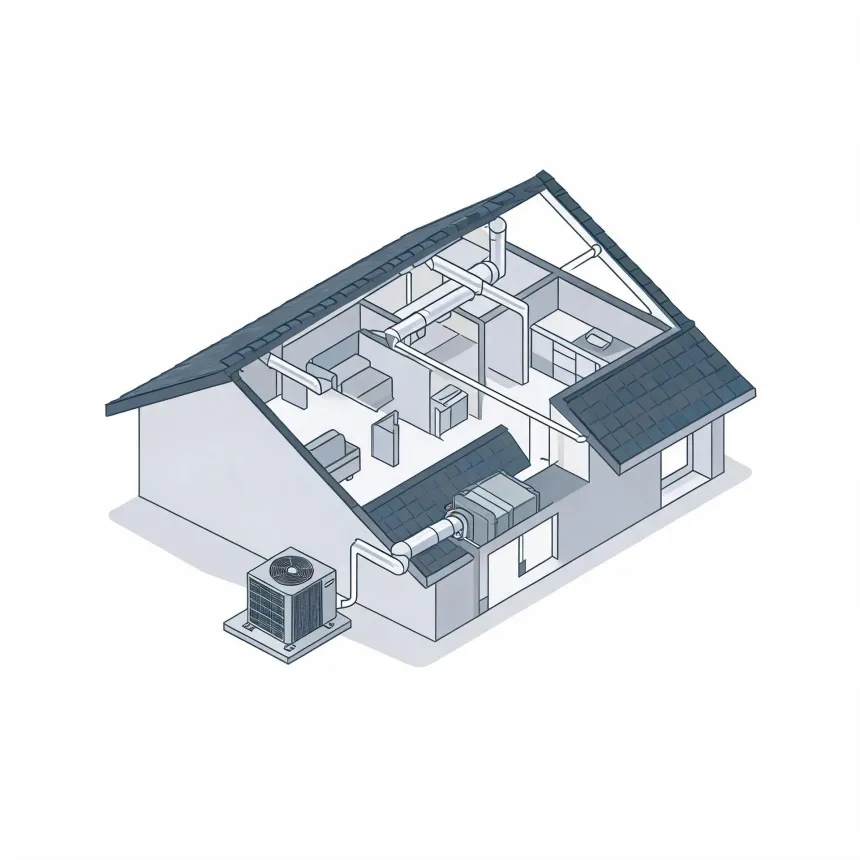
- A contractor removes the old equipment, sets the new furnace, air conditioner, or both, and connects them to the existing ductwork, gas line, and electrical. They'll check that the ducts and vents are sized right for the new equipment, since a system that's mismatched to its ductwork won't heat or cool evenly. Once it's connected, they run it through a cycle and check the airflow and temperature at the vents before calling it done. Any contractor doing this work in California has to hold a state license through the Contractors State License Board.