

How often to clean a dryer vent in California
A local pro who cleans dryer vents gets in touch with you.
Get my matchClean your dryer vent once a year. That holds for most houses in California, whether the dryer sits on an inside wall with a short, straight run to the outside or on an exterior wall with barely any duct at all. Lint builds up inside the vent every time you run a load, and a shorter run just means it takes longer to turn into a problem. Once a year keeps that lint from packing the duct tight enough to slow the airflow. When airflow drops, the dryer has to run longer to dry the same load, and with power costs here among the highest in the country, that extra run time shows up on your bill fast. A clogged vent also means more heat and lint sitting inside the duct, which is the real safety reason behind the yearly schedule. If your dryer runs most days for a full household, or the vent run is long or has several bends, check it closer to every six months instead.

Why lint builds up regardless of climate
Every load of laundry sheds lint, and the dryer sheet and lint trap only catch some of it. The rest rides the airstream down the vent and sticks to the inside wall of the duct, especially at bends and at the seams where sections join. A dry climate does not slow this down. The lint itself is dry when it leaves the drum, so it collects at the same rate whether the air outside is humid or not.

A blocked vent costs you twice
A dryer pushing air through a vent clogged with lint has to run longer to dry the same load, and every extra minute draws power at rates that run high in California. It also strains the heating element and the motor, since the dryer is working against restricted airflow instead of an open path. A vent cleared on schedule lets the dryer do its job in the time it is built to take, without the extra draw.
Once A Year, Or More Often
Once a year
- A straight run from an inside wall to the outside clears easily and once a year keeps it from ever getting tight enough to matter.
- You're not fighting a long duct with several turns, so lint has fewer places to pile up between visits.
- A dryer on an exterior wall with barely any duct has less length for lint to collect in, so the yearly clean stays ahead of it.
- This is the schedule that fits most California houses, inside or exterior wall, short run or not.
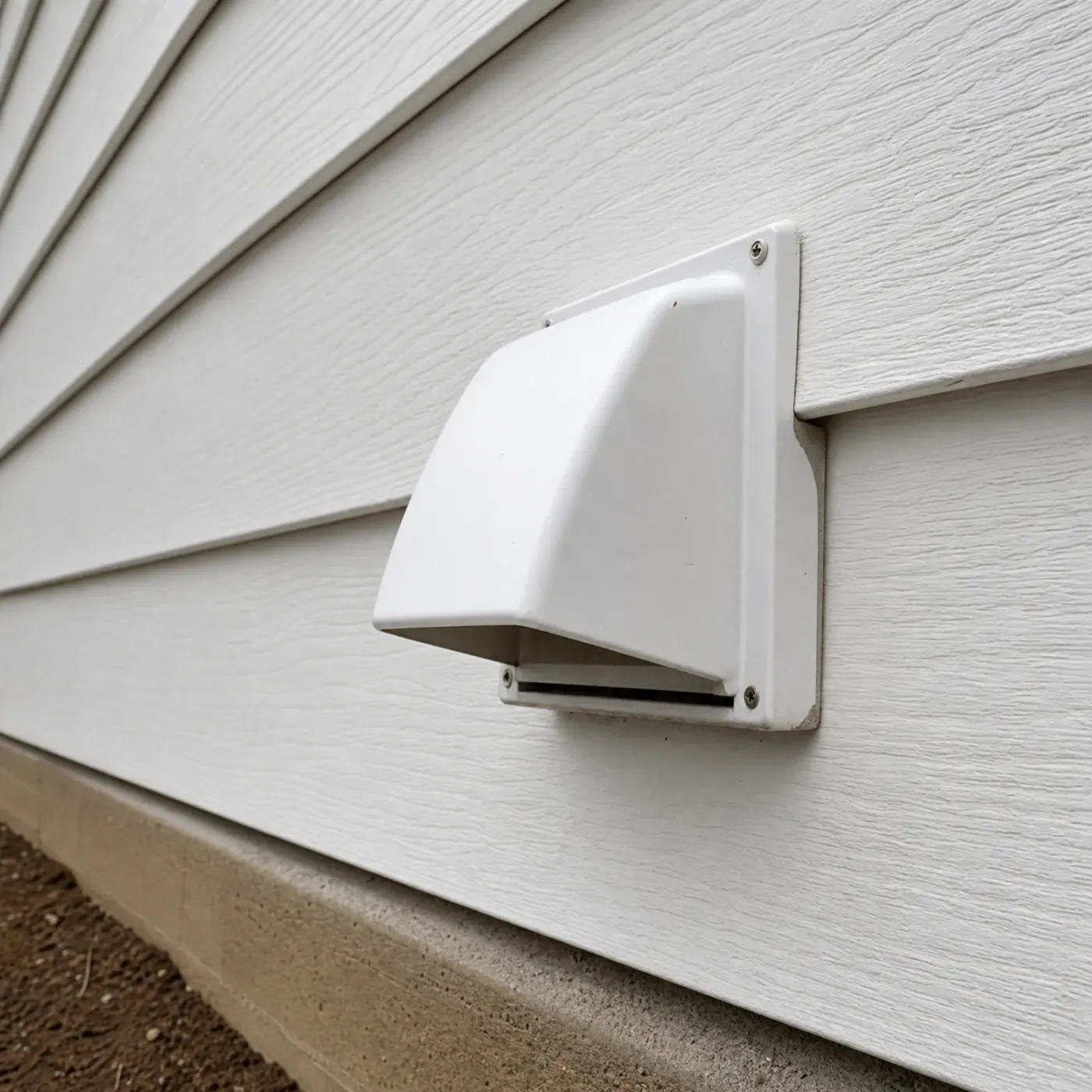
- You'll still want to check the outside vent hood between cleanings to make sure the flap opens freely and nothing's nesting in it.
More than once a year
- A long duct run with several bends traps more lint at each turn, so a once-a-year clean may leave some behind.
- If you run several loads a week, more lint moves through the vent and builds up faster than it would in a lighter laundry routine.
- A duct that's hard to access, routed through an attic or a long interior chase, is worth having checked more often since problems there go unnoticed longer.
- Towels, bedding and anything heavy with lint add more buildup per load than a typical mixed wash.
- If a load is taking longer to dry than it used to, that's lint narrowing the duct, and it's worth a look before the next scheduled year is up.

A tech runs a rod with a brush through the vent from the outside hood.
The brush spins and knocks lint loose from the duct walls as it travels.
A vacuum pulls the loosened lint out through the vent as the brush passes.
The rod is fed in section by section until it reaches the dryer connection.
Is your dryer taking longer to dry a load?
You'll notice it before anything else: a load that used to take 40 minutes now takes an hour, or you're running it twice. The top of the dryer feels hotter than usual, or the laundry room picks up a warm, faintly burnt smell partway through the cycle. Check the outside vent hood while a load is running. The flap should swing open and you should feel steady air pushing out. A weak flutter or barely any air means lint has built up enough to choke the duct. Left alone, that trapped lint is the most common reason dryers overheat and start house fires, so a dryer running hot and slow is worth paying attention to.




A pro who works on dryer vents
Your dryer vent cleaning request goes to one local pro.
Your dryer vent cleaning request goes to a local pro who does this work.
You're not committing to anything by asking.


A long duct with several bends
Some dryers sit in a laundry room or closet near the middle of the house, with the vent running through the attic or along several feet of duct before it reaches outside. Every bend is a place for lint to catch, and a longer run gives it more wall to stick to along the way. These setups often need cleaning more than once a year, especially if the dryer runs several loads a week. If you're not sure how your duct is routed, a tech can tell you after the first cleaning how long it ran before it got tight.
Electric dryers and the cost of restricted airflow
Gas dryers heat the drum cheaply compared to electric ones, but either way, a vent that's partly clogged makes the dryer run longer to finish the same load. On an electric dryer, that extra run time costs more here than almost anywhere else in the country, since California's power rates are among the highest. A dryer fighting a restricted vent pulls more power for the same result, load after load. Keeping the vent clear doesn't change what the dryer uses on a good day, but it stops the slow creep where every load takes longer than it should.
Power costs 31.35 cents per kilowatt-hour statewide
At 31.35 cents a kilowatt-hour, running a clogged dryer twice to finish one load costs more here than almost anywhere else. A clear vent gets the load done in one cycle, which is what keeps that rate from showing up on your bill.
EIA-861 2025 statewide residential average
Once a year, checked against how it's drying
- Once a year clears most dryer vents in California before lint cuts into airflow.
- A short, straight run and a long run with bends both land on the same yearly schedule.
- Longer drying times and a hot dryer top are the clearest signs the vent needs attention sooner.
- A tech clears the duct with a rod and brush from the outside hood, then vacuums out what's loosened.
- At 31.35 cents a kilowatt-hour, a clogged vent that forces a second cycle shows up fast on your bill.
- A local, licensed contractor who works on vents all year knows what usually fails in a run like yours.
A dryer vent in California gets cleaned once a year, no matter which way the duct runs. A short shot from an inside wall to the outside and a longer path with a few bends through the attic both wear down the same way, just at different rates, and a year is enough for either one to collect lint without choking the airflow. You don't need to guess at the schedule, though. The dryer tells you when it's slipping. A load that used to take 40 minutes and now takes an hour, or a dryer top that's hotter than it used to be, means lint has already cut into the airflow and the vent needs attention before the year is up. When it's time, the work itself is straightforward: a rod and brush run through the duct from the outside hood, breaking the lint loose, and a vacuum pulls it out behind the brush. Skipping it costs more here than in most places. At 31.35 cents a kilowatt-hour, a clogged vent that forces a second cycle to finish one load adds up fast, and a clear vent is what keeps that second cycle from happening. A local contractor who clears vents like yours all year round knows which part of a run like yours tends to pack in first, whether that's a bend near the wall or the stretch close to the hood, and checks that spot first instead of working the whole duct blind.




Dryer Vent Cleaning
Get your dryer vent to the right pro
Only one pro gets your request, so you hear from one company.
