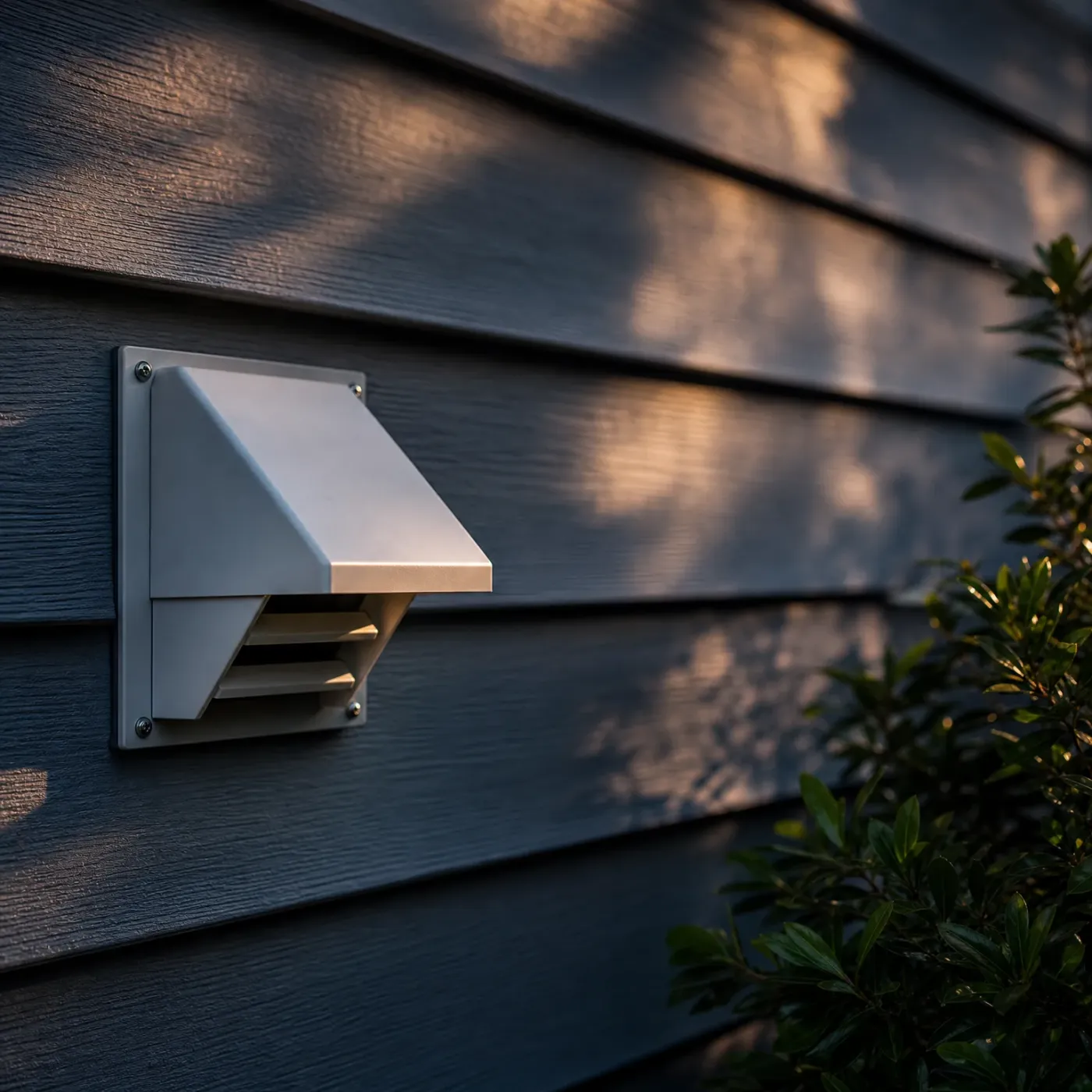

A white hooded louvered vent cover mounted on dark gray horizontal lap siding, with dappled late-day light and shadows across the wall and a leafy shrub at the right edge.

Let someone else find the pro

Why your dryer takes so long to dry in California

A dryer that runs two or three cycles to get clothes dry usually has a vent that's clogged somewhere between the drum and the outside wall. This page walks through why that happens and what it does to your gas bill and your power bill, both already high here. Send the form once and stop calling around for someone to check it.

Hand it off

A dryer that takes two or three cycles to finish a load is almost always fighting a blocked vent, not a weak heating element. Every dryer pushes hot, wet air out through a duct to the outside. When lint builds up along that duct, the air has nowhere to go. The drum keeps heating, the moisture stays put, and the clothes come out damp at the end of a normal cycle. You run it again. Most homes in California heat with gas, so that second and third cycle is burning gas each time, and the dryer's motor and blower are drawing power on top of that, which matters here since electricity costs more than in most of the country. A clogged vent also means the dryer runs hotter than it should for longer stretches, which wears on the belt and the heating element faster than normal use would. Clearing the vent is what fixes the drying time.

A white plastic hooded dryer vent with a screened opening mounted on gray horizontal lap siding above a concrete foundation and gravel bed.

Vent clear and flowing

Open this hood while the dryer runs and you feel a strong, steady push of warm air. The flap swings and stays open. A load of towels finishes in one cycle, because the moisture has somewhere to go the moment the drum pushes it out.


A white plastic dryer vent hood mounted on horizontal lap siding, clogged with gray lint at its lower opening, above a concrete foundation and walkway.

Vent packed with lint

Lint has built up inside this hood until the opening barely moves air. You can see it caked around the edges, with residue staining the foundation below. The dryer runs hot and long because the moisture it pushes out has nowhere to go.

Clogged Vent vs. Clear Vent

Vent never cleaned

  • Lint keeps collecting along the duct run, so the dryer works harder with each load until it's running two or three cycles just to finish towels.
  • The heating element and blower run longer to push air through a narrowing path, and on a gas dryer that means more gas burned per load.
  • A dryer pulling extra cycles all month adds real hours to a power bill that's already among the highest in the country.
  • Restricted airflow raises the temperature inside the drum, and clothes and elastics wear out faster from the extra heat they sit in.
  • A duct that's mostly blocked traps hot lint-carrying air inside the dryer cabinet, which is how dryer fires start.
  • Vent hood flaps stop swinging open all the way, a sign the duct is still blocked even if the dryer seems to be running fine.

Vent cleaned out

  • Air moves freely from the drum to the outside wall, so a load of towels finishes in one cycle instead of two or three.
  • The dryer cycles off sooner, which trims the gas or power it burns per load over the course of a month.
  • Lower drum temperature means less heat stress on clothes and the dryer's own heating element over time.
  • The vent hood flap swings open fully and stays open while the dryer runs, a quick check from outside.
  • Moist air leaves the house instead of backing up near the vent, so lint isn't sitting damp against a heat source.
  • Once it's done, you're not left tracking down who does this kind of cleaning or comparing quotes from different companies. Send the form and the search part is handled.
A white hooded exterior vent cover with a screened lower opening, screwed to beige horizontal lap siding above a concrete foundation.

Open and clear

This is what a vent hood should look like. The flap sits loose in its frame and swings open as soon as the dryer starts pushing air. No lint packed in the louvers, nothing blocking the opening. Air gets outside as fast as the drum pushes it out.

A hooded dryer vent mounted on beige lap siding, with gray lint buildup packed in and hanging from its louvered opening.

Clogged and stuck

Lint has built up across the louvers until the flap barely moves. The dryer is pushing hot, wet air into a vent that won't let it out. Lint is one of the most common causes of house fires traced to dryers, and this is what that buildup looks like from outside.

A smiling man in a dark green sweater sits at a wooden table with a light gray mug in a kitchen with white tile backsplash, pendant lights, and an adjoining living room visible.
A smiling man in a dark gray sweater stands indoors looking to the side, with a kitchen counter holding a ceramic mug and open wooden shelves behind him and a living area in the background.
A smiling man in a dark blue button-up shirt stands at a white kitchen island, with open shelving, a gas range, a potted plant and a window in the background.
A smiling man with dark wavy hair and a beard, wearing a dark green knit sweater, sits in an open-plan living room and kitchen with a brown sofa, large windows, and a counter holding a mug and a wooden bowl.

Power costs 31.35 cents per kilowatt-hour statewide

A clogged vent makes the dryer run a second or third cycle just to finish, and in California that extra time runs on electricity billed at 31.35 cents a kilowatt-hour, the highest rate most states never see. Clear the vent and the first cycle finishes the job.

EIA-861 2025 statewide residential average

  1. The drum tumbles clothes while the heating element warms the air inside

  2. Warm air picks up moisture and the blower pushes it toward the vent

  3. Lint collects along the duct wall and narrows the path with every load

  4. Trapped moisture keeps clothes damp, so the dryer starts another cycle

A white plastic hooded dryer vent screwed into light gray horizontal lap siding above a concrete foundation wall, with lint and dirt visible inside the vent opening.
Before you get your dryer vent cleaning
A white square dryer vent hood with a hinged flap mounted on light gray horizontal siding above a concrete foundation wall.
After you get your dryer vent cleaning

One request and it's handed off

You've already read why the extra cycles happen. Finding out doesn't clear the vent, and tracking down someone to do it is its own chore: searching for a dryer vent company, calling a few, explaining the same thing about your dryer each time, then sitting with quotes trying to guess who's worth the call. That's the part this page takes off your plate. Your dryer is pulling power at 31.35 cents a kilowatt-hour every time it runs that second or third cycle, and a gas dryer is burning more on top of that to heat air that can't get out. None of that changes until the duct is actually clear. Send the request and the search part is done. You stop being the one who has to find somebody and start being the one who gets a working vent and a dryer that finishes a load of towels in a single cycle.

The Vent Is the Answer

  • A dryer that needs two or three cycles almost always has a blocked vent, not a broken heating element.
  • Lint narrows the duct over time, so every load after that takes longer and runs up both the gas and the power bill.
  • A clear vent lets the first cycle finish the job, since the moisture has somewhere to go as soon as the drum pushes it out.
  • Once the vent is cleared, the fix holds until lint builds up again, not just for one load.
  • Finding a dryer vent company, calling around, and explaining the problem more than once is the part that ends when you send the form.

Two or three cycles to dry a load points to one thing: lint built up somewhere along the duct between the drum and the outside wall. It is not the heating element losing strength. It is airflow losing ground, a little more with every load, until the moisture that should leave with the first cycle is still sitting in the clothes for the second and third.

That extra time is not free. Most homes here heat with gas, so the burner runs longer to make heat that is not doing its job. The blower and drum keep turning on power billed among the highest rates in the country. A clogged vent charges you twice for one load of towels.

Clearing the duct brings the first cycle back to where it should be, because the air finally has somewhere to go the moment the drum pushes it out. That fix holds. It is not a one-time save for a single load, it is the vent working the way it was built to until lint collects again and narrows the path once more.

What stays yours is watching for that slowdown. What you no longer have to do is the part that eats an afternoon: searching for a dryer vent company, calling a few, explaining the same two or three cycle problem to each one, then sorting through what they quote you. Send the form and that search is over, not the vent cleaning itself, just the work of finding who does it.

A dark-clad house with large windows beside a gravel driveway lined with in-ground path lights, ornamental grasses and hydrangeas, with distant hills and an orange sunset sky.

Dryer Vent Cleaning

Done looking for a dryer vent pro

Duct and vent cleaningCalifornia
Step 1 of 3

What kind of equipment?

  • A gray upholstered sofa arm with a cream knit fringed throw sits beside a wooden side table holding a stack of books, a shallow wooden bowl, and a ceramic vase of leafy branches, on a wood floor near a window.
    • A local pro who cleans dryer vents gets in touch with you.
    • Your dryer vent cleaning request goes to a local pro who does this work.
  • A living room corner with a cream upholstered sofa and cushion beside a wooden side table holding a ceramic vase of olive branches and a small dark bowl, with a framed landscape painting on the gray wall and a linen curtain at the window.
    • After you send the request, you're done searching.
    • Send the form and the dryer vent cleaning stops sitting on your list.
  • A wood-framed armchair with a beige cushion and knitted throw sits beside a round wooden side table holding a ceramic mug, with a potted green plant near a window in the corner and a framed picture on the wall.
    • Skip calling around for someone who cleans dryer vents.
    • Answer a few questions about the dryer vent cleaning and skip the search.
  • Interior corner with beadboard wainscoting, a gray cabinet with wood countertop holding a vase of greenery below a window, and a potted leafy plant in a woven basket on a wood floor with a fringed jute rug.
    • Your dryer vent cleaning request goes to one local pro.
    • Your request stays with one local pro.