


Dryer taking too long to dry in San Diego, CA

A white plastic wall vent with a square mounting flange, hooded cover, and round duct collar visible beneath, shown against a plain light gray background.
Skip the calls

Why is my dryer taking forever to dry clothes?

You load the dryer, run a normal cycle, and pull out clothes that are still damp. So you run it again. Maybe a third time. It used to take one cycle. Now it takes two or three, or it runs hot and long and the clothes still come out warm and wrinkled instead of dry. Something has changed, and it's worth knowing what before you keep burning through cycles.

A clogged vent is the most common reason a dryer stops drying in one cycle

Lint builds up inside the vent line long before it ever reaches the trap, and once enough of it collects, the dryer can't push damp air out of the house fast enough. The drum still turns, the heat still comes on, but the moisture has nowhere to go, so it recirculates through the clothes instead of leaving with the exhaust. That's why a dryer can run a full hot cycle and still leave clothes damp. If your vent run is long, has several bends, or empties out through the roof instead of a short wall, lint has more surface to catch on and the problem shows up sooner. A dryer that's taking two or three cycles to finish a normal load is usually telling you the vent needs to be cleared, not that the dryer itself is failing.

A pile of beige, blue, and gray towels sits on top of a white dryer beside a window with green foliage outside, against a dark wall.

You pull the second load in an hour, and the towels on top are still damp, heavy in your hands. It's past seven, the kids are already in bed clothes, and the dryer is still ticking through another cycle you didn't plan on running. The room is warm from the machine working so long, warmer than it should be for just towels. You stack the damp ones on top of the dryer and go start dinner, figuring you'll check again in twenty minutes. You already know you will.

Why is this taking longer than it should for your house?

  • 2.72 people per household on average

    A typical San Diego County household runs 2.72 people worth of laundry through that dryer. More loads a week means more lint built up in the vent, and a full vent is what turns one cycle into three.

  • Half the homes here were built by 1980

    Half the homes in San Diego County were built in 1980 or earlier. A vent run that old has likely never been cleaned out, and the ductwork itself may be narrower or longer than what's used today.

  • Power here costs 42.22 cents per kilowatt-hour

    Power here runs 42.22 cents per kilowatt-hour, among the highest in the country. An extra cycle costs more here than almost anywhere else, so a clogged vent hits your bill harder too.

ACS 2020-2024 · EIA-861 2025

A white plastic hooded dryer vent cover mounted with screws on beige horizontal lap siding, next to a plain pale wall surface.

A vent that still runs clear

A dryer with a clean vent pushes hot air straight outside and clothes come out dry in one cycle. You feel it at the outside hood: a strong, steady flow of warm air while the dryer runs. The cycle ends on time, the laundry room doesn't heat up the way it does now, and the dryer itself runs cooler, which is easier on the heating element and the belt.

A metal louvered exterior vent hood screwed to a beige horizontal lap siding wall, with a blank light-colored surface filling the left half of the frame.

A vent packed with lint

Lint builds up along the inside of the duct, coating the walls until the path narrows to a fraction of its size. Air that should rush outside backs up into the drum instead, so clothes sit in warm, damp air instead of a dry airflow. You run the cycle again, then again, and the dryer works harder each time to push air through a duct that won't let much through.

Clear It Yourself or Have It Cleaned

Clean the vent yourself

  • A vacuum with a hose attachment reaches a foot or two into the duct, but most San Diego runs are ten feet or longer before they reach the outside wall.
  • You can see the hood from outside and check for weak airflow, but you can't see a crushed section of duct behind drywall or in the attic.
  • Lint that sits past a bend or a joint stays there no matter how long you run the vacuum from either end.
  • A rod kit from the hardware store clears a straight shot, but most vent runs have at least one turn where the rod stops working.
  • If the dryer is on an interior wall, the run to outside is longer, and a longer run is harder to clear end to end on your own.

Have it cleaned

  • A contractor who services dryer vents across San Diego County brings a brush and rod system built to reach the full length of the duct, turns included.
  • They can tell from the hood, the duct material and the run length whether this is a lint problem or something else, like a vent that was never sized right.
  • One contractor means one visit and one person who knows what they found, instead of sorting through separate quotes from several companies.
  • They check the connection at the wall and the hood flap while they're there, since a loose clamp or a stuck flap undoes a clean vent fast.
  • Someone who clears vents every week in this area has likely seen the exact layout in your house before, in a neighbor's place built the same year.
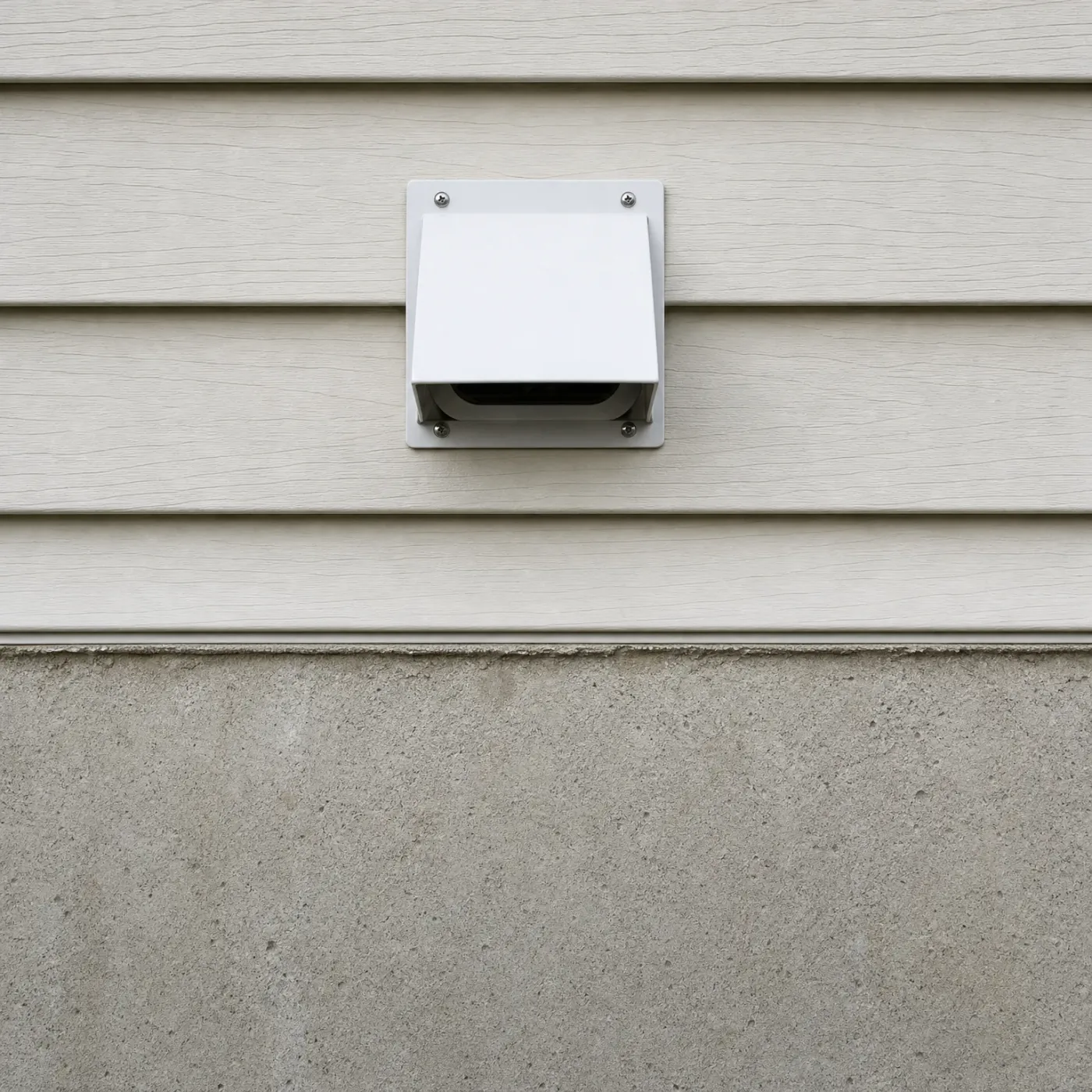
A white hooded dryer vent with a square mounting plate fastened to beige horizontal lap siding above a concrete foundation wall.

The hood with a clear opening

This is what the cap looks like when the vent behind it is clean. Air passes through the louvers without resistance, so the dryer sheds its heat and moisture outside in one cycle instead of fighting to push it through a narrowing duct.
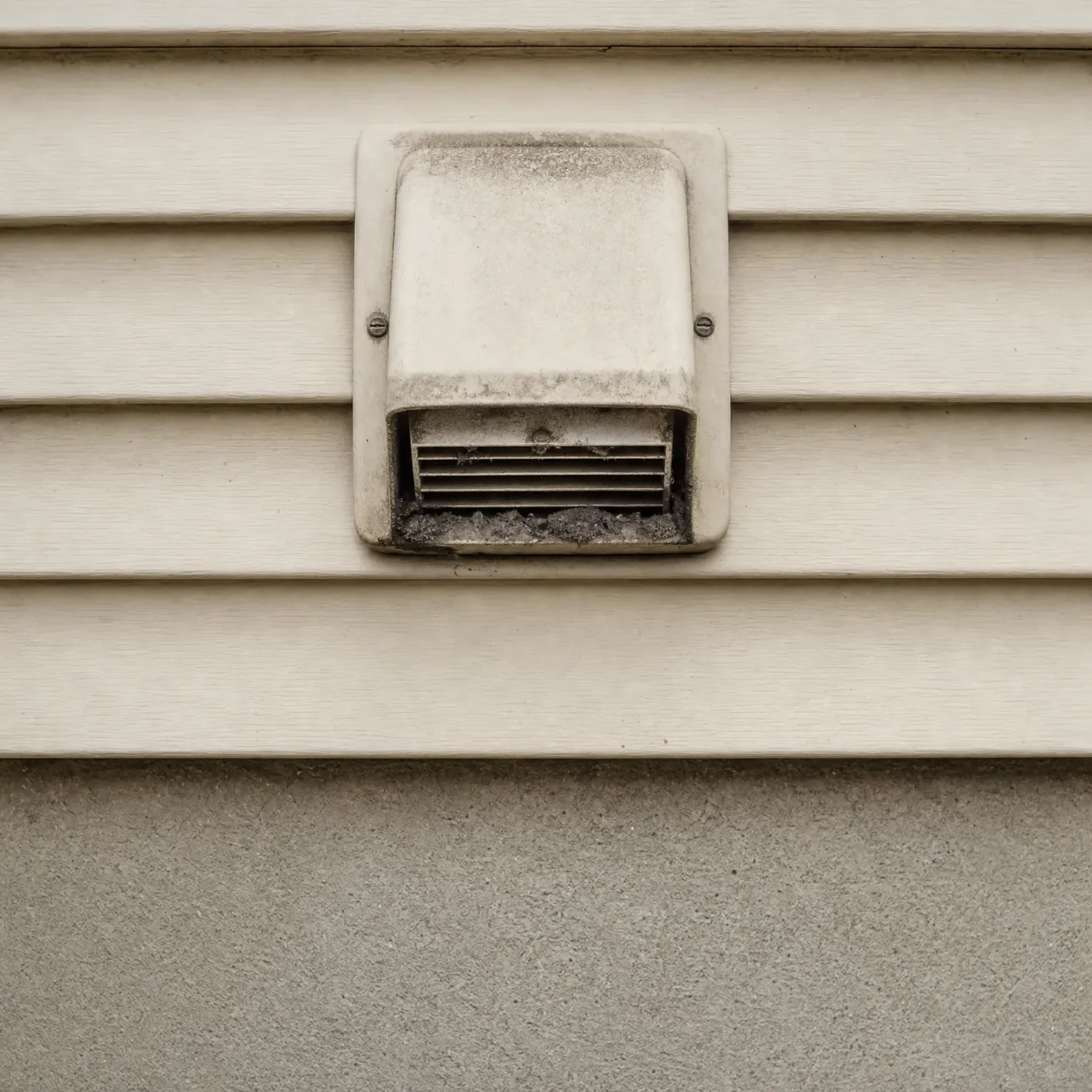

A dusty plastic louvered dryer vent hood screwed into beige horizontal vinyl siding above a gray stucco foundation wall, with lint buildup around the slats.

The hood clogged with lint

Lint has built up around the louvered opening until it's closing off the vent from outside. The dryer is still pushing air, but less of it gets out, so the heat and moisture stay in the drum and the clothes come out damp.

A smiling woman in a cream knit sweater sits at a marble counter with a glass of red wine, with a dining table, pendant lights, and French doors in the dim background.
A smiling woman with long dark hair in a cream sweater sits in a dimly lit open-plan home interior, with a glass of red wine in the foreground and a dining table, fireplace and shelving behind her.
A woman with long dark hair in a black turtleneck laughs while seated at a light stone counter with a glass of red wine, in a dimly lit interior with a potted plant, framed pictures and a hanging lamp behind her.
A woman in a dark sweater laughs while seated at a white marble counter with a glass of red wine, in a dimly lit open-plan interior with a pendant lamp and dining table behind her.

No calling every shop in San Diego County

At this point you've already pulled the lint trap, checked the hood outside, maybe run a shop vac a foot into the duct. If the dryer still runs long, the blockage is further down the line than a vacuum hose reaches, and that's a job for someone who clears the whole run, not just the end of it. Finding that person usually means searching around, calling a few companies, explaining the same thing on the phone three times, then sitting with quotes that don't match up. This sends the job to one licensed contractor local to San Diego County, someone who clears vents like yours all year and knows what a blocked run in this area usually looks like. No sorting through five bids or repeating yourself to each one. You get back to the part that matters: a dryer that dries a load in one cycle again, not three.

Why lint builds up faster here

Lint catches on anything that isn't a straight, smooth run, and most vents have at least one turn to clear a wall stud or a roofline. Every bend slows the air down a little more, and slower air drops more lint on the way instead of carrying it out the hood. A vent that runs ten feet with one turn behaves differently than one that runs twenty-five with three. Houses here often route the vent through a garage or an attic space to reach an outside wall, which means more duct and more turns than a straight shot would need. None of that is a flaw in the house. It just means the vent needs clearing on a schedule, not only when the dryer starts acting up.

What a clear vent changes

A dryer heats air, pushes it through wet clothes, and sends the moisture out through the vent along with that heat. If the duct is open end to end, the moisture leaves as fast as the dryer makes it, and the load finishes in one cycle. If lint has narrowed the passage, the moist air backs up instead of clearing out, so the dryer keeps heating and running past the point where a load like that should be done. The drum doesn't know the vent is blocked. It just keeps running on the timer or the moisture sensor, trying to finish a job the air can't carry out fast enough.

2.72 people per household on average

With close to three people in most San Diego County households, the dryer is probably running most days of the week. That pace feeds more lint into the vent between cleanings, and a vent already running slow with buildup falls behind faster when it barely gets a rest.

ACS 2020-2024

How a vent cleaning actually works

  • A dryer vent is just a duct, so a technician checks it for airflow the same way you'd check any pipe for a clog.
  • Most vent cleaning uses a rotating brush fed through the duct from both ends, not a vacuum hose, because lint packs tight past the first few feet.
  • The brush knocks lint loose as it travels the length of the duct, and a vacuum on the other end pulls the loose material out.
  • A tight bend or a crushed section of flexible duct catches lint faster than a straight run, so those spots get checked first.
  • Birds and rodents nest in vent hoods with weak airflow, and a technician checks for that before assuming the blockage is lint.
  • The job isn't finished until airflow is tested at the hood again, confirming the fix rather than just assuming the duct is clear.

A dryer vent cleaning isn't someone sticking a shop vac in the hood and calling it done. A technician treats the duct like any other pipe that's stopped carrying what it should, which means finding where the flow drops off and why. The tool of choice is a rotating brush, run through the duct from the hood end and often from the dryer end too, since lint packs tight once you get past the first few feet and a vacuum hose alone won't reach it. The brush knocks the buildup loose as it works down the line, and a vacuum pulls the loosened lint out rather than letting it resettle further in. Bends matter here. Any spot where the duct turns to clear a stud or follows the roofline is a place lint catches faster than it does on a straight run, and a crushed section of flexible duct does the same thing, so those spots get checked first rather than last. Before any of that, a technician looks at the hood itself, because birds and rodents build nests in vents that have gone weak, and that blockage looks a lot like a lint clog from the outside. Once the duct is clear, the job isn't finished until airflow gets tested at the hood again. That's the difference between assuming the vent is clear and knowing it.

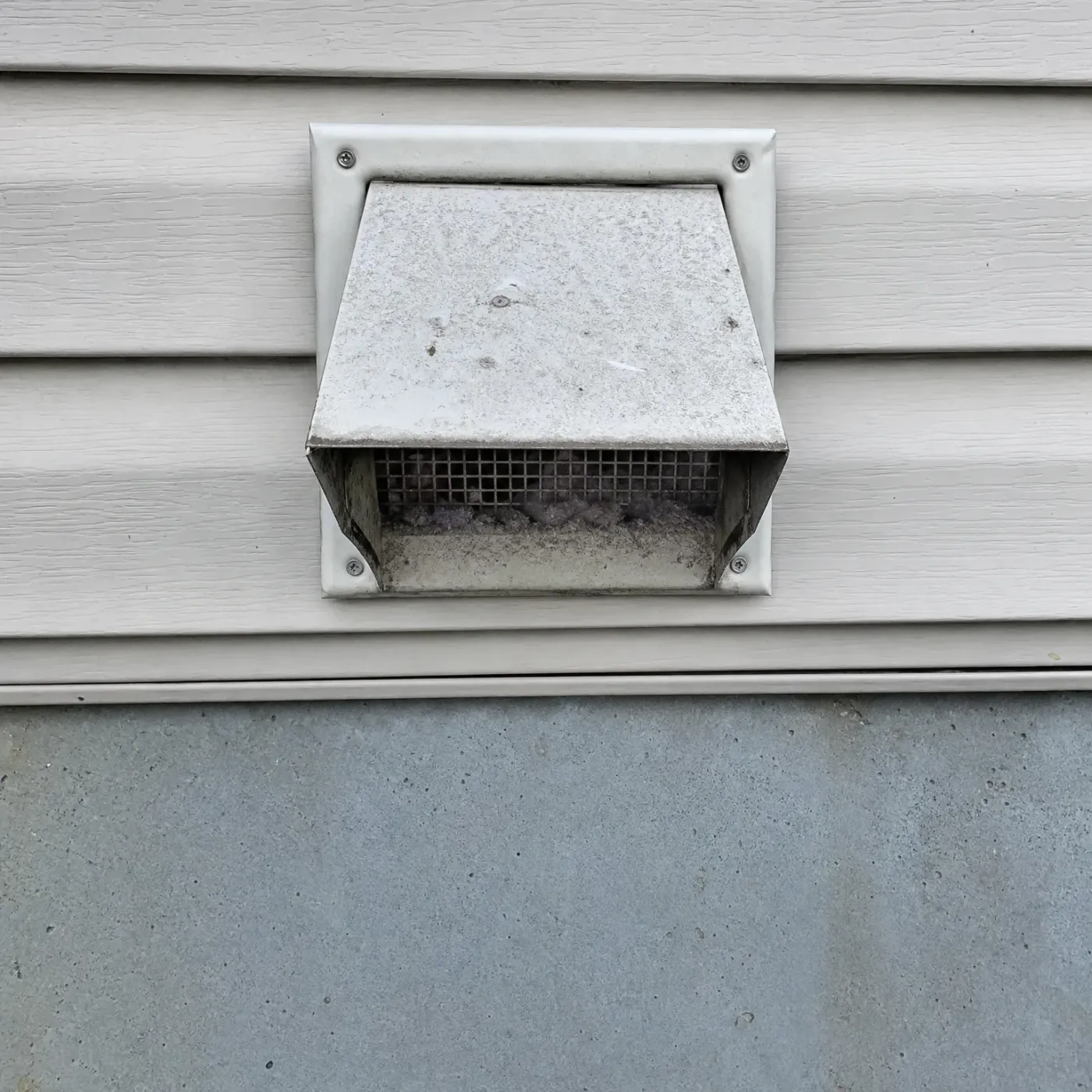
A metal dryer vent hood with a screened opening clogged by gray lint, mounted on light gray horizontal vinyl siding above a concrete foundation wall.
Before you get your dryer vent cleaning
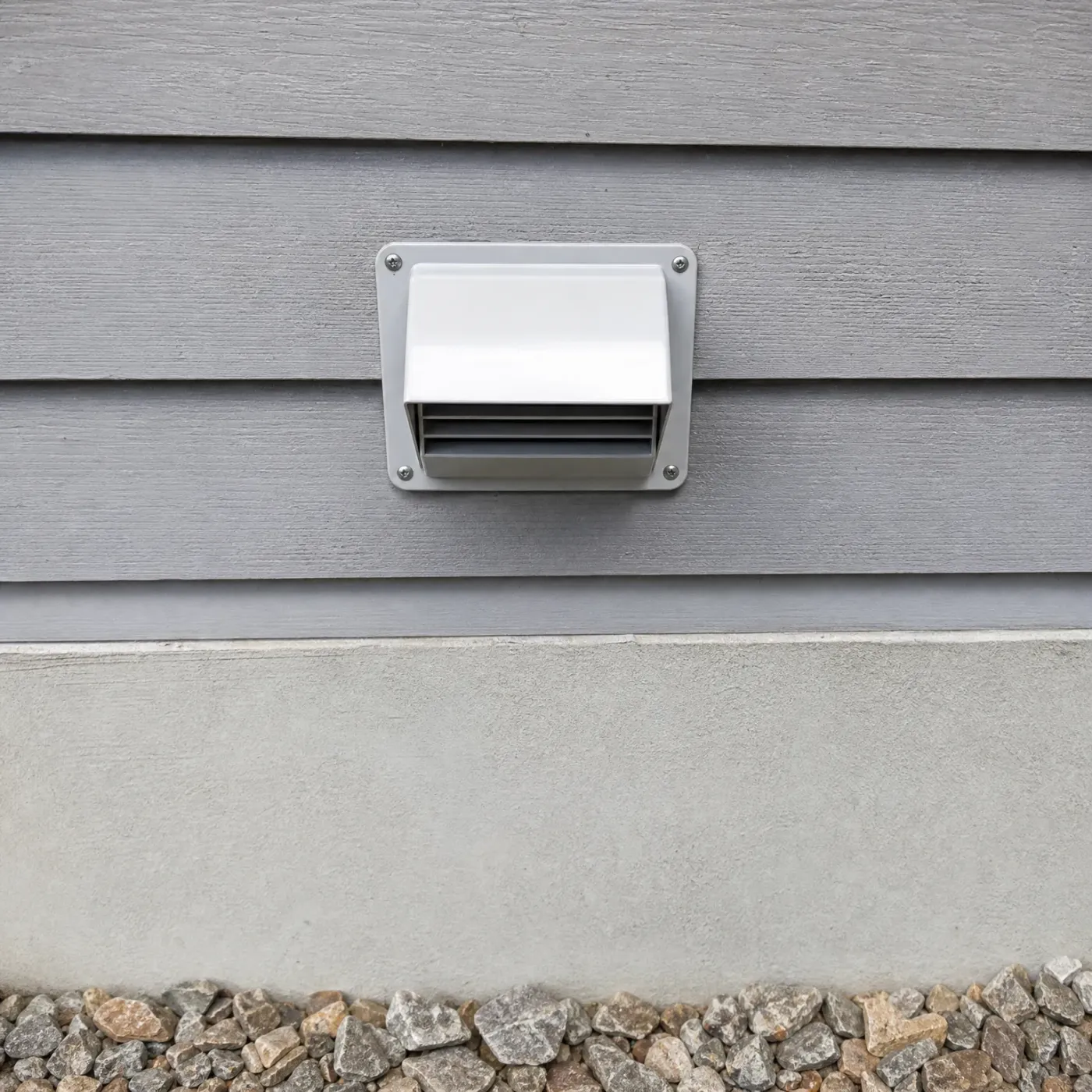
A white hooded louvered vent screwed to gray horizontal lap siding above a concrete foundation wall, with gravel along the ground.
After you get your dryer vent cleaning
A white hooded dryer vent with a screened opening mounted on beige horizontal lap siding.

Vent cap, clean

This is what the hood looks like when the vent behind it is clear. The louvers sit open, the screen behind them is free of lint, and the four mounting screws are the only thing you notice. Hold your hand near it while the dryer runs and you feel steady, warm air pushing out.

A dirt-streaked white plastic dryer vent hood screwed to light gray horizontal lap siding above a concrete foundation wall.

Vent cap, clogged

Lint has built up around the flap opening and across the hood itself, gray and matted into the louvers. The screws are still there, but the opening is narrowed by everything caught on its way out. That buildup is why the air coming off this hood feels weak, and why the dryer upstream is working two or three cycles to do one load's worth of drying.

A dryer that needs two or three cycles to do what one used to do is telling you the vent is restricted, and clearing that restriction is what brings the cycle back down to one. That's a job for someone who runs a brush through the full length of the duct, not just the few feet a shop vac reaches. A tech who works San Diego County vents every week has seen how these runs are built, where the bends sit, and what a vent looks like when it's actually clear versus when it just seems that way from the hood. You call one licensed local contractor, explain what the dryer's been doing, and they come look at your vent specifically, not a general service call split across three companies trying to get your business. No flood of calls to sort through, no repeating the story to five different people. Just someone local who knows this equipment, checking the one thing that's actually slowing your laundry down.

A metal hooded dryer vent with a louvered opening mounted on dark gray horizontal lap siding, with leafy shrub foliage in the lower left corner.

Skip the calls to every shop

A licensed pro who works in San Diego County gets your request.

Duct and vent cleaningSan Diego County, CA
Step 1 of 3

What kind of equipment?