Mini Split Installation in Los Angeles, CA
A new system here will heat from November through April and cool from June through September every year. Tell us about the house, and a licensed contractor who covers Los Angeles County will get in touch.
Tell us about the job
It takes about a minute.
Ten months of the year, one of these two
Los Angeles County asks a mini-split to work most of the year. Heat from November through April, cooling from June through September. Only two months sit outside either job.
Winter nights average 41°F here, mild by most standards, but the unit still has to bring that up to room temperature every night for six months straight. Summer afternoons average 87°F, and the same system has to pull that back down for four months. A new unit installed on or after January 1, 2023 has to meet 14.3 SEER2 for cooling and 7.5 HSPF2 for heating. Those are the federal minimums for any split-system heat pump, ductless included.
- 6 months
- November through April, your system heats
- 4 months
- June through September, it cools
- 41°F
- the average winter night it heats against
- 87°F
- the average summer afternoon it cools against
NOAA nClimDiv, 1991–2020 normals
California requires HVAC contractors to hold a state license.
The license is issued to the contractor, not to this particular installation. California's Contractors State License Board tests the contractor and keeps the record on file, and that record follows them from job to job rather than resetting for each one.
For this job, that license is what stands behind the person doing the work. Most cities and counties also require a permit for a mini-split installation, with an inspection once the work is done. The permit and inspection check the installation itself, in the wall and at the line set, separately from the license that covers the contractor.
Sources: California Legislative Counsel · Contractors State License Board
- Is a mini split worth it?
- For most homes here, yes. You need heat from November through April and cooling from June through September, so a system that does both from one unit is working most of the year. A mini split also heats and cools only the room it's in, so you're not paying to run air through ducts that lose heat or cool air along the way. If your home already has ductwork and a working furnace, the case is weaker. It makes the most sense for a room addition, a garage conversion, or any space the main system doesn't reach well.
- How many rooms can a mini split cover?
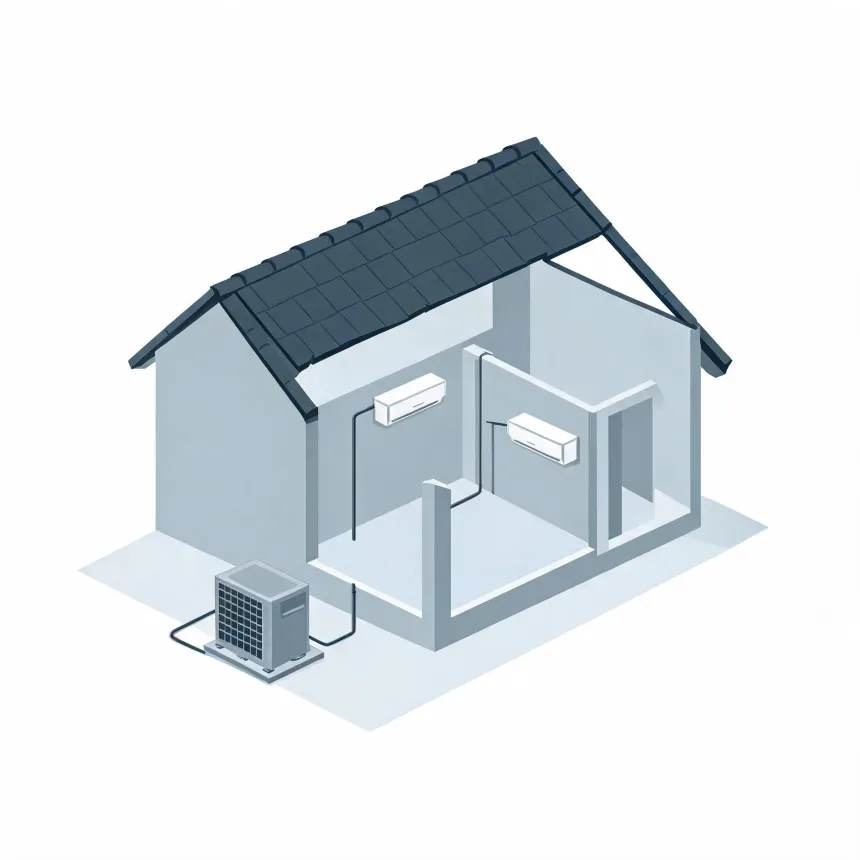
- One outdoor unit can run several indoor heads, so a single mini split system can cover more than one room at a time. Each indoor head is sized to the room it's in, and each one can be set to a different temperature. A contractor sizes the outdoor unit and picks the number of heads based on the square footage and layout of your home, so the right count depends on the house.
- Can a mini split heat a whole house?
- It can, if it's sized and placed for that from the start. A multi-zone system with a head in each main room can carry a whole house through winter nights that average 41°F here. What it can't do is heat a house through one or two heads meant for a single room. Whether it's the right call for your whole house versus keeping a furnace as backup is something a contractor should work out room by room.