Mini Split Installation in Riverside, CA
A new system here will heat from November through March and cool from April through October every year. Tell us about the house, and a licensed contractor who covers Riverside County will get in touch.
Tell us about the job
It takes about a minute.
A mini-split here works almost every month of the year
Riverside County asks for cooling seven months a year, April through October, with summer afternoons averaging 99°F. Heat is needed the other five months, November through March, on nights that average 42°F. That is 12 months of one system or the other doing something. A mini-split installed here needs to hold up at both ends, not just get through a mild spell in between.
Any mini-split installed new has to clear a federal floor. It must reach 14.3 SEER2 for cooling and 7.5 HSPF2 for heating. That is not a sales feature. It is the minimum a manufacturer is allowed to build to now.
- 5 months
- November through March, your system heats
- 7 months
- April through October, it cools
- 42°F
- the average winter night it heats against
- 99°F
- the average summer afternoon it cools against
NOAA nClimDiv, 1991–2020 normals
California requires HVAC contractors to hold a state license.
The license is held by the contractor, not issued job by job, so the CSLB has tested and recorded the person or company before they ever get to your house, and that record stands behind every job they take on, not just this one.
For a mini-split installation, that license is what backs the work itself, but in most cities and counties the job also needs a permit from the local building office, with an inspection once the installation is done. That inspection is a separate check on the finished work, done by the local building office rather than the state.
Sources: California Legislative Counsel · Contractors State License Board
- Is a mini split worth it?
- For most homes here, yes. Riverside needs cooling from April through October and heat from November through March, so a system that does both from one unit is working nearly every month of the year. A mini split also handles rooms that window units or a struggling central system leave hot or cold, like an added bedroom or a garage conversion. Whether it makes sense for your house depends on what you have now and what you're trying to fix, so a contractor should look at the space before you decide.
- How many rooms can a mini split cover?
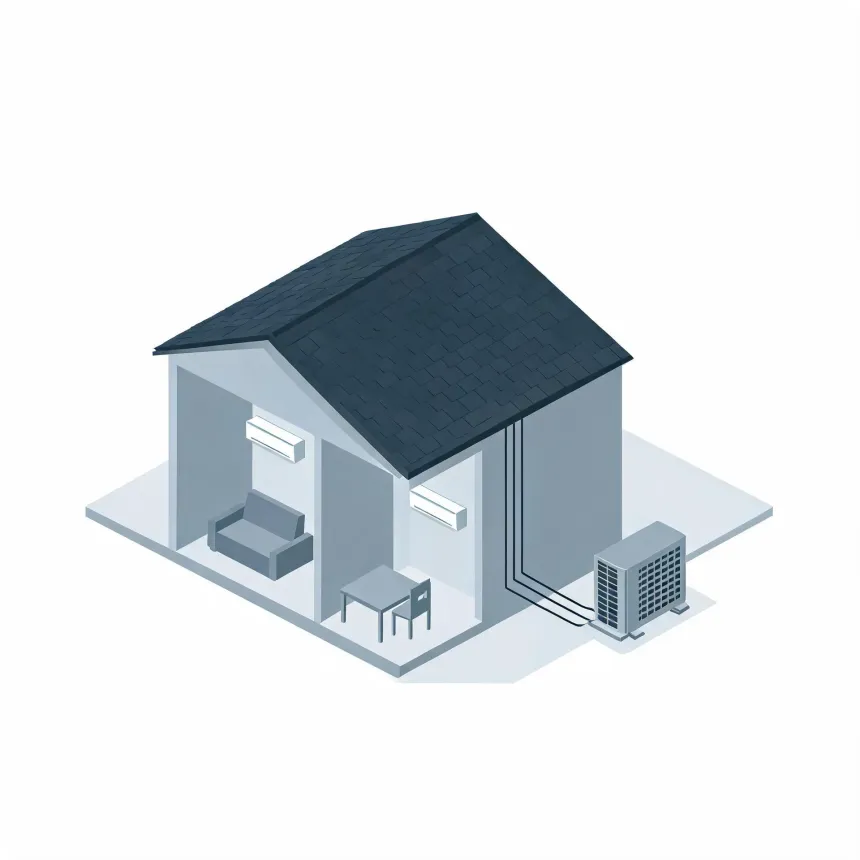
- A single outdoor unit can run more than one indoor head, so it can cover several rooms at once. Each indoor head is sized for the room it serves, so a small bedroom and a large living room would need different capacities from the same outdoor unit. The right number for your house comes down to layout and how those rooms are used, which is something a contractor needs to walk through in person.
- Can a mini split heat a whole house?
- It can, if enough indoor heads are placed to reach every room, but a single head only heats the space it's mounted in. A house with an open layout might get by with one or two heads. A house with several closed-off rooms needs a head in each one to heat evenly. Winter nights here average 42°F, which is a milder load than a heat pump would face in a colder climate, so a whole-house setup has an easier time keeping up.