Mini Split Installation in Santa Maria, CA
A new system here will heat from November through May and cool from July through September every year. Tell us about the house, and a licensed contractor who covers Santa Barbara County will get in touch.
Tell us about the job
It takes about a minute.
Ten months of the year, your mini-split is working
Santa Maria doesn't hit hard extremes, but it doesn't give a mini-split much rest either. Winter nights average 40°F from December through February, and homes here need heat from November through May, seven months a year. Summer afternoons average 81°F, with three more months of cooling from July through September. That's ten months where the system is doing something.
A new unit installed here has to be sized for both jobs, not just one. And if it was manufactured on or after January 1, 2023, federal rules require it to hit at least 14.3 SEER2 for cooling and 7.5 HSPF2 for heating, since a ductless heat pump falls under the same split-system minimums as any other.
- 7 months
- November through May, your system heats
- 3 months
- July through September, it cools
- 40°F
- the average winter night it heats against
- 81°F
- the average summer afternoon it cools against
NOAA nClimDiv, 1991–2020 normals
California requires HVAC contractors to hold a state license.
That license comes from the Contractors State License Board, and it covers the contractor, not the job in front of you. The board tested that contractor and keeps a record of them, but no state inspector comes to look at your mini-split once it goes in.
That check happens locally instead. In most cities and counties, installing a mini-split needs a permit from the local building office, and an inspection after the work is done. That inspection is where your installation gets looked at, separate from what the contractor's license already covers.
Sources: California Legislative Counsel · Contractors State License Board
- Is a mini split worth it?
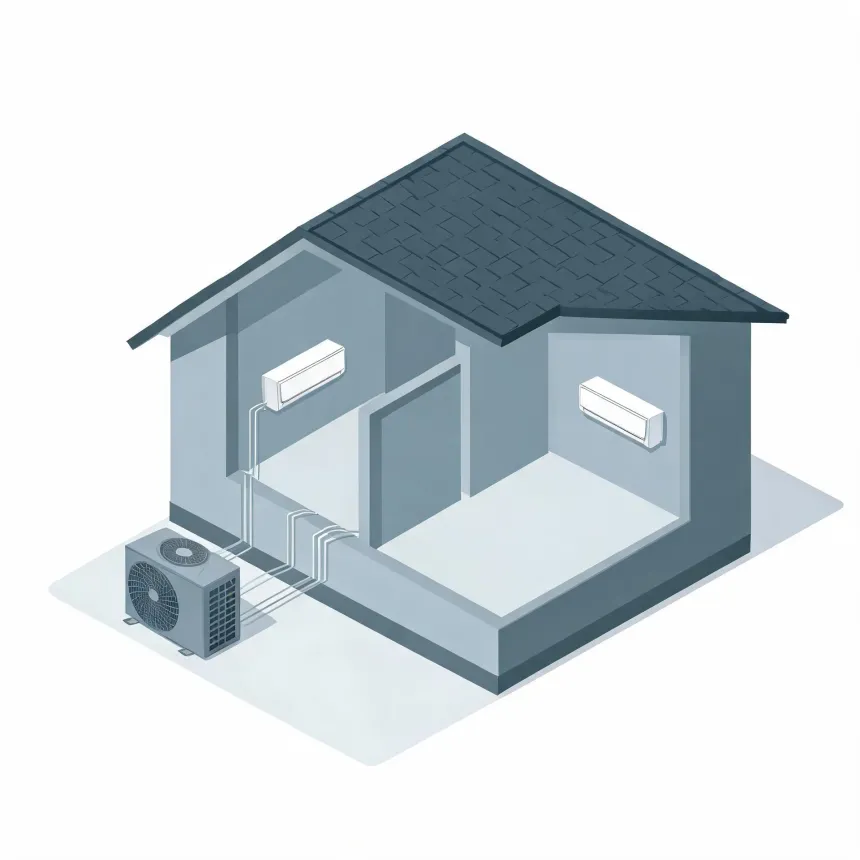
- For most homes here, yes, since the same system handles both winter heat and summer cooling. Homes in Santa Maria need heat from November through May and cooling from July through September, so a system that does both from one unit covers nearly the whole year. A mini split also heats and cools only the rooms it serves, so a bedroom addition or a room over a garage that never gets even temperature can get its own comfort without extending ductwork. Whether it makes sense for your house depends on which rooms need it and what's there now, and a contractor can walk through that with you.
- How many rooms can a mini split cover?
- A single outdoor unit can run more than one indoor head, so one system can cover several rooms at once. Each indoor head serves one room or open area, so a two-bedroom addition might use two heads on one outdoor unit, while a larger install could run more heads off a single compressor. The right count comes down to the square footage and layout of the rooms you're conditioning, not a fixed rule. A contractor sizing the job will look at each room before deciding how many heads and how much capacity it needs.
- Can a mini split heat a whole house?
- It can, if there are enough indoor heads placed to reach every room. A mini split with one head in one room will only heat that room well, but a system designed from the start with a head in each living space can heat the whole house the way a central furnace does. Winter nights here average 40°F, so the heat pump needs to be sized for that kind of cold, not just for mild days. Most homes in Santa Maria heat with gas now, so a whole-house mini split is usually a different kind of system than what's already installed, and a contractor can size it against your coldest nights.