Mini Split Installation in Visalia, CA
A new system here will heat from October through May and cool from June through September every year. Tell us about the house, and a licensed contractor who covers Tulare County will get in touch.
Tell us about the job
It takes about a minute.
Your mini-split works almost the whole year here
In Visalia it runs nearly twelve months, heat from October through May and cooling through the four months after that. Winter lows near 31°F mean the heat pump has to work on cold nights, not just take the edge off, and summer afternoons near 84°F keep it running most days through the warm months.
A new unit installed now has to meet 14.3 SEER2 for cooling and 7.5 HSPF2 for heating, the federal minimum for split-system heat pumps. That is the floor a licensed installer sizes and sets up to meet, matched to the room it is heating and cooling.
- 8 months
- October through May, your system heats
- 4 months
- June through September, it cools
- 31°F
- the average winter night it heats against
- 84°F
- the average summer afternoon it cools against
NOAA nClimDiv, 1991–2020 normals
California requires HVAC contractors to hold a state license.
The Contractors State License Board tests contractors before they're licensed and keeps a record of who holds one. That license belongs to the contractor, not to any single job, so the same license that qualifies someone to install a furnace also covers a mini-split.
Because the license covers the contractor rather than this specific job, the protection on the installation itself comes from the local building office. In most California cities and counties, putting in a mini-split needs a permit, and an inspector checks the work once it's done.
Sources: California Legislative Counsel · Contractors State License Board
- Is a mini split worth it?
- For most homes here, yes, because a mini split handles both the heat you need from October through May and the cooling you need June through September with one system. Winter nights average 31°F here, and a heat pump mini split is built to keep working in that range without backup heat. It also skips the ductwork, so there's no air lost to a hot attic or a crawl space along the way. Whether it makes sense for your house depends on how many rooms you're trying to cover and what's heating them now, and a contractor can walk through that with you.
- How many rooms can a mini split cover?
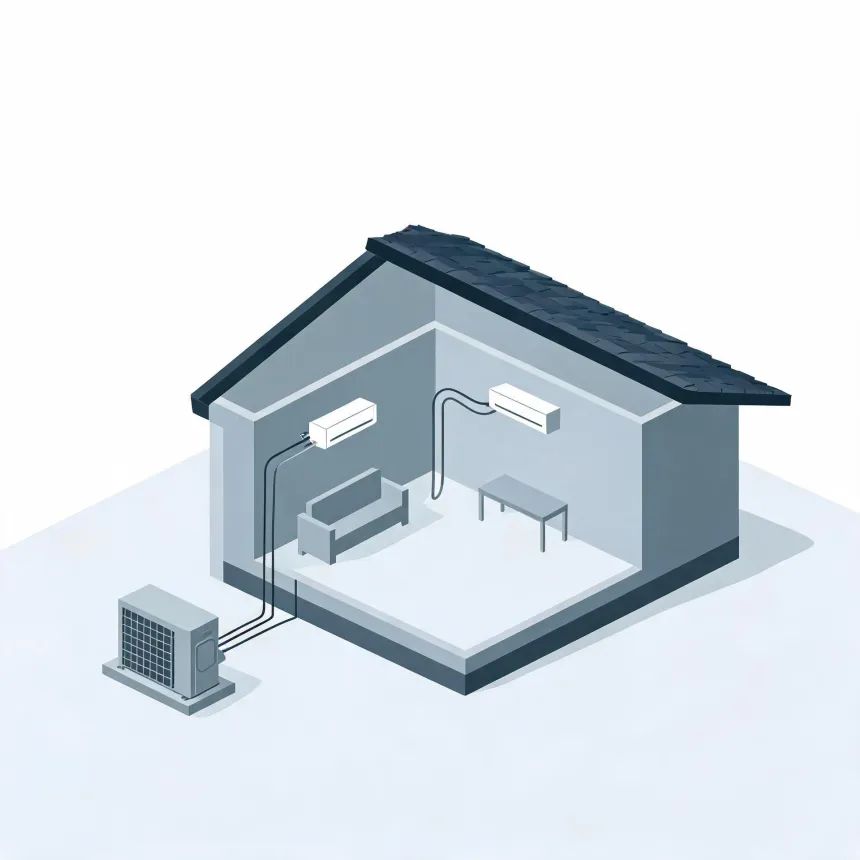
- A single outdoor unit can run one indoor head or several. Each indoor head handles one room or one open area, so a multi-zone system with four heads can cover four separate rooms, each with its own thermostat. The right number for your house depends on the size and layout of the rooms, which is something a contractor sizes on site rather than something you can guess from square footage alone.
- Can a mini split heat a whole house?
- It can, if it's sized and placed to reach every room, but a lot of whole-house jobs use a multi-zone system with an indoor head in each main room rather than one unit trying to cover everything. With winter nights here averaging 31°F from December through February, the system also needs to be rated to keep producing heat at those temperatures. A contractor can look at your floor plan and tell you how many zones it would take to heat the whole house evenly.