
It's off your list after this
Why your heat won't reach upstairs in California
Cold air pools downstairs and the upstairs bedrooms stay chilly even with the furnace running. Usually it's the ductwork, a blocked return, or the system struggling to push air that far. This page gets into why. Send the form and skip calling around to different HVAC companies to find out who can look at it.
Send it todayHeat rises on its own, so the air your furnace pushes out should reach the upstairs bedrooms without a fight. When it doesn't, the duct run to that floor is usually too long, too narrow, or kinked somewhere in the attic, and the furnace loses pressure before the air gets there. Sometimes it's simpler: a return vent upstairs that's closed, blocked by furniture, or was never sized to pull enough air back down. In a two-story house the thermostat downstairs also reads a room that heats up fast, so the furnace shuts off before the upstairs ever catches up. None of this means the furnace is failing. It means the air isn't getting where it needs to go, and that's a problem in the ducts and the setup, not the gas or the burners. Left alone, it just means paying to heat a floor that stays cold anyway.


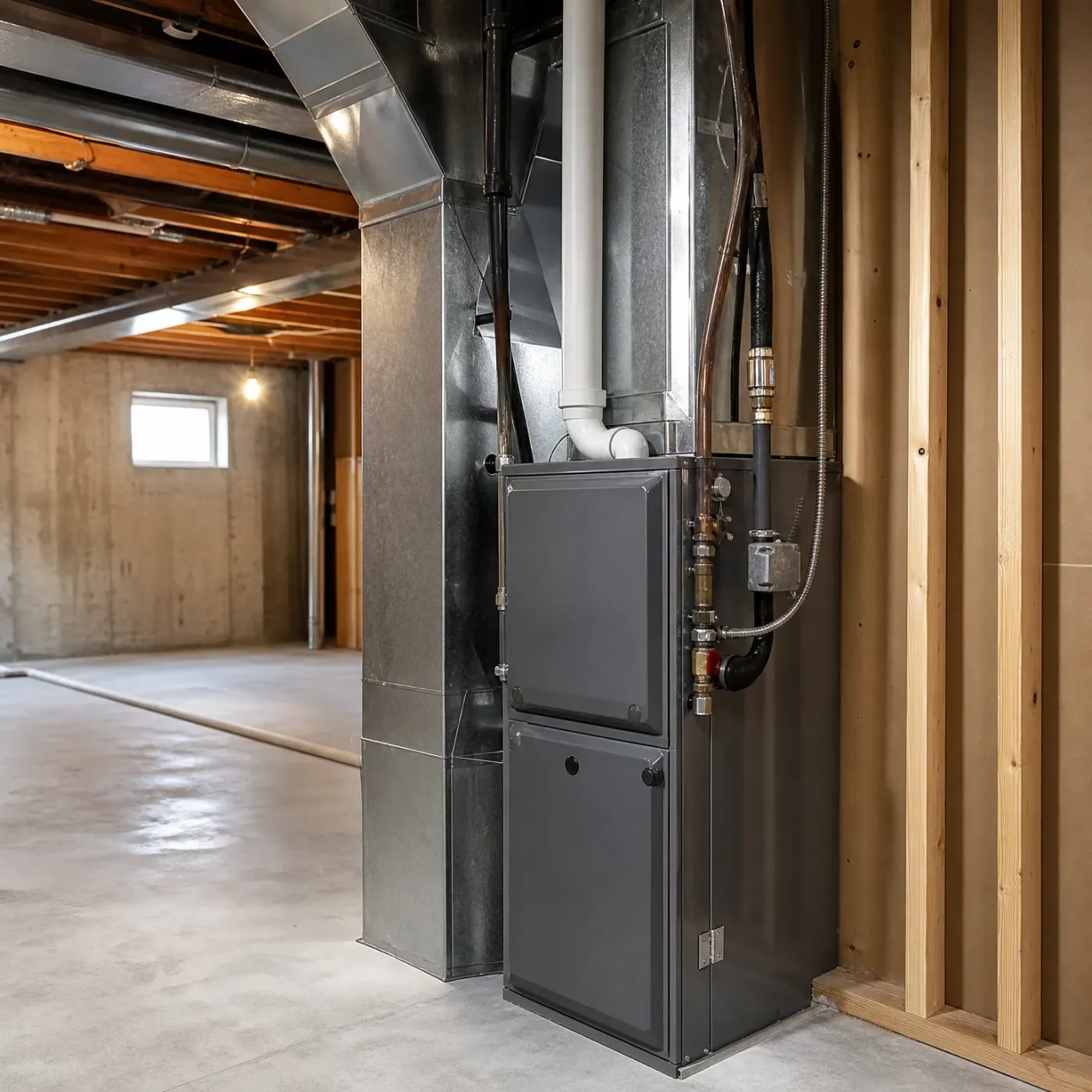
Your furnace moves a set amount of air, and every foot of ductwork between it and the upstairs registers has a say in how much of that air arrives. In a lot of California homes, the attic run is where things go wrong. Flex duct gets pinched where it crosses a joist, or someone steps on it during a repair and never knows. Insulation packed in around a duct can flatten it the same way, slow and quiet, with nothing visible from below. Downstairs usually has its own return grille pulling air back to the furnace. Upstairs often doesn't, so there's less pressure working in its favor to begin with. If one trunk line splits off to feed four or five rooms upstairs, each room gets a smaller share than the furnace was built to push out. And somewhere in that trunk line there's usually a damper, a simple metal flap that can get bumped or left half shut, cutting off air that was meant for the second floor before it ever gets there.
Where the air actually goes
- A furnace blower is sized to push air through the ducts as they were designed, not through a run that got pinched or crushed in the attic.
- Flex duct that bends sharply around a joist or gets stepped on loses airflow at that spot every time the furnace runs.
- The return air grille pulls room air back to the furnace, and if there's only one downstairs, the upstairs rooms never get that pull working for them.
- A duct run split too many ways to feed every upstairs room leaves less air for each one than the furnace was built to deliver.
- Insulation stuffed around a duct in the attic can crimp it flat without anyone seeing it happen.
- A damper in the trunk line can get bumped or left half closed, cutting off part of the air meant for the second floor.




Hand off the search today
Explain the job once and skip repeating it on every call.
After you send the request, you're done searching.
You only hire the pro if you want to.


Is one bedroom always colder than the rest of the house
You turn the furnace up and the hallway warms fine, but one bedroom upstairs stays cold enough that you keep a space heater by the bed. Maybe you hold a hand to the vent and barely feel air moving, or you hear the blower running hard without much coming out. Sometimes it's just the one room at the end of the run, sometimes it's the whole upstairs. Left alone, that room pulls more from a space heater or an electric blanket, and with power rates here, that adds up fast. It's also a sign the duct feeding that room is working harder than it should, and that doesn't tend to fix itself.

It's a January evening and the thermostat reads 70, but your kid's room upstairs is colder than that. You climb the stairs with a hand out, feeling for the vent. A thin stream of air comes out, barely warm, nothing like what's blowing downstairs by the furnace closet. The space heater is already plugged in by the bed, the one you bought last winter for this exact room. Outside it's cold enough that the heater's been running since five. You can hear the furnace cycling on and off downstairs, working, but whatever it's pushing out isn't making it up the stairs in any amount that matters.
Winter nights average 40°F statewide
California winter nights average 40°F, not the hard freezes some states get. That's mild enough that a furnace struggling to reach the upstairs still gets by most nights, which is why the problem can sit for a season or two before anyone calls someone about it.
NOAA nClimDiv 1991-2020 county normals weighted by homes


Why the upstairs stays cold
- A duct that's too long, too narrow, or crushed in the attic is the usual reason upstairs stays cold while the furnace runs fine.
- Gas furnaces are the norm here, and the issue is almost always the path the air takes, not the furnace itself.
- Mild winter nights let this kind of airflow problem sit for a season or two before it gets bad enough to deal with.
- Checking the vent for weak airflow tells you more than turning the thermostat up another few degrees.
- Sending the form means you're done searching for a contractor, calling around, and explaining the cold room more than once.
- Sorting through quotes and callbacks is the part that disappears once you submit the form, not the repair itself.
The furnace is almost never the problem. Somewhere between the unit and the upstairs vents, the duct run is too long, too narrow, or got crushed where it bends around a joist in the attic, and the air loses pressure before it finishes the trip. That's why the downstairs feels fine while the bedroom above stays cold enough for a space heater. California winter nights average 40°F, mild enough that this kind of airflow problem doesn't force anyone's hand right away. It can sit for a season or longer before it's bad enough to deal with, which is usually how it goes unnoticed until the cold room becomes routine. Holding a hand to the vent and feeling for weak airflow tells you more about what's wrong than nudging the thermostat up another few degrees ever will. Once you know it's the path the air takes and not the furnace itself, the next step is getting someone to look at the actual duct run, not just the equipment. That's the part that takes time on your own: finding a contractor who does this kind of repair, calling around to see who's available, explaining the cold bedroom and the weak vent more than once, then sorting through quotes and waiting on callbacks. Sending the form means that search is done. You're not left comparing names or repeating yourself to the next person who picks up. The room still needs the same fix either way, but finding who does it stops being your job.

Stop chasing a furnace pro
Skip searching for a furnace pro and answer a few questions instead.