Side profile of a bearded man wearing a faded dark blue baseball cap and a matching dark T-shirt against a plain light gray background.

Why your house is so dusty in California

Duct and vent cleaningDucts or ventsCalifornia
Step 1 of 2

What ZIP code is the job in?

The dust is coming through your ducts. Every time the furnace or the air conditioner kicks on, it pulls air through the return and pushes it back out through every vent in the house, and whatever is riding in that air, dust, pet hair, skin cells, gets spread room to room and settles on every flat surface. A dirty filter makes it worse, but even a clean one only catches so much, and dust that builds up inside the duct walls themselves keeps shedding into the airstream long after you vacuum. With warm, dry stretches for much of the year here, windows stay open less than you'd think and the system runs often enough to keep recirculating what's already inside rather than bringing in fresh air. If the ducts haven't been cleaned since the house was built or since you moved in, that buildup has had a long time to collect. Cleaning them out addresses the source instead of just the surfaces you can see.

A basement with a gray furnace on a concrete pad connected to large sheet-metal ducts running along an exposed wood joist ceiling, with PVC pipes and plastic sheeting on the walls.
Sealed, well-fitted ductwork moves air through the house without picking up anything extra along the way.
Galvanized sheet metal HVAC ductwork with a vent grille running along a wooden joist ceiling above a bare concrete wall.
Gaps and loose joints in the duct run pull in dust from the joist bay and send it straight out your vents.

Your return duct runs at negative pressure. That means a gap in it does not leak air out, it pulls air in, from the attic, the crawlspace, wherever that section of duct happens to run. The blower pulls that air in and pushes it out every vent in the house, and it does this several times an hour, all day, because the fan still has to move air through the warm months here even without humidity to fight. None of that air passing through a duct gap ever reaches your filter. The filter only cleans what passes through it, and air entering downstream of it skips that step completely. Flex duct makes this worse where it sags between the joists. Dust settles in those low spots and gets picked back up every time the system cycles. So the dust in your house is not just coming from inside your house. Gas furnaces push a lot of air to heat efficiently, and that air is only as clean as the path it travels. A duct system with gaps or sagging runs is pulling in more than it should, every single time it kicks on.

Where the dust gets in

  • The return side of your duct system runs at negative pressure, so any gap there draws in air instead of losing it.
  • Attic space, crawlspace or garage air gets pulled through those gaps and carried straight into your living space.
  • A forced air system cycles the full volume of air in the house several times an hour whenever it runs.
  • The blower keeps running during the warm months here even without the heavy air you'd get elsewhere, so the pull on those gaps doesn't let up.
  • A filter only catches what passes through it, so air entering downstream of the filter, through a duct gap, skips that step entirely.
  • Flex duct that sags or kinks between the joists collects dust along the low spots and sheds it back into the airflow.
An older man with gray hair and a beard stands in a dimly lit entryway wearing a dark hooded coat dusted with snow, with a lit table lamp, framed picture, and front door with glass panels behind him.
An older man with gray hair and a beard, wearing a dark snow-dusted jacket and scarf, stands smiling in a dimly lit entry hall with a lamp, wooden front door and staircase behind him.
A gray-haired bearded man in a dark coat with snow flecks on the shoulders stands just inside a dimly lit home entryway, with a lamp, framed pictures, sofa and candle-style lights in the background.
An older man with gray hair and a beard, wearing a dark coat and scarf dusted with snow, stands in a warmly lit home entryway with an arched doorway, lamps, and a living room visible behind him.

California's dry air means dust rides easier and settles slower, so a duct leak here carries more of it into the house than the same leak would somewhere humid.

Gas furnaces push air through the ducts for most of the year here, so a dirty or leaky duct run gets more passes to redistribute what it's carrying, not fewer.

A woman with dark shoulder-length hair sits wrapped in a gray fleece blanket on a sofa with an open book on her lap, beside a lit lamp and a dark window.
A smiling older woman with gray shoulder-length hair in a cream cable-knit turtleneck sweater stands behind a wooden board holding a round loaf of bread, in a warmly lit kitchen with a dark window and shelves behind her.
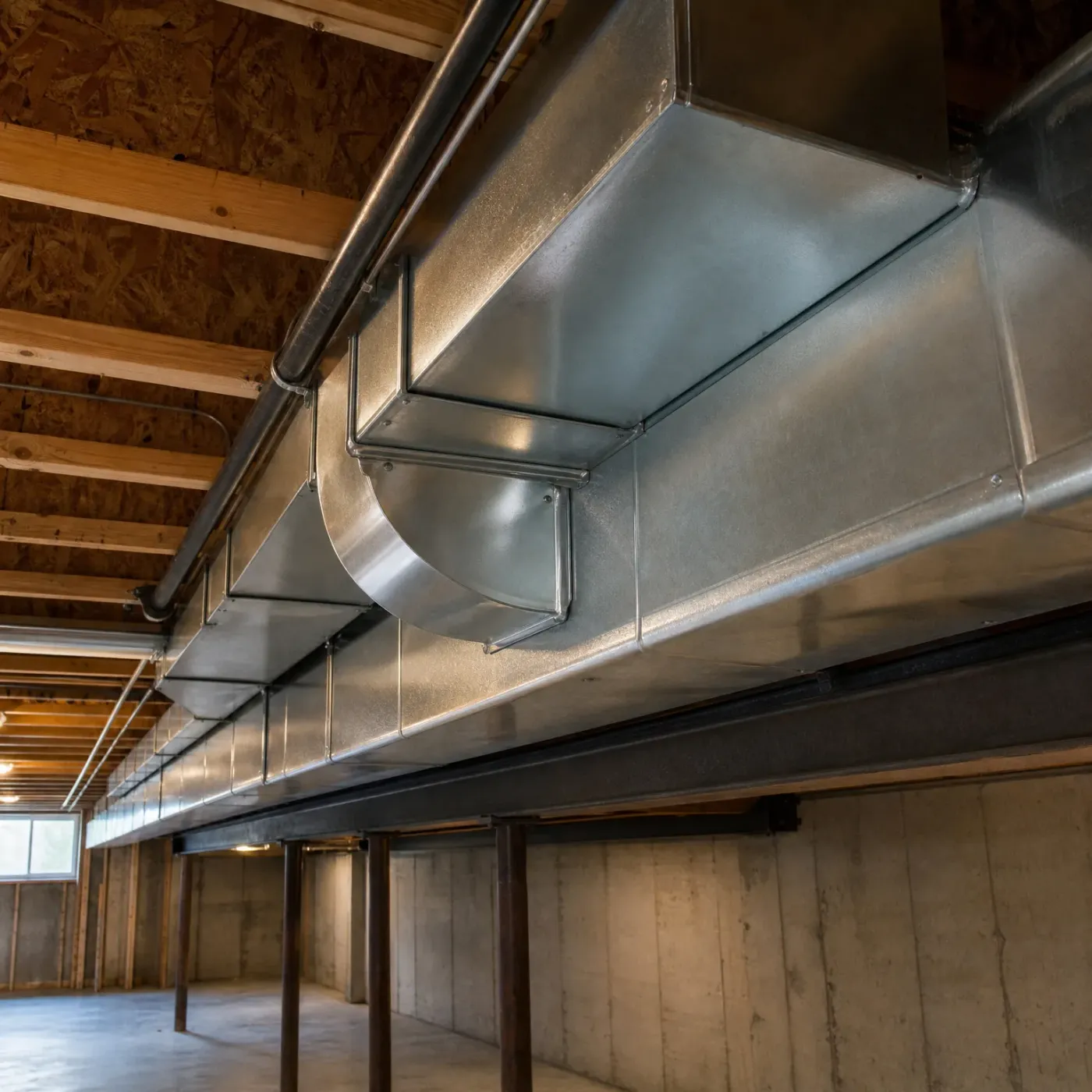
Unfinished basement with galvanized sheet-metal rectangular and round ductwork running along a wood-joist ceiling, two steel support columns, a small window, and a furnace unit against the far right wall.

Ductwork sealed and intact

This is what a clean run looks like: metal joints banded tight, flex duct supported so it doesn't sag between the joists, and the plenum boxed in square at the furnace. Air goes from the furnace to the vent and nothing joins it along the way.

An unfinished basement with bare concrete walls and floor, showing exposed wooden floor joists, pipes, wiring, and metal HVAC ducts with a vent grille overhead.

Ductwork open to the joist bay

Here the seams have gapped and the branch ducts pull loose where they meet the trunk line. Every time the system cycles, those openings draw in whatever is sitting in the joist bay and send it out through your vents with the rest of the air.

Basement ceiling with galvanized sheet metal rectangular ducts and round pipes running between wooden joists above a bare concrete wall and floor.
Before you get your ductwork cleaning
Unfinished basement with bare concrete walls and floor, showing exposed wood floor joists overhead with sheet-metal rectangular ductwork, insulated flexible ducts, and pipes.
After you get your ductwork cleaning
Galvanized sheet metal HVAC trunk ducts and branch takeoffs running below a wood-joist ceiling in an unfinished basement with concrete walls, steel support columns and a concrete floor.

A local pro for your ductwork cleaning

Fill out one short form instead of calling around.

Your duct cleaning request goes to a local pro who does this work.

Skip the search

Asking costs nothing, and the choice to hire stays yours.

Why does my house stay dusty even after I clean it?

You vacuum, you wipe every surface, and two days later the same gray film is back on the TV stand and the windowsills. That cycle alone tells you the dust isn't coming from your shoes or the open window. Something in the house is generating or moving it faster than normal housekeeping can keep up with, and most people don't think to look at the one system running air through every room all day.

Your duct system is resupplying the dust as fast as you remove it

Cleaning a surface only deals with dust that has already landed. Your furnace and air conditioner are still cycling air through the house the whole time, and if that air is picking up dust from a leaky return or a gap in the duct run, it's putting down a new layer about as fast as you take the old one away. With a gas furnace running for months at a stretch and California's dry air keeping dust airborne longer instead of settling into corners, a duct leak here puts more of it back into circulation than the same leak would somewhere with heavier, wetter air. Wiping surfaces treats the symptom. The ductwork is the source.

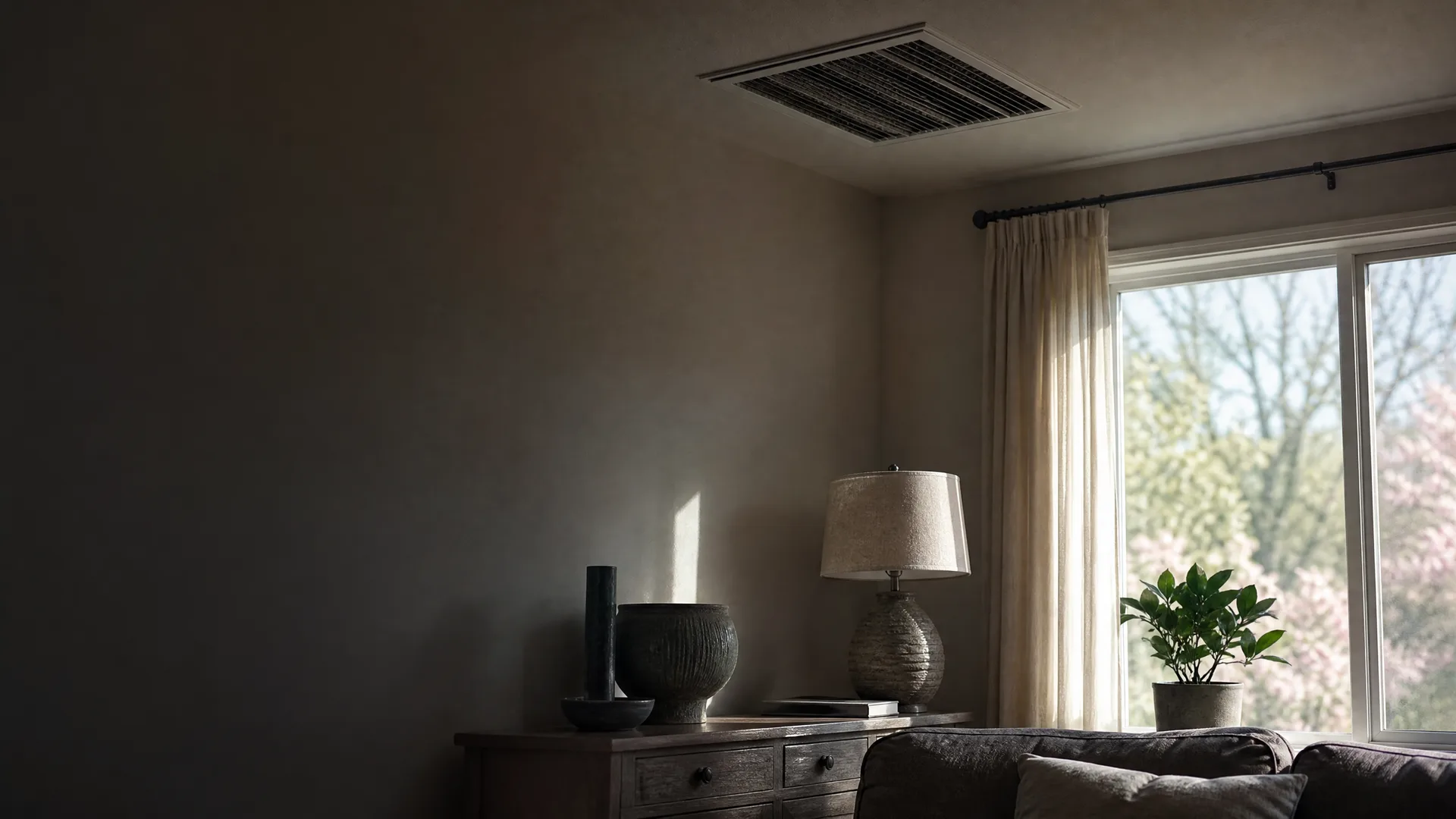
A dim living room corner with a ceiling air vent, a curtained window showing blossoming trees, a table lamp and dark ceramic vessels on a wooden dresser, a potted plant, and a sofa in the foreground.

The light comes in low through the front window, that flat spring light before the heat sets in. You're on the couch with your coffee and you look up at the ceiling vent, the one above the side table. There's a gray fringe along the grille, thick enough to see from across the room. You wipe the side table every few days and it never stays clean long. The lamp base has a film on it. The leaves of the plant next to it look dull instead of green. Outside it's dry, the kind of spring day where nothing feels damp, and somehow that makes the dust on the table stand out more, sitting there in the light instead of settling into any moisture in the air. You run a finger along the grille slats without meaning to and pull it back gray.


Power costs 31.35 cents per kilowatt-hour statewide

At 31.35 cents a kilowatt-hour, pulling extra air through a leaky duct run costs more here than almost anywhere else, since the furnace blower and the AC both have to work through it. A sealed system doesn't just keep dust down, it keeps that draw off a power bill that's already steep.

EIA-861 2025 statewide residential average

What the Dust Comes Down To

  • Dust that comes back days after cleaning is being carried by your ducts, not tracked in from outside.
  • Gaps in the return pull dust from the attic, crawlspace or garage every time the furnace or AC runs.
  • California's dry air lets that dust travel further and settle slower than it would somewhere humid.
  • A gas furnace that runs most of the year here means more hours spent pushing dust through a leaky run.
  • Sealed, intact ductwork moves air to the vents without adding anything to it along the way.
  • Finding out which part of your duct run is doing this takes a look at the system itself, not another round of wiping surfaces.

Your ducts are either sealed or they aren't, and that difference shows up on your windowsills before anything else tells you. Dust that resettles within a couple of days isn't coming through the door or off your shoes. It's riding the air your furnace and AC push through the house every time they cycle on, and if there's a gap anywhere on the return side, that air is picking up whatever sits in the attic, crawlspace or garage along the way. California's dry air doesn't make the dust, but it lets it travel further and hang in the air longer before it lands, so a leak here shows up on your furniture faster than it would somewhere with more humidity. A gas furnace that runs most months of the year just means more hours for that cycle to repeat.

None of this tells you where the actual gap is. That takes someone looking at the joints, the plenum, the runs behind your walls and under the house, the kind of look you can't do yourself with a flashlight and a Saturday afternoon. The alternative is what most people already know too well: searching through contractors, calling a few, describing the same gray film on the same windowsill three or four times, then trying to compare quotes for work you can't fully evaluate yourself. Getting matched with someone who already does this work and having them reach out directly skips that part. The duct system itself still needs a look. That part doesn't change.

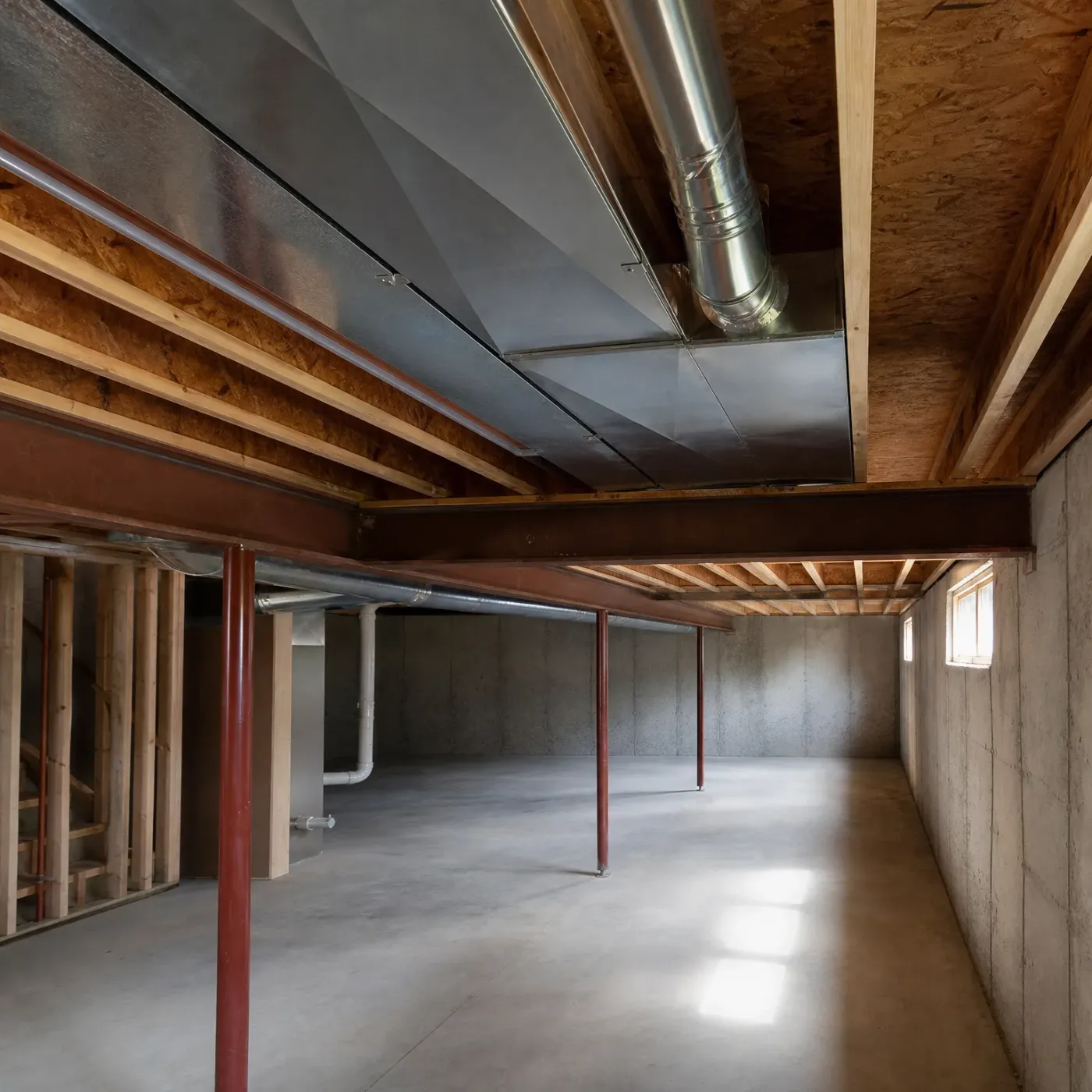
Unfinished basement with bare concrete walls and floor, exposed wood floor joists and steel beams, red support columns, and galvanized metal ductwork and pipes overhead, with a small window on the right.

Get the right pro for your ductwork

Skip the calls

Explain the job once and skip repeating it on every call.

No fee to send it, and nothing to sign.