AC Maintenance in Bakersfield, CA
Air conditioners here run from May through September, so April is the time for a tune-up. Tell us about your system, and a licensed contractor who covers Kern County will get in touch.
Tell us about the job
It takes about a minute.
Five months of heat in a row wears on a system
Your air conditioner runs from May through September here, with summer afternoons averaging 93°F. That is five straight months of long run times, not just a few hot weeks. The compressor and the fan motor carry that load day after day, and the strain adds up over a season, not in one afternoon.
A tune-up before the heat sets in checks the refrigerant charge and the electrical connections, the parts most likely to fail under a long, steady load. It catches a weak capacitor or a dirty coil while the system is still cooling the house, not after it has quit on the hottest day of the year.
- 5 months
- May through September, your air conditioner is on duty
- 93°F
- the average summer afternoon it cools against
- 8 hail events
- in ten years, and hail bends the fins on outdoor coils
- 711 wind events
- in ten years, and wind drives debris into outdoor units
NOAA nClimDiv, 1991–2020 normals

Book your AC tune-up in April, before homes here start needing cooling in May.
- Jan
- Feb
- Mar
- Apr
- May
- Jun
- Jul
- Aug
- Sep
- Oct
- Nov
- Dec
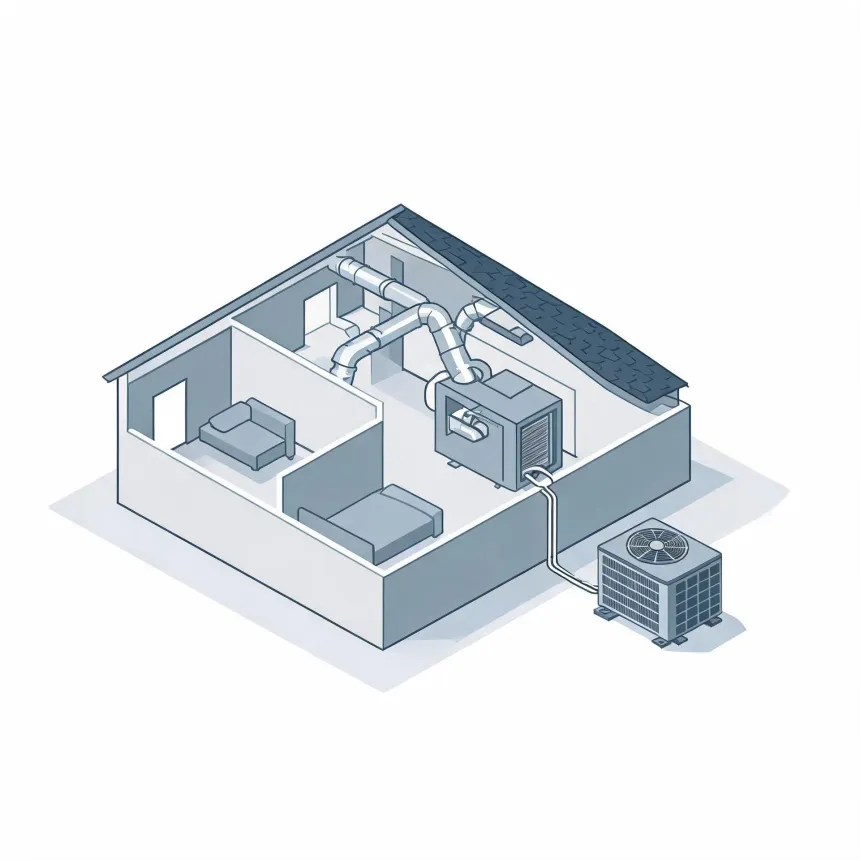
A tune-up checks the refrigerant charge, cleans the coils, tests the capacitor and tightens the electrical connections.
California requires HVAC contractors to hold a state license.
That license comes from the Contractors State License Board, and it belongs to the contractor, not to the job. The board tests contractors before they're licensed and keeps a record of who holds one. It doesn't sign off on each visit to a home, so the license tells you the contractor was checked, not that this particular job was inspected after the fact.
For a maintenance visit on an air conditioner, that license is what stands behind the work. If the technician opens the refrigerant side of the system to check the charge or deal with a leak, federal law also requires EPA Section 608 certification, the same requirement that applies in every state. That certification is separate from the license, and it exists because refrigerant has to be handled and recovered a specific way no matter where the work happens.
Sources: California Legislative Counsel · Contractors State License Board
- What does AC maintenance include?
- A technician checks refrigerant pressure, cleans the condenser coil, tests the capacitor, and looks over the electrical connections. They also check airflow across the indoor coil and make sure the condensate drain isn't clogged. The thermostat gets checked too, so it's calling for cooling and reading the temperature right. In Bakersfield, where the unit runs hard through summer highs near 93°F, a clean coil and correct refrigerant charge matter more than they would in a milder climate, since the system has less room to work around a problem.
- How often does an air conditioner need maintenance?
- Once a year, ideally before the heat sets in. Bakersfield homes only need cooling from May through September, so scheduling service before that stretch begins gives a contractor time to catch anything before five months of hard running start. A capacitor that's weakening or a coil that's picked up dust over the year won't show up as a problem until the unit is actually working against 93°F afternoons.
- Is AC maintenance worth it?
- Yes, because most compressor failures and refrigerant leaks start as small problems that maintenance catches early. A dirty coil or a weak capacitor makes the compressor work harder, and over five months of highs near 93°F, that strain adds up. Skipping maintenance doesn't mean the unit stops working right away. It usually means it fails on one of the hottest days instead of a mild one.