
HVAC Installation in Bakersfield, CA
A new system here will heat from November through April and cool from May through September every year. Tell us about the house, and a licensed contractor who covers Kern County will get in touch.
Tell us about the job
It takes about a minute.

Bakersfield asks a new system to work almost every month of the year
Summer afternoons here average 93°F, and that heat runs from May through September. Winter brings six more months of heat calls, November through April, with nighttime lows averaging 37°F. That leaves only one month when a system gets to rest.
A new system has to be sized to handle both ends of that range, not just the one you're thinking about today. Most homes in Kern County heat with gas, so if you're replacing a furnace alongside the air conditioner, a licensed contractor can size both to work together instead of one straining to make up for the other.
- 6 months
- November through April, your system heats
- 5 months
- May through September, it cools
- 37°F
- the average winter night it heats against
- 93°F
- the average summer afternoon it cools against
NOAA nClimDiv, 1991–2020 normals
California requires HVAC contractors to hold a state license.
The license is held by the contractor, not tied to this one job. The state tested that contractor and keeps a record of them under the CSLB, and that record covers whatever work they take on, this installation included.
For a system installation like this one, the license is what stands behind the contractor's qualifications, but the work itself gets checked separately. In most cities and counties in Kern County, putting in a new furnace, air conditioner or heat pump needs a permit from the local building office, and the work gets inspected once it is done.
Sources: California Legislative Counsel · Contractors State License Board
- When should I replace my HVAC system?
- Replace it when repairs start coming often, or when a technician tells you a major part like the compressor or heat exchanger has failed. Age matters too. Once a system gets old, parts get harder to find and it loses efficiency even when it is still running. Here the system works most of the year, heat from November through April and cooling from May through September, so a failing unit does not get much rest between seasons. If you are patching the same system more than once a year, replacement is usually the better move.
- Should I replace my furnace and air conditioner at the same time?
- If both are old, yes, it usually makes sense to do them together. A furnace and air conditioner installed at different times can end up mismatched, with the newer unit working around the limits of the older one. They also tend to wear out around the same time when they started life together. A contractor can look at both and tell you whether one still has years left or whether pairing them now is worth it.
- What happens during an HVAC installation?
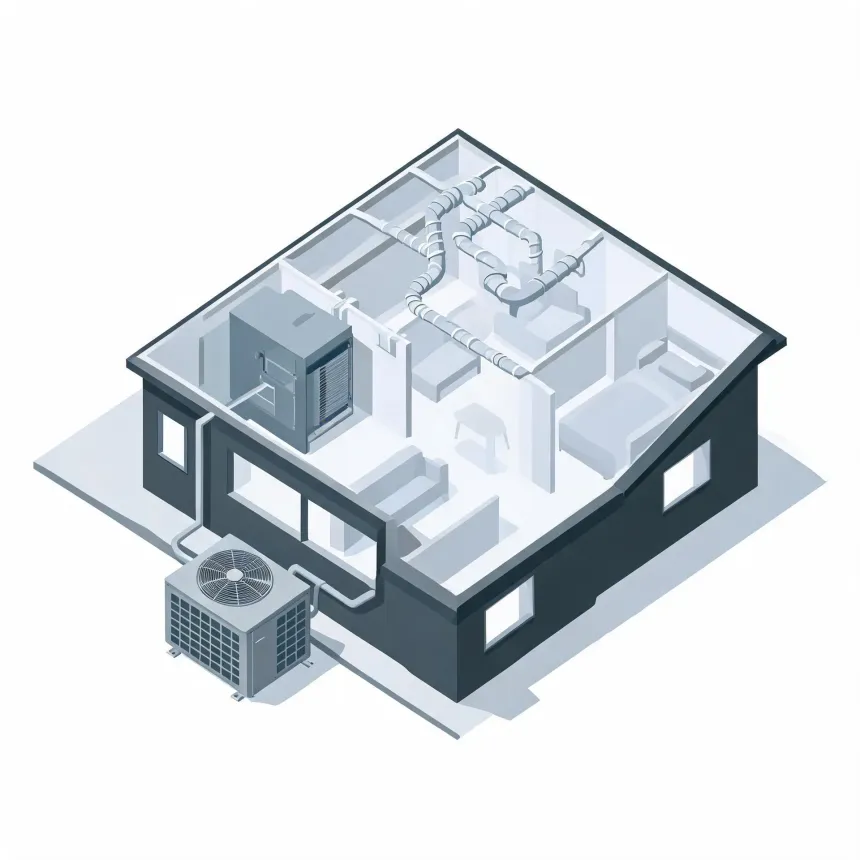
- A contractor first sizes the new equipment to the house, checking the ductwork, insulation, and how the old system performed. On installation day, the old furnace and or air conditioner comes out, and the new equipment goes in, including the coil, the line set for the outdoor unit, and any duct or vent work needed to connect it properly. Once it's in, the contractor tests it, checks refrigerant levels and airflow, and walks through the thermostat and any new controls with you. In California, the contractor doing this work has to hold a state license, so it is worth asking to see it before work starts.