Heat Pump Repair in Oxnard, CA
Homes here need heat from November through May and cooling from July through September. If your system quits, tell us what it's doing and a licensed contractor who covers Ventura County will get in touch.
Tell us about the job
It takes about a minute.
Your heat pump runs almost year round here
Oxnard asks for heat from November through May and cooling in July through September. That is 10 months of the year your heat pump is working, with only a short break between them. Winter nights averaging 38°F keep the system in heating mode for long stretches rather than cycling on and off, and summer afternoons near 83°F keep it working through the afternoon and into the evening.
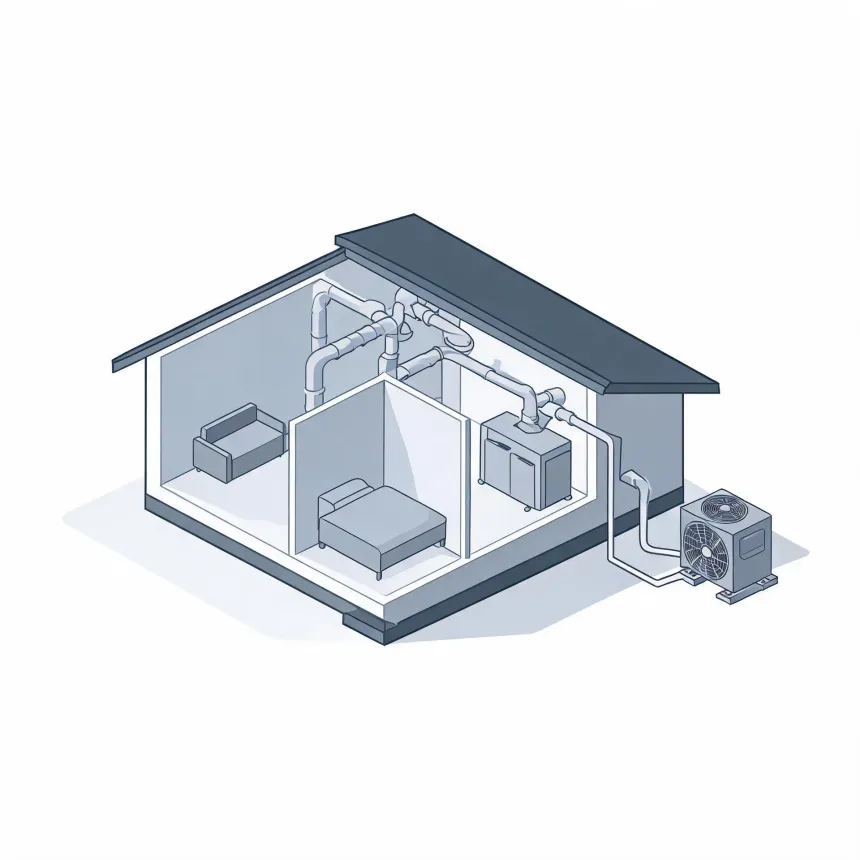
That kind of steady run time wears on the compressor and the reversing valve, the part that switches the system between heat and cooling. When the reversing valve starts to stick, you may notice the system blowing cool air when you asked for heat, or it keeps running without warming the house. Power matters too. Across California, 17 percent of households lost power for at least 24 hours in 2024, and most heat pumps need a reset before they will run again once power comes back.
- 7 months
- November through May, your system heats
- 3 months
- July through September, it cools
- 38°F
- the average winter night it heats against
- 83°F
- the average summer afternoon it cools against
NOAA nClimDiv, 1991–2020 normals
California requires HVAC contractors to hold a state license.
The Contractors State License Board is the one that tests and licenses HVAC contractors in California, and that license belongs to the contractor, not to this one repair. It is a record you can check before anyone touches your heat pump, not a certificate written for this specific job.
A heat pump repair almost always means opening the refrigerant side of the system, and that part of the work falls under a separate federal rule. Whoever handles the refrigerant has to hold EPA Section 608 certification, no matter what state they work in. In California, the contractor's license is what stands behind the repair as a whole, and the 608 certification is what covers the refrigerant work inside it.
Sources: California Legislative Counsel · Contractors State License Board
- Why is my heat pump blowing cold air?
- In defrost mode, your heat pump runs the outdoor fan while it clears frost off the outdoor coil, and during that time the indoor unit can blow air that feels cool. That should only last a few minutes at a time. If cold air is constant, the system may have lost refrigerant, or the reversing valve that switches it between heating and cooling has stuck. A contractor licensed by the Contractors State License Board can check the valve and the refrigerant charge.
- Why is there ice on my heat pump?
- A heat pump normally builds a light coat of frost on the outdoor coil in cold weather, then melts it off during a defrost cycle. If ice is thick, covers the coil, or never melts, the defrost cycle isn't kicking in, or airflow across the coil is blocked. Low refrigerant also causes the coil to run colder than it should and ice over. Clear away anything blocking the outdoor unit and have a contractor look at the defrost control and the refrigerant level.
- Why is my heat pump running but not cooling?
- If the outdoor unit is running but the air coming from your vents isn't cold, check the air filter first, since a clogged one chokes off airflow across the indoor coil. Next check that the thermostat is actually set to cool and set below the room temperature. If both check out, the system may be low on refrigerant or the outdoor coil may be dirty enough to block heat from releasing outside. Either of those needs a contractor to diagnose, since low refrigerant means there's a leak somewhere in the line.