
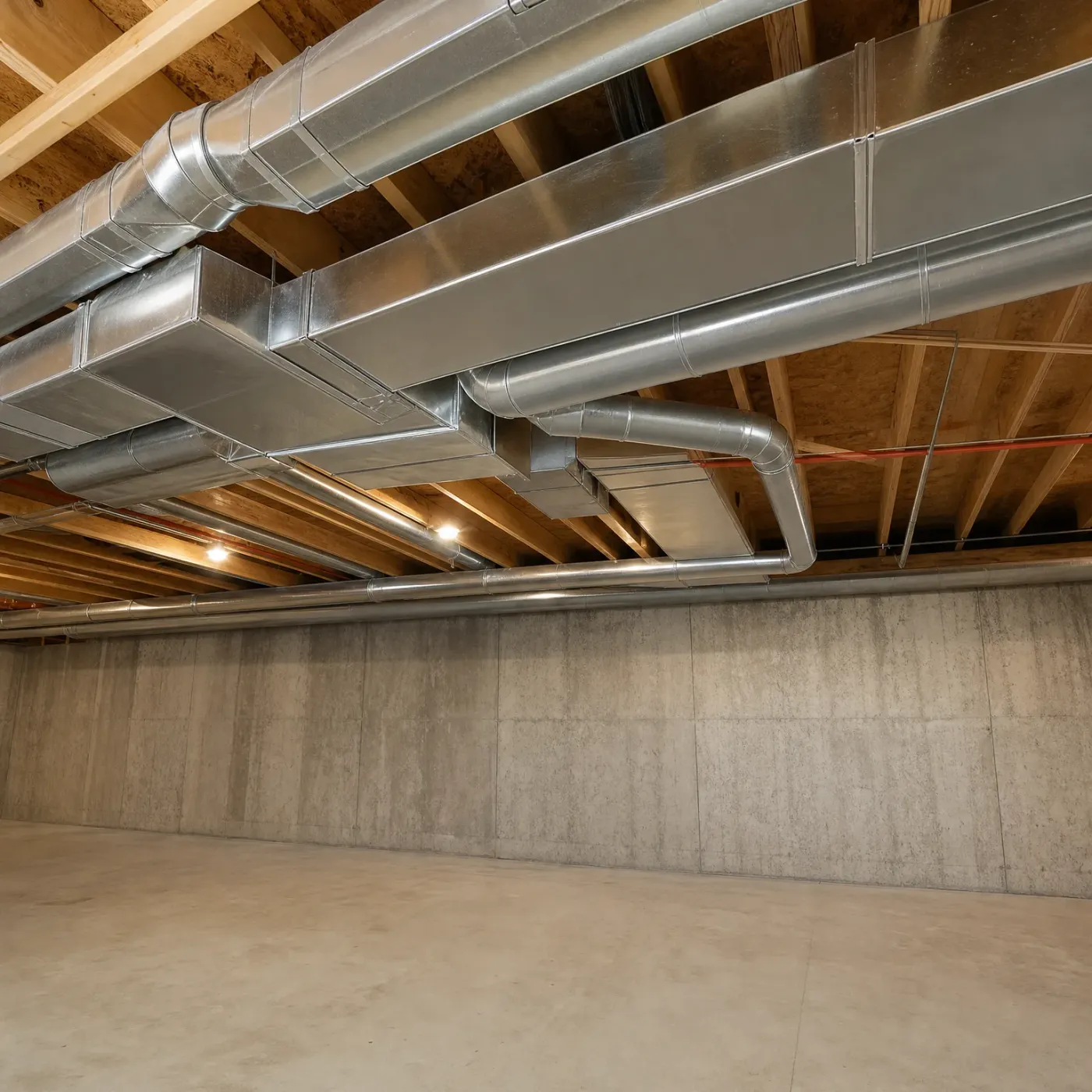
Before
Air coming through the vents carries that musty edge with it, especially right after the AC kicks on and the coil is wet.
That musty smell is almost always moisture sitting somewhere in the duct system, usually on the evaporator coil or in the drain pan underneath it. San Diego air doesn't carry much humidity, but the coil itself gets cold and wet every time the AC runs, and if the condensate drain is slow or the coil stays damp between cycles, mold starts growing right there and the blower pushes that smell through every vent in the house. Dirty filters make it worse because dust sitting on a wet coil is exactly what mold needs. Sometimes the smell is in the ductwork itself, especially if a return leaks and pulls in air from an attic or crawlspace. It's not dangerous to run the system while you sort it out, but it won't go away on its own, and the longer the coil stays wet, the more buildup a cleaning has to remove. A contractor can check the coil, the drain line, and the ducts to find exactly where it's coming from.
Half the homes here were built by 1980
Ducts in a house built by 1980 have had decades to collect dust and debris, which gives moisture something to cling to and go stale.
Heat runs November through April
Cooling runs June through September here, so the coil sits wet for four months straight most years, long enough for a smell to settle into the ductwork.
Cooling runs June through September
Heat runs November through April, which means the same ducts go half the year without any airflow to dry out what the summer left behind.
ACS 2020-2024 · NOAA nClimDiv 1991-2020
The coil does the cooling, and cooling means pulling moisture out of the air. That water has to go somewhere, and in a working system it drips down into a pan and out through a thin PVC condensate line. That line is narrow enough that algae, dust, or a bit of debris can block it. Once it's blocked, water has nowhere to go but back up into the pan, where it sits instead of draining. Standing water next to a dark, enclosed coil cabinet is exactly where a musty smell takes hold.
Airflow matters too. A blower wheel caked with dust, or a filter that's been in place too long, slows the air moving across the coil. Slower airflow means the coil takes longer to dry out between cooling cycles, so it stays damp longer than it should. Once the smell is there, the return ducts pull it through the system and every vent in the house ends up carrying it.
Flex duct is part of why the smell lingers. The insulation wrapped around that duct can hold moisture and odor well after the coil itself has dried. And if duct joints aren't sealed tight, the system can pull in air from the attic or crawlspace along the way, adding to what comes out the vents. A contractor who works on these systems locally knows to check the drain line and the coil first, since that's where this almost always starts.
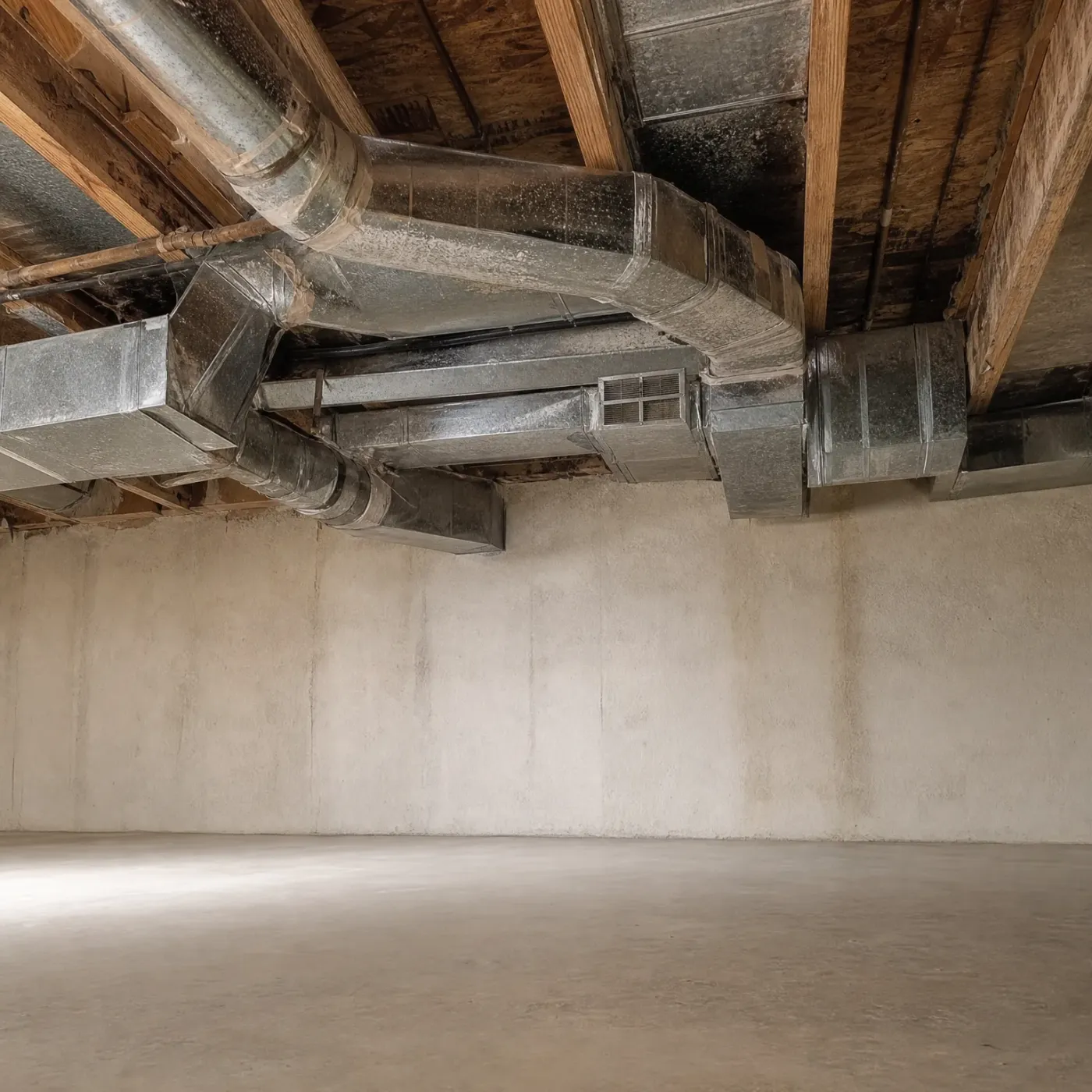

It's late April, warm enough that you've got the ceiling vent open in the living room. Light comes in flat and bright across the couch. You run a finger along the grille and it comes back gray. Looking closer, the slats are furred with dust, and a thin film of it has settled on the side table and the arm of the couch underneath. The air coming out doesn't feel damp, just faintly off, like a closet that hasn't been opened. You've kept this house in good shape for years, so the smell catches your attention more than it might otherwise. A local contractor who works on duct systems all over San Diego County would know in a few minutes whether that grille is telling you something about what's sitting further back in the line.
The pro who gets in touch is licensed in California and works in San Diego County.
There's no charge for the request.
Run a bottle of vinegar or a wet-dry vac down the condensate line and the smell can back off for a while. That clears the line, not the dust sitting in the ducts themselves or the film on the coil. Dust doesn't rinse out on its own. It sits on the coil fins and along the duct walls, and every time the coil sweats, that moisture soaks back into it. A few weeks later the smell is back, because the part that was actually holding onto it never got touched. Clearing the drain line solves drainage. It doesn't solve what's growing on the surfaces the water keeps touching.
Duct cleaning works the dust and debris out of the supply and return runs, and a coil cleaning gets at the fins directly, the surface the smell keeps coming from. Together they take away the material that holds moisture after the cooling cycle ends. A local contractor who services this equipment every summer knows which duct runs in a San Diego house tend to collect the most, since houses here hold onto that dust for months without a hard freeze or heavy rain to help clear it. One contractor means one visit, one assessment of your actual ducts, not a string of calls from companies guessing at what's wrong.


Air coming through the vents carries that musty edge with it, especially right after the AC kicks on and the coil is wet.
Air moves through clean ducts and across a clean coil, with nothing left behind for it to pick up on the way to the room.
You'll catch it most when the AC first kicks on, a damp, closed-up smell that fades after a few minutes. Dust comes out of the vents faster than it should, settling on shelves and furniture again within days of cleaning. Some rooms, especially ones with vents that run near the coil, hold the smell more than others. If anyone in the house has allergies or asthma, you may notice more sneezing or stuffiness when the AC is running. None of this means the system is broken. It means moisture and dust have built up somewhere in the ducts or around the coil, and the air is carrying it through the house every time it runs.

The smell keeps coming back every time the AC cycles on, and the dust keeps settling back on the same shelf a few days after you wipe it. Nothing about the system changes on its own. The coil stays wet every run, the ducts hold what's already built up, and the film sitting on the coil stays put until something physically removes it. Months from now you're smelling the same thing, just more of it.

A local contractor who works on duct systems every summer knows where moisture tends to collect in a San Diego home and what a coil looks like after years of sitting wet. Cleaning out the ducts and the coil takes away what the moisture has been clinging to. Air moving through afterward has nothing left to pick up. You get matched with one contractor for your situation, not several calling at once.
At 42.22 cents per kilowatt-hour, running the blower longer than it needs to costs you more here than almost anywhere else. Dust-clogged ducts make the system work harder to push air through, and that extra runtime shows up on your bill before it ever shows up as comfort.
EIA-861 2025





The musty smell from your vents is moisture that's settled somewhere in the duct system, usually on the coil or in the dust that's built up over the years. That's the whole answer. Vinegar down the drain line or a new filter might knock it back for a week, but the ducts and the coil still hold what caused it in the first place, and the smell comes home once the AC's been running a few days.
A San Diego contractor who works on duct systems through the summer knows which part of your setup usually holds the problem, whether it's the coil, the drain pan, or dust packed into the runs themselves. Get matched with one who takes on jobs like this in your area, and they'll reach out to look at your system specifically, not a general case of what might be wrong.



A duct system pro near you
The pro who reaches out is licensed in California.
