









Signs your air ducts need cleaning in California

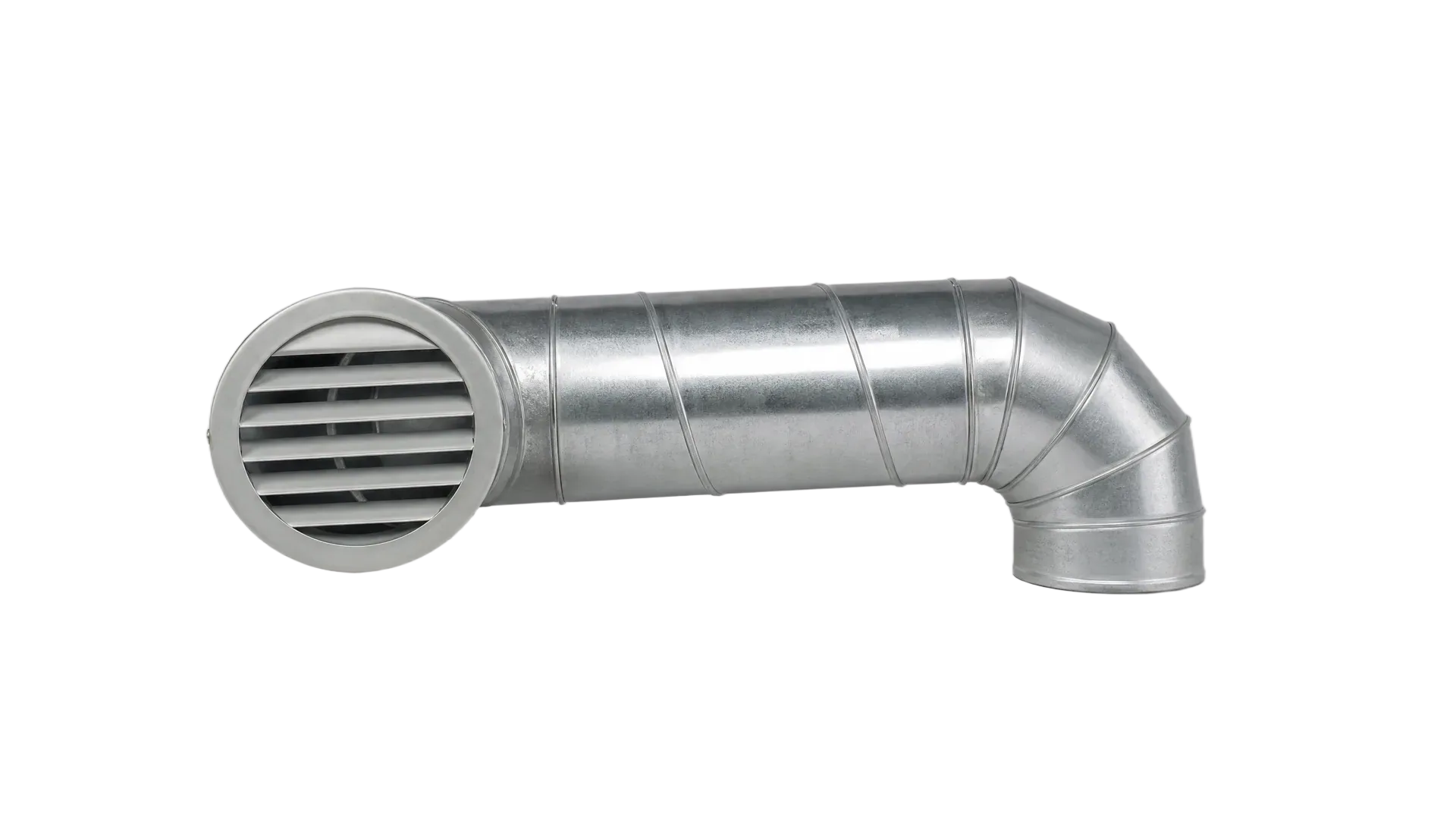
A galvanized steel round duct section with a 90-degree elbow at one end and a louvered vent grille at the other, photographed against a plain gray background.
Hand off the search

What are the signs your air ducts need cleaning?

You've noticed something off, maybe dust settling faster than it used to, or a musty smell when the AC kicks on. You're not sure if it's worth paying someone to look at the ducts or if you're imagining a problem that isn't there. With power costing what it does here, you want to know before you call anyone whether this is a real issue or just normal California dust working its way through the house.

Dust around the vents, a musty smell, and weak airflow are the clearest signs

If dust builds up fast around the vent covers, or you catch a musty smell when the air kicks on, that's dust and debris sitting in the ducts and getting blown into the room every time the system runs. Weak airflow from a vent that used to blow strong is another sign, usually meaning a buildup somewhere narrowing the path. Since most homes here run the AC all summer and the furnace all winter, air is moving through those ducts almost constantly, so buildup gets circulated through the house instead of sitting still. None of these signs mean the system is broken. They mean the ductwork needs attention before it keeps pushing dust and odors into rooms you spend time in.

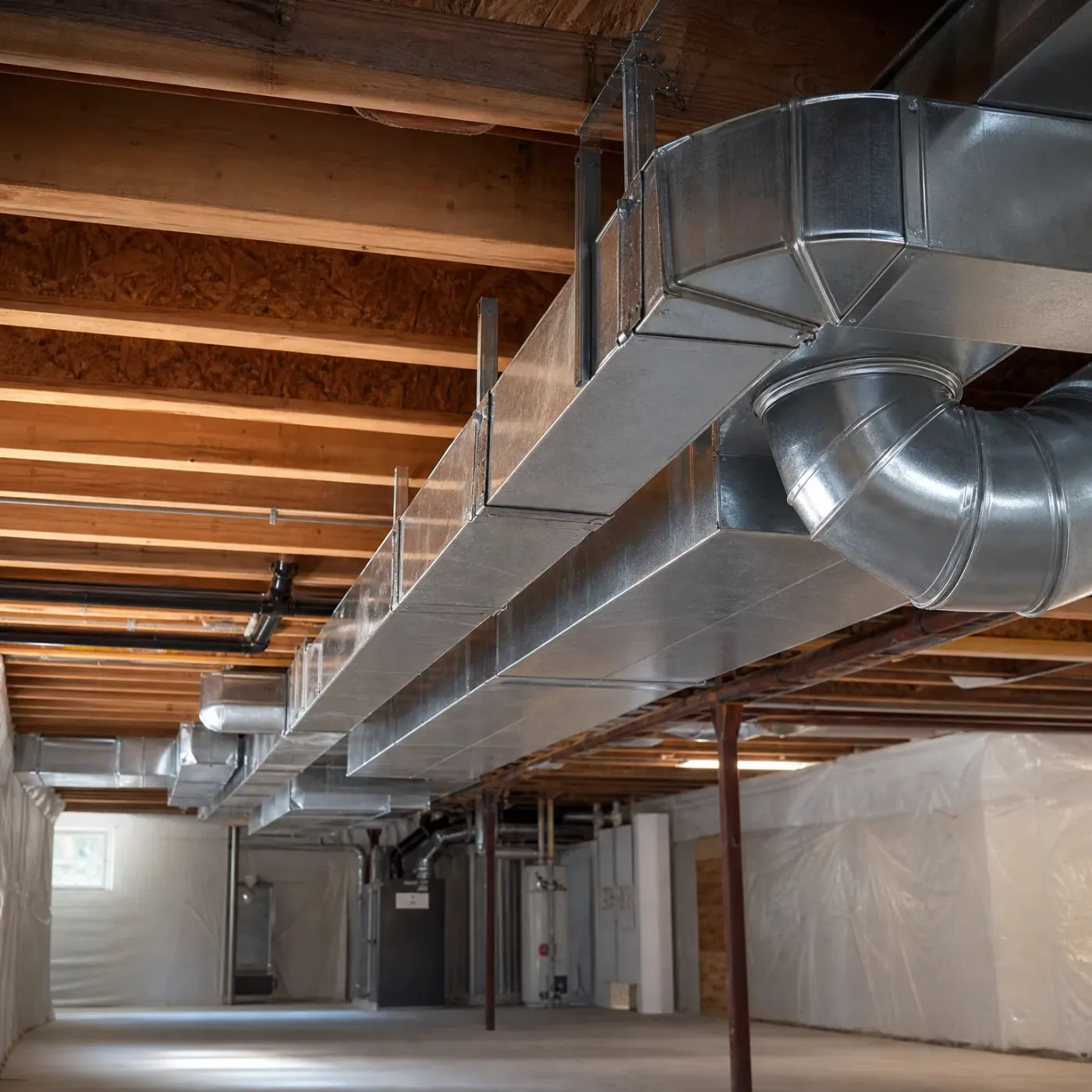
Unfinished basement interior with exposed wooden floor joists, galvanized rectangular and round sheet-metal ducts, a gray furnace unit at left, and a large blank light-colored wall at right.

Dust that returns within days

Wipe a shelf and check it again two or three days later. If a layer comes back that fast with the AC running, the supply vents are pushing it into the room. Ducts don't generate dust on their own. They collect what's already in the house, and a leaky return or a buildup inside the trunk line recirculates it faster than normal. A filter changed on schedule and dust that still piles up points at the ducts, not the filter.

Galvanized sheet metal ductwork with elbows and a vent grille running beneath an exposed wood joist and OSB ceiling, next to a blank white wall.

Uneven airflow room to room

Stand under a vent in the room that always feels stuffy and compare it to one that cools fine. A real difference in airflow between rooms, not just temperature, often means a blockage or a section of collapsed duct somewhere in the run. Since AC here works hard through the warm months, air has to move freely through every branch to keep rooms even. A duct that's restricted makes the system run longer to do the same job.

Power costs 31.35 cents per kilowatt-hour statewide

At that rate, every cubic foot of air your AC has already cooled is worth protecting. Clogged or leaking ducts make the system run longer to hit the same temperature, and in California that extra runtime shows up fast on the bill. Clean ducts mean less wasted cooling.

EIA-861 2025 statewide residential average

Dust you can see vs. mold you can't

Dust buildup is the sign you can check yourself. Run a finger along a vent cover or look at how fast a shelf gets gritty again after wiping it down. If it's bad, you'll know within a few days. Mold is different. It can sit inside the duct, past the first bend, where you'd never see it. A musty smell when the air kicks on is usually the only clue you get before someone opens the duct and finds it. Both are real reasons to get the system looked at, but one you can confirm from your living room and the other you can only guess at until it's inspected.

One vent vs. the whole house

Sometimes the problem is a single room. One vent blows weaker than the rest, or dust shows up heavier in one spot and not others. That usually points to a blockage or a disconnect somewhere in that one run, not the whole system. Other times every room has it: dust everywhere, the smell every time the AC runs, uneven cooling no matter which vent you check. That's a sign the problem is further back, at the main trunk or the return, where it touches every room the ducts feed. Either way the fix starts with someone tracing the duct run, not guessing from the vent cover.

A smiling man in a dark green shirt over a white t-shirt sits at a kitchen counter with a dark mug, looking off to the side, with shelves, plants and a bright living area behind him.
A man in a gray long-sleeve waffle-knit shirt smiles and looks off to the side in a kitchen with open shelving, a refrigerator, a wooden sideboard with a potted plant, and a glass door to the right.
A man in a dark green ribbed sweater stands smiling and looking off to the side beside a stone kitchen counter with a ceramic mug, with a dining table, pendant lights, and large windows in the background.
A bearded man in a gray long-sleeve shirt stands smiling and looking off-camera beside a kitchen counter with a white mug, with a living room, fireplace and wall-mounted television behind him.
Unfinished basement with galvanized sheet-metal trunk ductwork and round branch ducts suspended beneath wood floor joists, with support posts, plastic sheeting on the walls, and a furnace and water heater along the far wall.

It's off your list after this

Skip calling around for someone who cleans ducts.

Send the form and finding a duct cleaner is handled.

Skip the search

No fee to send it, and nothing to sign.

Unfinished basement with bare concrete walls and floor, exposed wood joists, and galvanized sheet-metal HVAC ductwork and pipes running across the ceiling.
Metal runs clean and tight at the joints, with nothing clinging to the inside surfaces you can reach or see.
Basement ceiling with galvanized sheet-metal ductwork, wooden joists and subfloor, black and white pipes, above a concrete wall and floor.
Dust cakes the seams where branches meet, and a line of grime tracks along the bottom of the duct.

Think about what's actually moving through those ducts into your kid's bedroom or your kitchen every time the AC runs. If the system is pushing dust back into the house, you're wiping the same shelf every few days and breathing the rest between wipings. A musty smell near a vent usually means moisture got into a duct run somewhere, and mold doesn't stay put once it has a food source and a way to spread through the house. None of this shows up on a utility bill as "ducts," but a system working against buildup inside the ducts runs longer than it should to reach the temperature on your thermostat, and with what power costs in California that extra runtime adds up over the summer. The risk isn't dramatic. It's a slow one: more dust in the air you breathe, a smell that doesn't go away on its own, and a bill that's higher than it needs to be for the cooling you're actually getting.

Empty basement room with bare concrete walls and floor, exposed wooden floor joists overhead, large galvanized sheet-metal ducts with a vent grille, colored pipes, and a single lit bulb.
Before you get your ductwork cleaning
Empty unfinished basement with bare concrete floor, insulated walls with vapor barrier between wood studs, exposed wood joists, galvanized sheet-metal ductwork, a recessed light, and a steel support column.
After you get your ductwork cleaning

You check it yourself

You already notice the small things, the dust that comes back fast, the musty smell when the AC kicks on. You can keep an eye on it, wipe the shelf again, crack a window when the smell shows up. That buys you some time and costs nothing. What it doesn't do is tell you what's actually built up inside the ducts themselves, or whether it's getting worse. You're managing what you can see on the outside of a system you can't see into, and guessing at the rest.


Someone looks inside

A contractor opens the vents and checks the runs themselves, not just what's settling on your furniture. That tells you what's actually in there, whether it's dust, debris, or something growing, and whether cleaning now gets ahead of it or it's already past that. You skip the part where you'd have to find someone, call around, and explain the problem more than once. Send the form and that search is off your plate. What's inside the ducts stops being a guess.

A smiling bearded man in a green t-shirt sits on a gray sofa, looking down toward a device at the bottom of the frame, with a bookshelf and a green plant blurred behind him.
A bearded man in a plaid flannel shirt stands indoors looking out a window at snow-covered conifers, with a ceramic mug on the wooden sill and wooden cabinets behind him.

What the signs actually tell you

  • Dust that returns within days, a musty smell at startup, and grime at the duct joints all point the same direction.
  • None of these signs need a contractor to confirm, you can check vents and shelves yourself before deciding to act.
  • Ducts that are dirty make the AC run longer to reach the same temperature, and that shows up on a California power bill fast.
  • Mold hides inside the duct run where you can't see it, so a clean-looking vent cover doesn't rule it out.
  • Catching this now, before the dust or the smell gets worse, is the same habit that keeps most small problems from turning into bigger ones.
  • Once you know what to look for, the only real decision left is who checks the ducts and clears what's inside them.

Everything that points to dirty ducts is something you can check in your own house, today, without a contractor's opinion to confirm it. Dust that comes back fast, a musty smell when the AC starts, grime sitting at the joints where duct sections meet. Each one on its own means something. Together they mean the air moving through your vents is carrying more than cooled air. Some of what's wrong you'll never see, since mold can sit inside a duct run with no sign at the vent cover, which is the reason a quick look isn't the same as knowing for sure. What all of this costs you shows up twice. Once in the house itself, in what's settling on the shelves and what you're breathing between cleanings. Again on the power bill, since ducts that are dirty or leaking make the AC work longer to hit the same temperature, and in California that extra runtime adds up fast. None of this is a reason to panic. It's a reason to act on it now instead of waiting for the smell to get worse or the dust to get heavier, the same way you'd deal with any small problem before it turns into a bigger one. The only thing left to figure out once you've checked these signs is who actually opens up the ducts and clears out what's built up inside them.

Dimly lit interior showing galvanized sheet-metal HVAC ductwork running below a wooden joist ceiling above a dark gray wall.

Stop chasing a duct system pro

Answer a few questions about the duct cleaning and skip the search.

Duct and vent cleaningDucts or ventsCalifornia
Step 1 of 2

What ZIP code is the job in?
