
Signs your ducts need cleaning in Los Angeles, CA

Start one form

You searched this because something made you wonder about the ducts in your house. Maybe it's dust that keeps coming back, or a musty smell when the AC kicks on, or you just can't remember the last time anyone looked at them. In Los Angeles, that search usually turns into an afternoon of its own: finding a few duct cleaning companies, calling each one, explaining your house and what you've noticed more than once, then sitting with quotes that are hard to compare because no two companies describe the job the same way. This page skips that part. Tell it what's going on, and it goes to one licensed contractor local to Los Angeles County, someone who works on duct systems in homes like yours all year and knows what to check first. No list of companies calling you back at once, no sorting through bids. Just the one call, to someone who already knows what you're dealing with.

The clearest sign is dust that resettles within a day or two of cleaning the house, along with a musty or stale smell when the AC kicks on. You might also notice more sneezing or stuffiness indoors than outside, or see dust blowing visibly from the vents when the system starts. Look at the vent covers themselves: a buildup of gray or black residue around the edges means it's inside the ducts too, not just on the surface. In Los Angeles, AC runs for months at a stretch through the warm season, and that steady airflow moves whatever is sitting in the ducts through every room over and over. Homes near busy roads or construction tend to pull in more of this through the return air. None of these signs alone means the ducts are the cause, but together they point there, and a look inside the system is the only way to know for sure what's built up and how much.

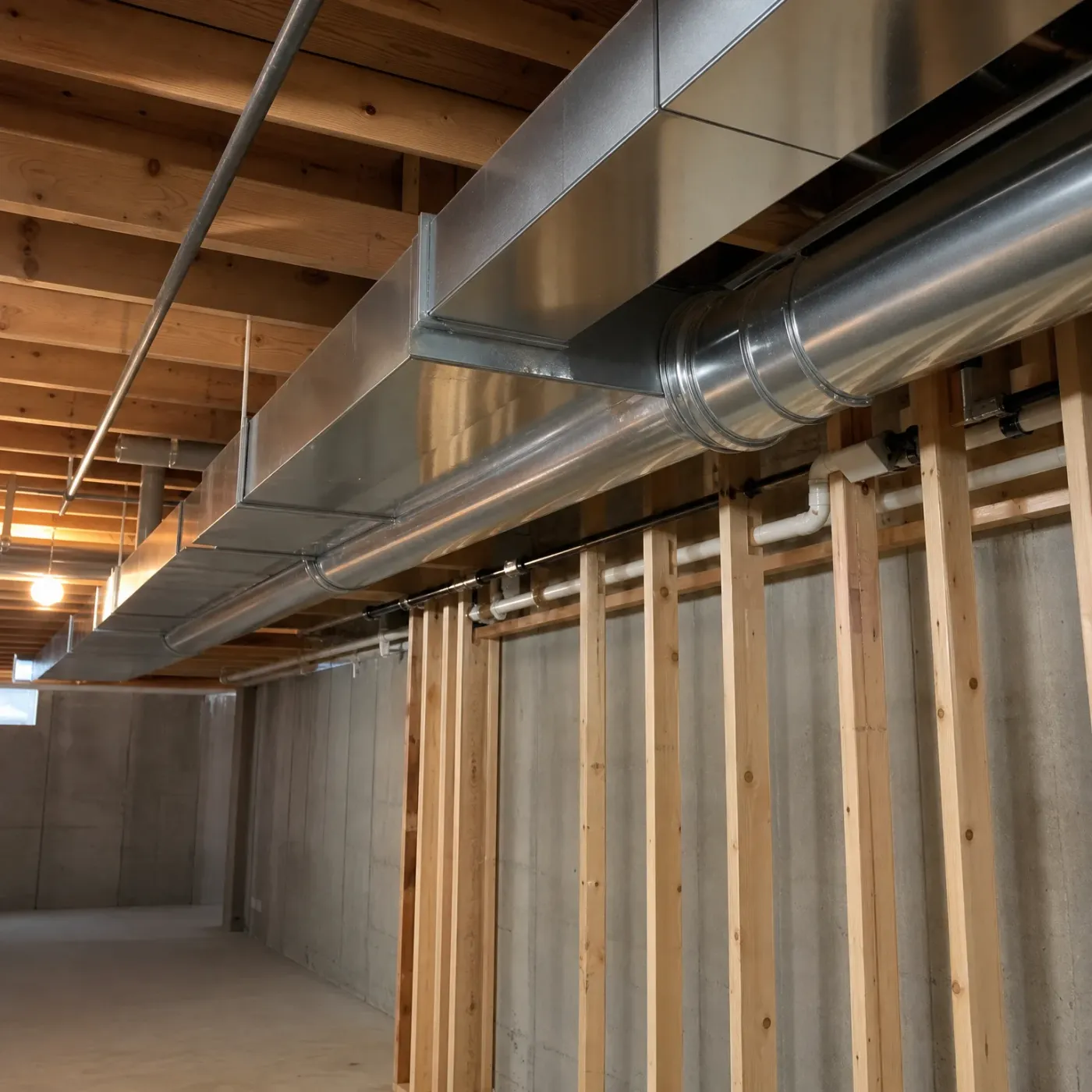
Empty unfinished basement with bare concrete walls and floor, showing galvanized sheet metal ductwork, insulated flexible duct, and pipes running along the wood-framed ceiling, with a small window at left.

Ducts running clean

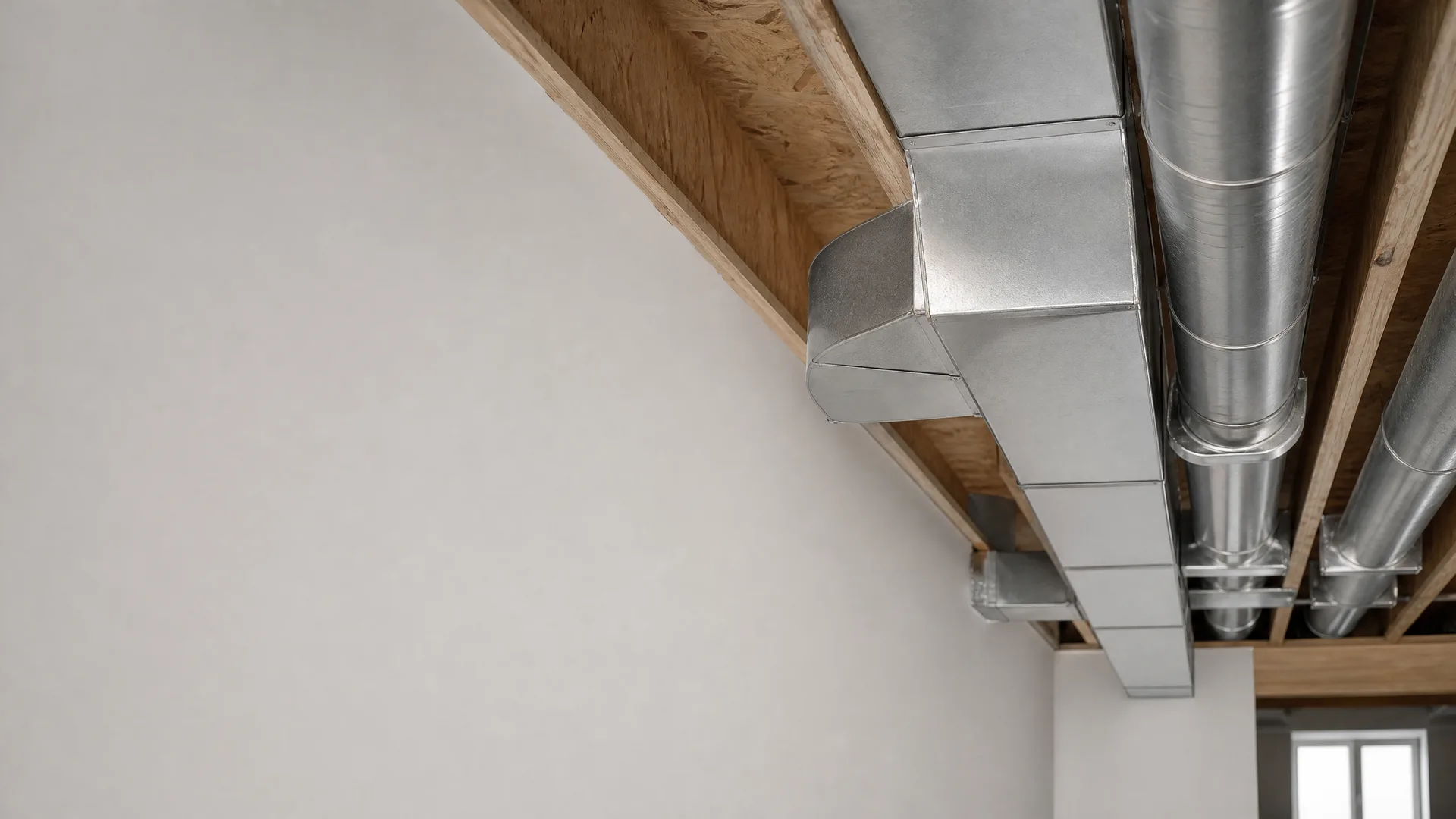
This is what a duct system looks like when air moves through it the way it should. The metal is clean, the joints are sealed, and nothing is blocking the path from the furnace to the vents in your rooms. Dust stays where it lands instead of cycling back through the house.


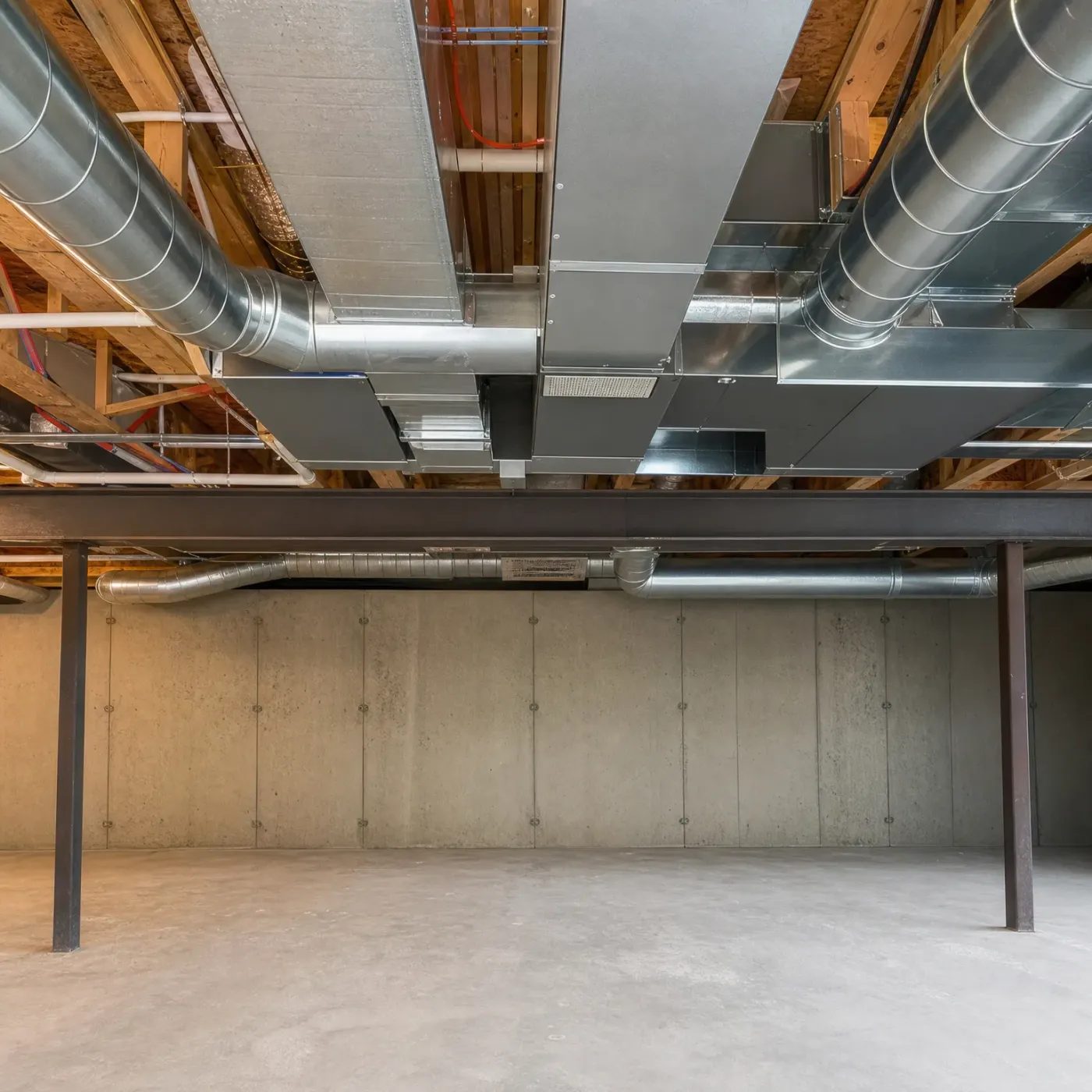
Empty basement room with bare concrete walls and floor, with exposed wooden joists, sheet-metal HVAC ducts, an insulated flexible duct, and pipes running across the ceiling.

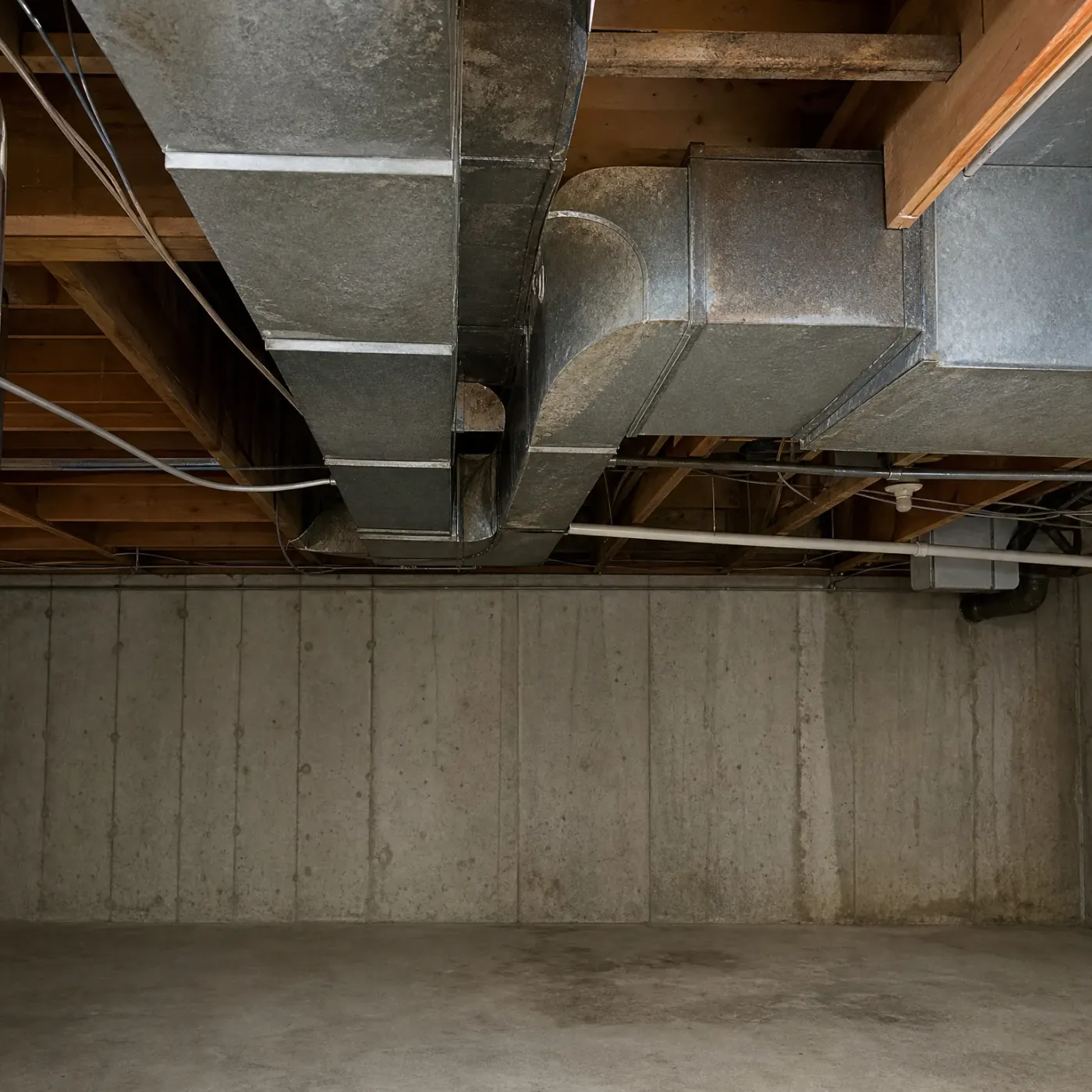
Ducts in trouble

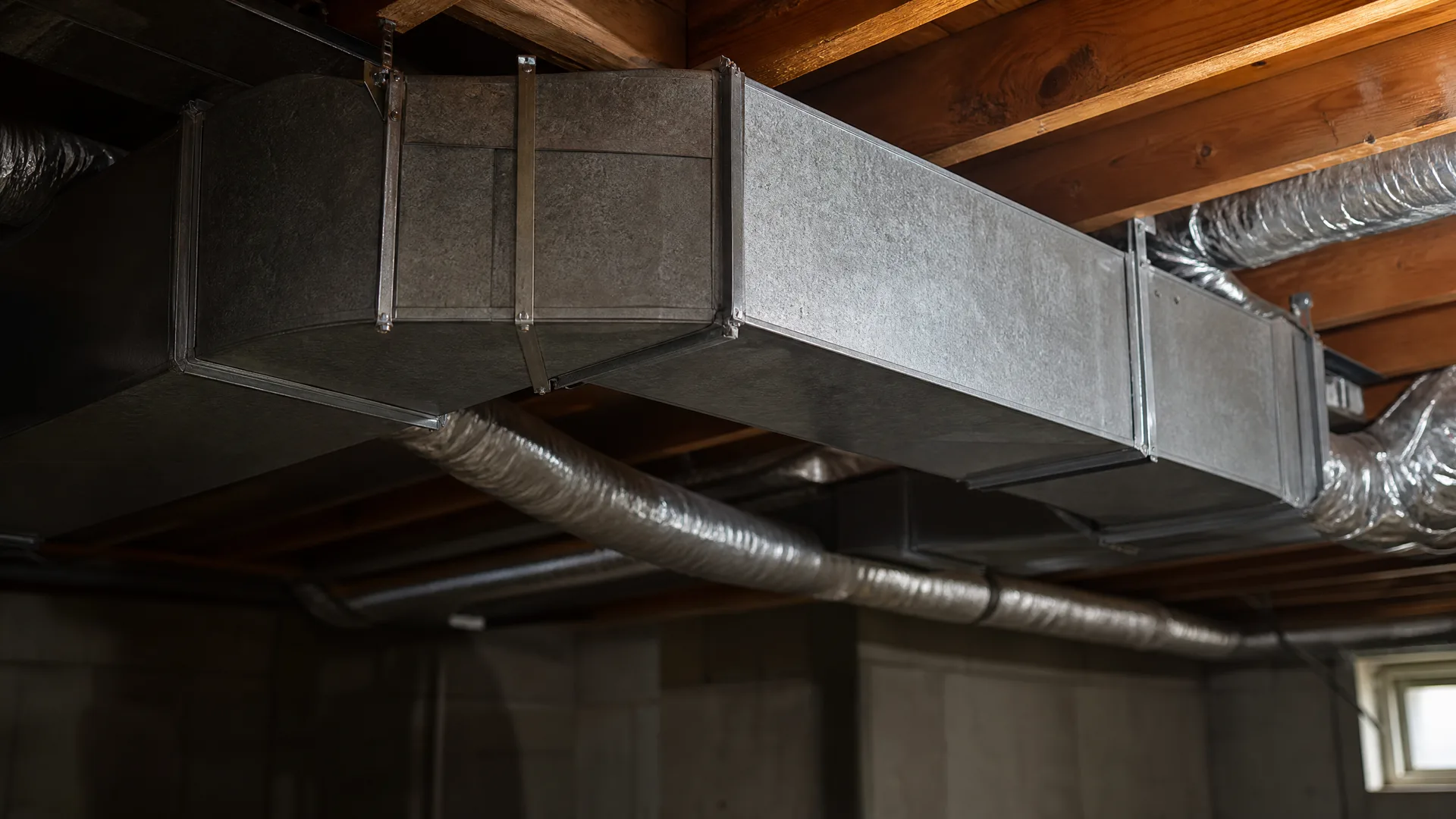
Flex duct sagging against the joists, wiring crossing the metal, insulation coming loose at the seams. Any gap here lets dust and attic or crawlspace air mix into what your AC is pushing out. This is the setup that leaves dust resettling fast and that musty smell when the system kicks on.

Why does duct dust seem worse in some Los Angeles homes than others?

  • Half the homes here were built by 1965

    Half the homes in LA County were built in 1965 or earlier, and older duct runs have had more years to gather dust and work loose at the joints.

  • Heat runs November through April

    Heat runs November through April here, about six months of air pushing through the same ducts your AC just finished circulating all summer.

  • Cooling runs June through September

    Cooling runs June through September, so for four straight months your ducts are moving air through every room almost daily.

ACS 2020-2024 · NOAA nClimDiv 1991-2020

Dust inside a duct run doesn't get washed away or dried out. It just sits on the metal, and every time the blower kicks on, some of it rides the airflow straight into the room you're sitting in.

That's why a duct system can look fine from the vent cover and still be pushing dust into your living room every time the AC or furnace runs. The problem is inside the run, not at the opening.

Empty basement room with bare concrete walls and floor, and an exposed ceiling of wooden joists with large galvanized sheet-metal ductwork and pipes.
Before you get your ductwork cleaning
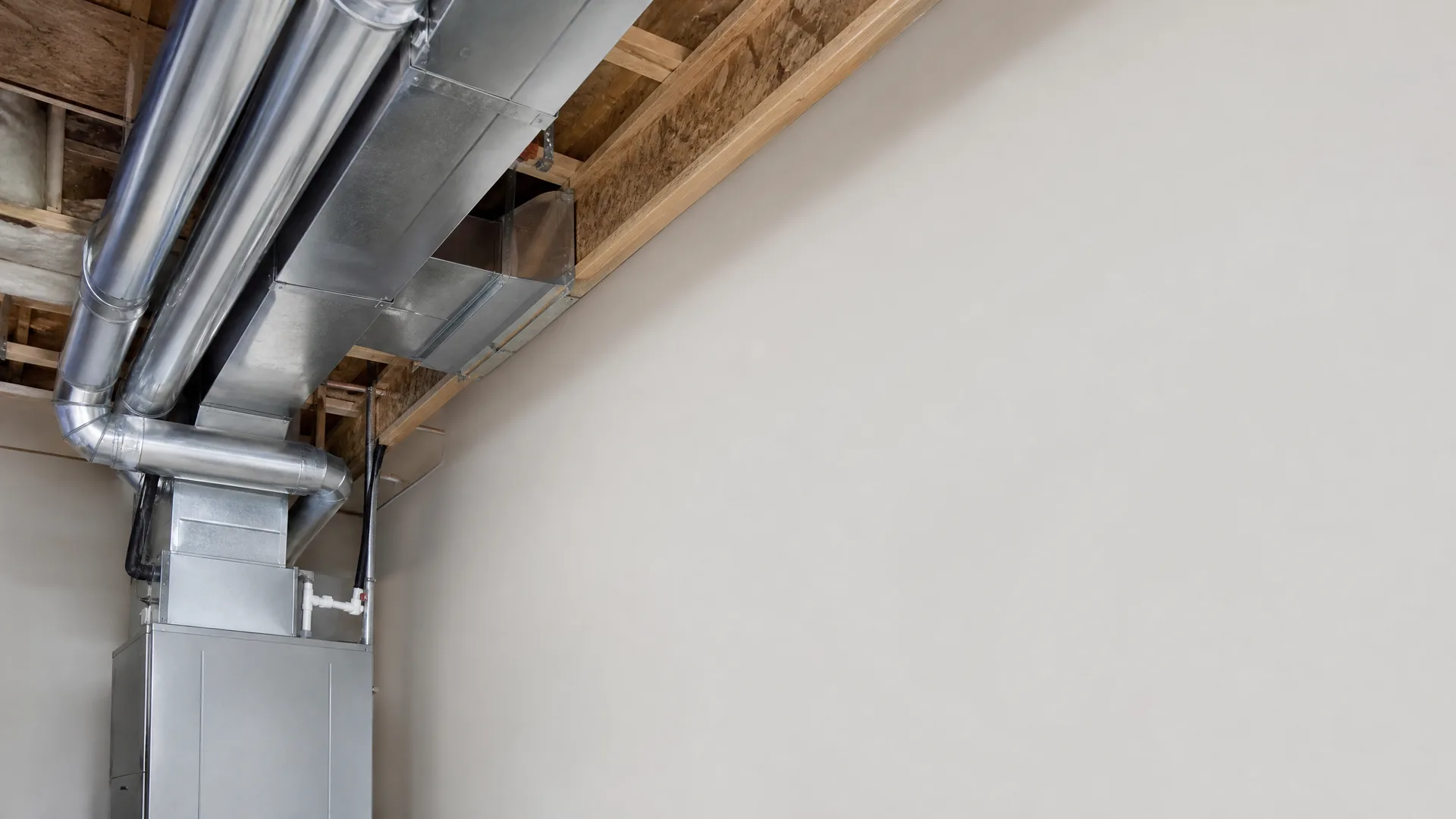
Unfinished basement with exposed wood joists, galvanized sheet-metal ductwork, insulated flex ducts, piping, a small window, and a furnace or air handler against a gray wall.
After you get your ductwork cleaning

What's settling in your house

Every day the blower runs, whatever is sitting in your ducts gets a little of it pushed into your rooms. You dust the shelves and a day later there's a film again. You wipe the TV stand and by the weekend it's back. If that's been going on for months, it's not your cleaning. It's the ducts feeding the house dust faster than you can keep up with it, and that won't change until the ducts do.

What it does to your air

Los Angeles summers already push people indoors to the AC, and winters send them to the gas furnace from November through April. Either way, that's air moving through the same ducts for months at a stretch. If there's dust or mold sitting in the line, you're breathing it on repeat every time the system runs. Anyone in the house who gets stuffy, sneezes more indoors than out, or notices a musty smell when the AC kicks on is dealing with that air directly, not just a dirty-looking vent cover.

A smiling woman with long brown hair in a cream sweater sits at a stone counter with a glass of red wine, with a dimly lit living room, beamed ceiling and glass doors behind her.
A woman with shoulder-length dark wavy hair in a beige sweater laughs while looking off to the side, seated at a white marble counter with a glass of red wine, in a dimly lit home interior with a kitchen and sofa in the background.
A smiling woman with long dark hair in a black sweater sits at a white marble counter with a glass of red wine, in a dimly lit kitchen and living area with pendant lights, a potted plant, and flowers.
A smiling woman with long brown hair in a light knit sweater sits at a stone-topped counter with a glass of white wine, with a dimly lit living room, sofa, fireplace and round mirror behind her.
Unfinished basement with exposed wood joists, galvanized rectangular and round ductwork, piping, stud framing against concrete walls, and a bare hanging light bulb.

No calling every shop in Los Angeles County

The pro who gets in touch is licensed in California and works in Los Angeles County.

Skip searching for a duct system pro and answer a few questions instead.

Find a licensed pro

It costs nothing to send, and you don't have to hire anyone.

Unfinished basement with concrete walls and floor, a steel beam on posts, and exposed wooden joists with sheet-metal ductwork and piping overhead.
Air moves through clean metal here, past sealed joints and a clear path from the furnace to every room.
Unfinished basement with bare concrete walls and floor, and galvanized sheet-metal HVAC ducts, pipes and wiring running along the wood-joist ceiling.
Loose joints and heavy dust buildup along the duct run are feeding straight into the air you breathe.
  1. Dust and debris settle along the bottom of horizontal duct runs first.

  2. The blower stirs loose particles every time it cycles on.

  3. Some of that dust rides the airflow out through your vents.

  4. A technician opens access points and runs a brush through each run.

Get It Cleaned or Let It Sit

Clean on schedule

  • A technician checks the return side and the supply runs on the same visit, so nothing gets missed because it was out of reach.
  • You get one quote, from one licensed local contractor, instead of sorting through a stack of bids for the same job.
  • Whatever's loose along the duct run gets pulled out before the blower has a chance to push it into another room.
  • You skip the back and forth of explaining the dust and the smell to three different companies before anyone shows up.
  • Someone who works on duct systems all over LA County knows which joints tend to work loose first and checks those without being told.

Wait it out

  • The dust that resettles on your shelves keeps coming from the same place, so cleaning the house again doesn't touch the cause.
  • Every day the blower cycles, more of what's sitting in the ducts rides the air into the rooms you spend your evenings in.
  • You're still the one calling around, comparing quotes, and repeating the same description of the smell to whoever picks up.
  • A musty smell when the AC kicks on doesn't go away on its own, and it tends to get noticed by anyone who visits.
  • The longer loose joints sit without a look, the more dust and debris they've had time to gather by the next check.
Galvanized sheet-metal ductwork and round pipes running along an exposed wood-joist ceiling with insulation, above a furnace unit beside a blank painted wall.

Calling around for quotes

Finding someone to clean your ducts usually means a search, a handful of calls, and the same explanation of dust and smell repeated to each one. Then you wait on quotes and try to judge them against each other with no real way to compare. Most people put it off not because the problem is small, but because the search to fix it is tedious.

Galvanized rectangular and round sheet-metal ductwork mounted beneath an exposed wooden joist and OSB ceiling, next to a plain white wall and a window at lower right.

One contractor who knows this work

Here you get matched to one licensed contractor working in Los Angeles County, someone who cleans ducts in homes like yours all year and knows which joints tend to work loose and where dust tends to collect first. No flood of calls from competing companies, no repeating yourself five times. One contractor, already familiar with this kind of system, looking at your actual ducts.

A closed laptop and a ceramic mug of dark coffee sit on a wooden table, with a blurred kitchen counter, potted plant, wooden utensils and cutting boards, and a large window in the background.

What it's doing to your house right now

If you haven't had the ducts looked at, you're probably cleaning more than you should have to. Surfaces that stay dusty no matter how often you wipe them, a return vent with a gray film around the edges, air that feels thicker in some rooms than others. None of that is about how clean you keep the house. It's about what's riding the air every time the blower starts.

Finding someone to deal with it is its own chore. You'd normally search, call a few companies, explain the dust and the smell to each one, then try to compare quotes that don't break down the same way. Go through a contractor match here instead and that part disappears. You get one licensed local contractor who works on duct systems in homes like yours all year, not a round of callbacks and a stack of bids to sort through.

A living room with a cream sofa and knit throw beside a window, with a wooden coffee table in the foreground holding a round woven tray, a small bowl, and a speckled vase of green leafy branches.
Unfinished basement with bare concrete walls and floor, exposed wood joists, and large sheet-metal HVAC ducts and pipes running along the ceiling.

Ducts doing their job

This is a duct run carrying air the way it was built to. The joints are tight, the metal inside stays clear, and the furnace in the corner pushes air down a path that isn't shedding dust along the way. Nothing here needs your attention.

Basement interior with galvanized rectangular and round sheet-metal ductwork and copper piping running below a wood-joist ceiling, above a concrete wall and bare concrete floor.

Ducts losing the fight

Here the run is exposed under the joists with nothing hiding what's inside it. Loose joints and years of settled dust mean some of what's in that metal ends up in your rooms every time the blower cycles. From the outside, both runs can look about the same.

Power here costs 29.69 cents per kilowatt-hour

At 29.69 cents per kilowatt-hour, every extra minute your blower runs to push air through clogged ducts shows up on the bill. A system working against buildup pulls more power to move the same amount of air through your house.

EIA-861 2025

A smiling middle-aged man in a dark green sweater sits at a candlelit table with a glass of red wine and a bowl of salad in the foreground.
A woman in a cream knit sweater reclines on a beige couch with eyes closed and a slight smile, a gray hardcover book resting open on a textured blanket over her lap, with a lit table lamp and a leafy plant in the dim background.

Where That Leaves You

  • Dust that resettles in a day, a musty smell at startup, and visible buildup at the vent are the signs that point to a duct cleaning.
  • A local contractor who works on duct systems all year in this climate knows which joints tend to loosen and where dust collects first.
  • You get one licensed contractor to deal with, not a round of calls and quotes to compare against each other.
  • If the signs match what's going on in your house, the next step is getting someone to look at the actual ducts, not guess from the vent cover.
  • Once the request goes in, the back and forth of finding someone to do this work is off your plate.

Dust that comes back fast, a musty smell when the air kicks on, a gray ring at the vent cover. Those are the things to check, and if you've seen even one of them, the ducts are worth a look. Nothing about that changes whether you act on it or not. What changes is whether someone with the right eyes actually gets in there, opens the access points, and tells you what the buildup looks like along the run instead of you guessing from the vent cover.

That's where a local contractor matters. Someone working on duct systems around Los Angeles year-round has seen which joints loosen first in houses built decades apart, and knows the difference between dust that's cosmetic and buildup that's feeding straight into your air. You're not explaining your situation from scratch to someone unfamiliar with the area or the kind of duct runs common here. One contractor looks at your system, and one contractor tells you what they find.

That also means you're not fielding calls from five different companies or trying to weigh quotes against each other with no way to compare the actual work being proposed. The request goes to someone local who does this for a living, and from there it's their job to look at your ducts and tell you what's going on, not yours to sort out who's worth calling back.

Rectangular sheet-metal HVAC trunk ducting and insulated flexible ducts running along wooden floor joists in an unfinished basement ceiling above concrete block walls.

Explain it one time

Duct and vent cleaningDucts or ventsLos Angeles County, CA
Step 1 of 2

What ZIP code is the job in?