

Ducts holding their seal
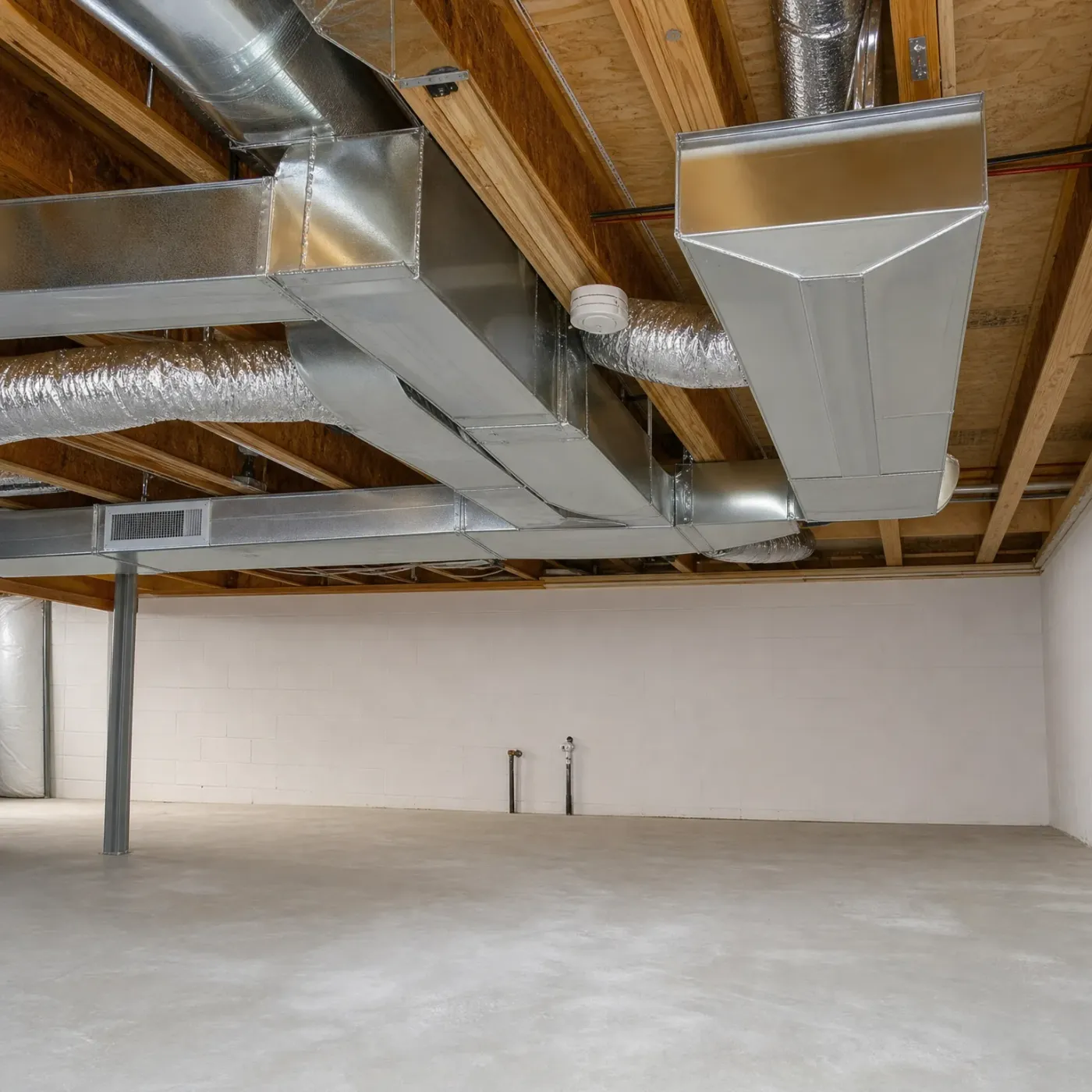
Air moves through tight joints and closed seams, all of it going where the furnace or AC meant it to go. The joists underneath stay clean and dry because nothing is leaking out along the way.
You've noticed something off, maybe a room that never feels right or a power bill that seems high, and you're wondering if the ducts are to blame. Leaky ductwork doesn't announce itself with a bang. It shows up in smaller ways around the house, and most homeowners don't connect the dots until they know what to look for.
Air escaping through gaps or loose joints in the ducts never makes it to the room it was meant for. You end up with a bedroom down the hall that's always a few degrees off, or a home office that won't cool down in the afternoon. Dust building up faster than it should, or a musty smell near the vents, points the same way. Power here already runs among the highest rates in the country, so air paying for but losing along the route adds up fast. Ducts that run through the attic or garage lose more, since the air they leak mixes with space you're not trying to heat or cool at all.
Conditioned air leaves the furnace or AC coil under pressure.
Loose joints and seams in the duct let air escape into the attic or crawlspace.
Rooms farthest from the unit get less air and feel wrong.
The system runs longer to make up for the air it lost.
Walk through your rooms during a hot stretch. The bedrooms at the end of the hall feel warmer than the living room, even with the thermostat set the same for the whole house. You might feel warm air leaking around a duct seam if you stick your hand up near the attic access. The power bill creeps up without you running the AC any more than last year. Dust shows up fast after you've just cleaned, especially near the vents, because leaking ducts pull in attic or crawlspace air and carry it right into your rooms. A system fighting leaks like this runs longer than it should, and the parts inside it wear down faster for the work they're doing.


Half the homes here were built by 1977
Half the homes in Orange County were built in 1977 or earlier. If yours is one of them, the ducts have had decades to work loose at the joints.
Heat runs December through March
Heat runs December through March here. A leak in the attic during those months sends warm air where you don't want it and pulls in cold air to replace it.
Cooling runs June through October
Cooling runs June through October, the longer stretch of the two. A leaky duct system has more months to waste air and run up the bill.
ACS 2020-2024 · NOAA nClimDiv 1991-2020
A leak that goes unfixed costs you twice. First on the power bill, since Orange County power rates are among the highest in the country and a furnace or AC running longer to cover for lost air shows up every month. Second in the attic or crawlspace itself, where warm, moist air escaping from a joint can sit against the wood framing and the duct surface instead of going where you need it. Gas heats most homes here, and that air is paid for the moment it leaves the furnace, whether it reaches your living room or drifts into the attic instead. If one bedroom has felt off for months, that's not the room, that's the duct feeding it losing air before it arrives. Left alone, the gap at that joint doesn't close itself. It stays, and the house keeps paying for it every time the system runs.
A duct that leaks at a joint doesn't just lose air. It pulls in whatever is sitting in the attic or crawlspace, dust, insulation fibers, loose debris, and carries it straight into the duct run.
That's why a leaky system often means dirtier ducts, not just a higher bill. Cleaning only solves half the problem if the joints that let the dust in are never sealed.




Skip searching for someone who cleans ducts in Orange County.
You only hire the pro if you want to.

Air moves through tight joints and closed seams, all of it going where the furnace or AC meant it to go. The joists underneath stay clean and dry because nothing is leaking out along the way.

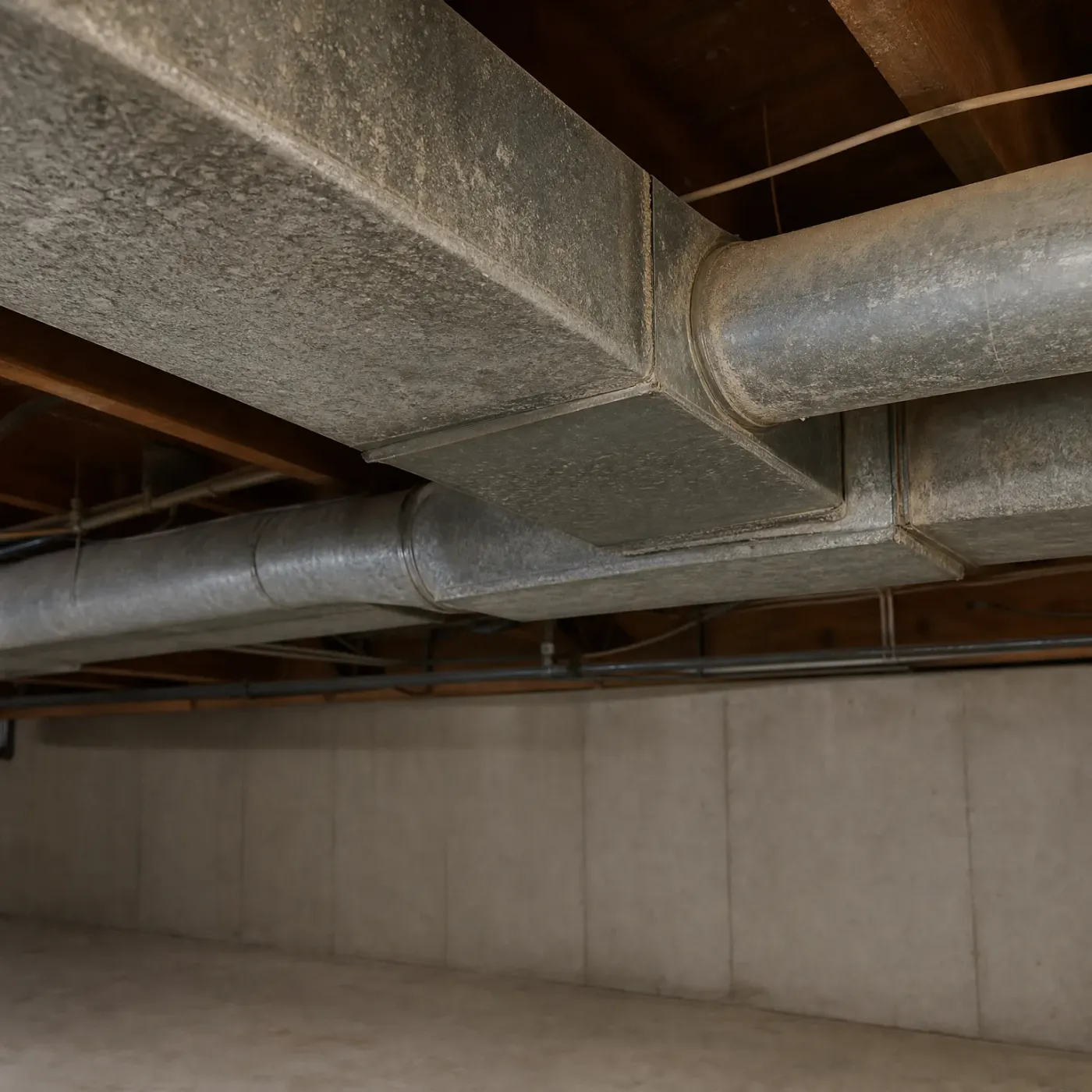
Joints have opened up where the metal sections meet, and conditioned air is escaping into the space below the floor instead of reaching your rooms. The system has to run longer to make up for what's getting out.
At 32.40 cents per kilowatt-hour, every minute your AC runs longer to cover for a leak shows up fast on the bill. A duct system losing air isn't a small drag here, it's one of the most expensive ways to waste power in the country.
EIA-861 2025
Foil tape or mastic from the hardware store can close a seam you can see and reach. That's real, as far as it goes. But most of the leaking happens at joints buried in the attic or crawlspace, places you'd need to climb into and crawl along to even find. Without sealing every joint along the run, the rooms farthest from the furnace keep running warm or cool, and the power bill keeps reflecting the air that's still getting out where you didn't look.
A contractor who does this for a living checks the whole run, not just the spots you can reach from the attic hatch. That means pressure testing to find leaks you can't see and sealing joints wherever they sit, not just the convenient ones. It costs you the time of getting someone out there, but it saves you the back and forth of calling around, explaining the problem to three different companies, and comparing quotes before you even know what's wrong.



A warm room that won't cool down, a bill that's crept up, dark staining on a joist in the attic. Any one of those points the same direction. The duct system is losing air somewhere along its run, and it's been losing it for a while.
Finding the actual leak means getting into the attic or crawlspace and checking joints and seams one by one, which isn't a weekend project for most people. Instead of sorting through contractors on your own and explaining the same problem on call after call, you can get matched with one who takes care of that legwork and reaches out to you directly about what your house needs.


Find a duct system cleaning pro in Orange County



