

The flap is doing its job
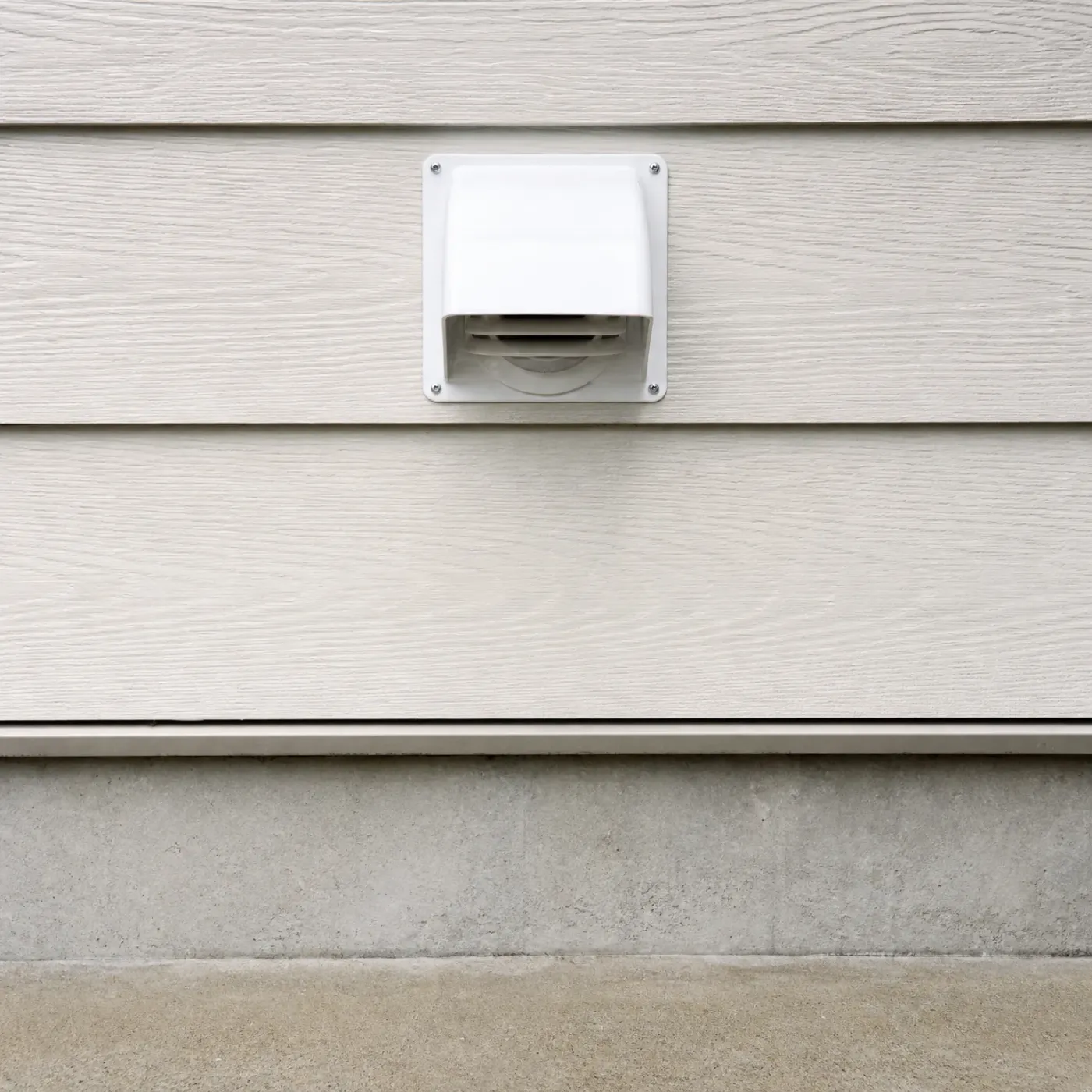
The hood sits flush against the siding and the flap hangs closed against the opening. Air pushes it open only when the dryer runs. No gap, no ledge, nothing for a bird to work with.
One request and the dryer vent cleaning stops waiting on you.
A bird in your dryer vent is usually a mild Anaheim winter at work. Vent hoods with weak or missing flaps give birds an easy, sheltered spot to build a nest, and because the area rarely freezes, nesting can start earlier in the year and carry on longer than it would somewhere colder. You'll likely notice it as weaker airflow, a burning smell when the dryer runs, or chirping near the wall where the vent exits. The nest blocks the duct, so moist, heated air has nowhere to go. That trapped heat is also how lint fires start. Birds will keep adding material to the same spot year after year once it's proven safe to them, so the vent needs to be cleared out and the hood fixed or screened, not just cleared once.
A bird finds the vent hood flap won't close.
Nesting material gets packed into the duct opening.
Lint builds up behind the nest and blocks airflow.
The dryer runs hotter and takes longer to dry.
2.87 people per household on average
With 2.87 people per household on average here, this dryer likely runs most days of the week, so a blocked vent gets tested often and fails sooner.
Half the homes here were built by 1977
Half the homes in Orange County were built in 1977 or earlier, and older vent runs are more likely to have the kind of loose or missing flap that lets a bird in.
Power here costs 32.40 cents per kilowatt-hour
Power here runs 32.40 cents per kilowatt-hour, so a dryer working against a blocked vent to finish a load costs you more than it would somewhere cheaper.
ACS 2020-2024 · EIA-861 2025
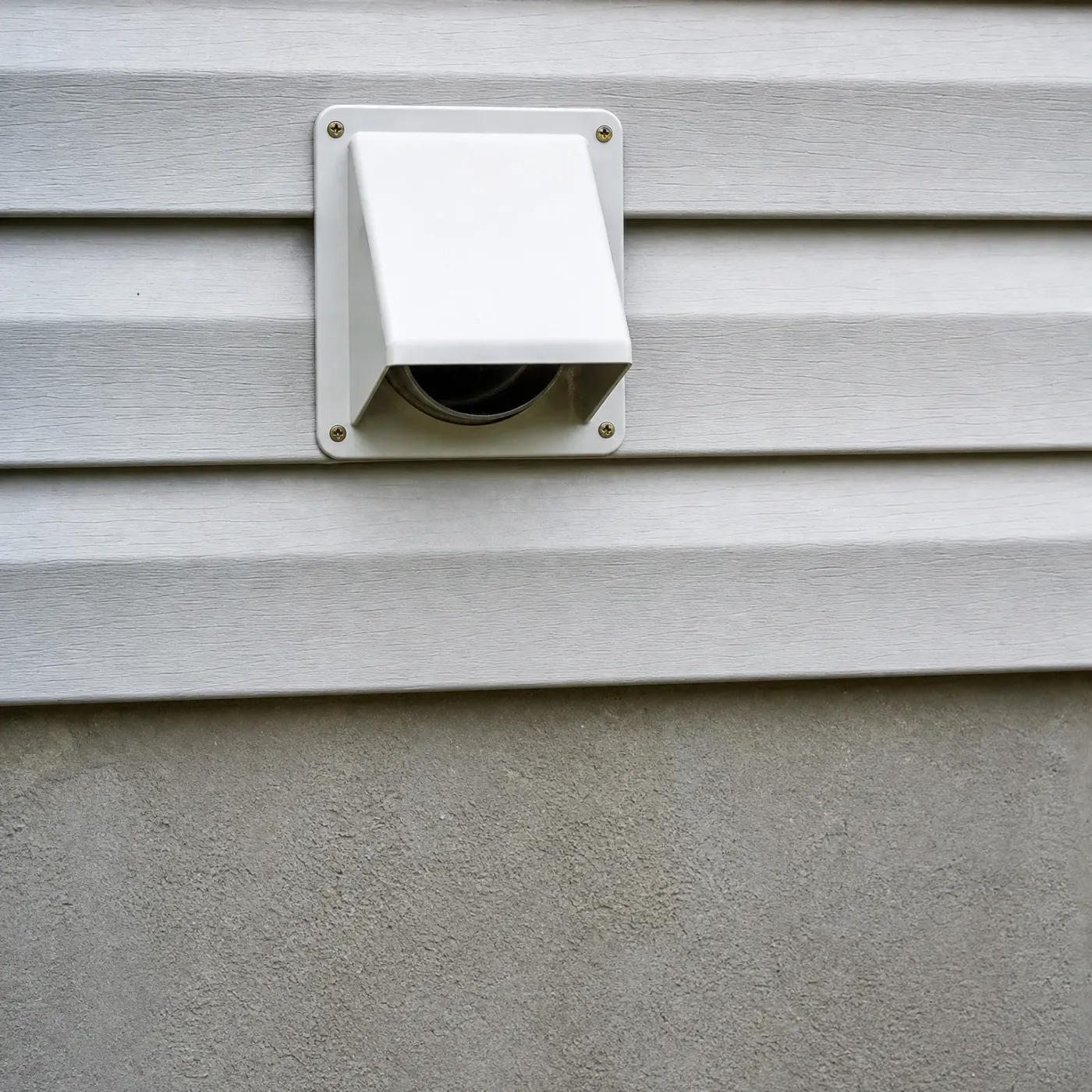
The hood sits flush against the siding and the flap hangs closed against the opening. Air pushes it open only when the dryer runs. No gap, no ledge, nothing for a bird to work with.
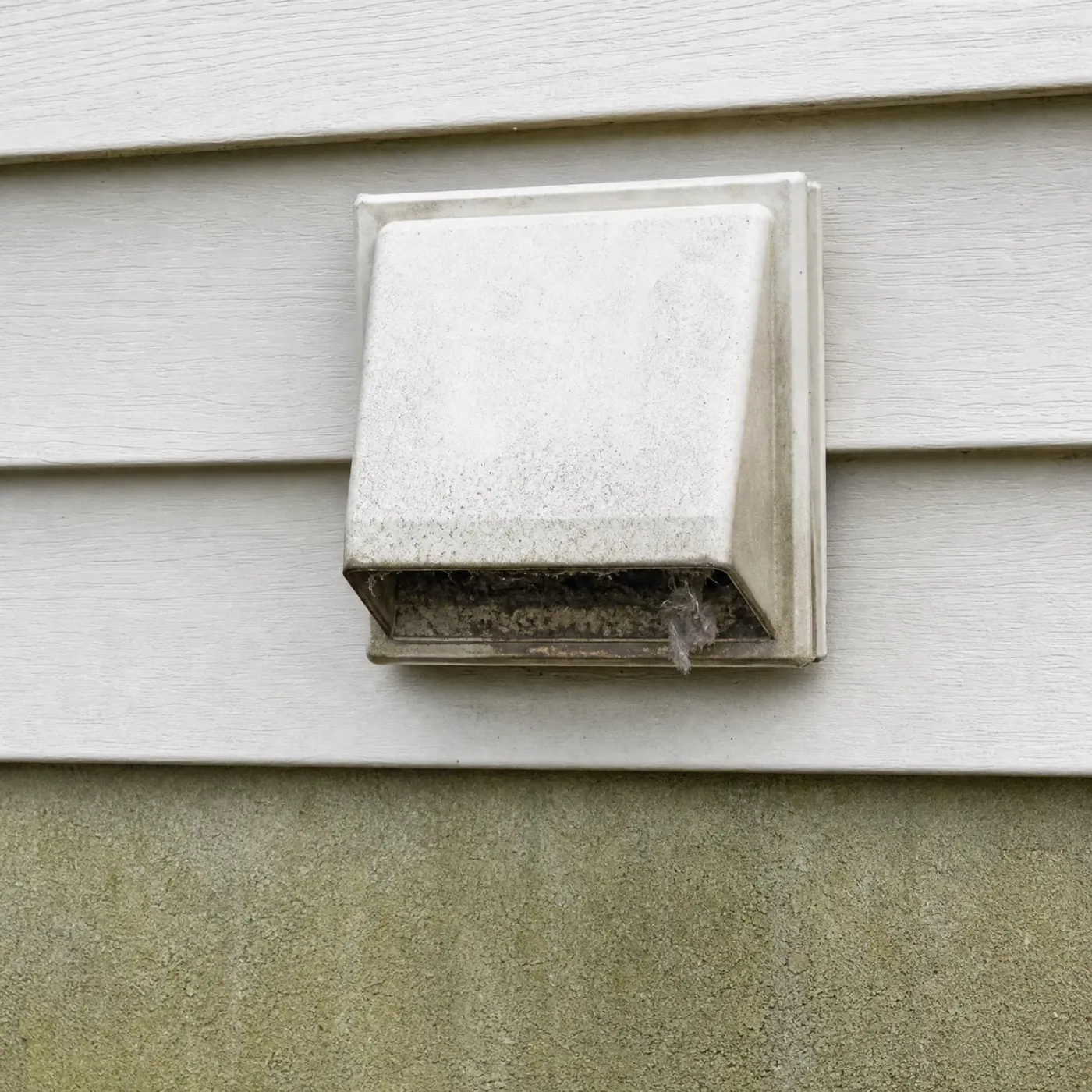
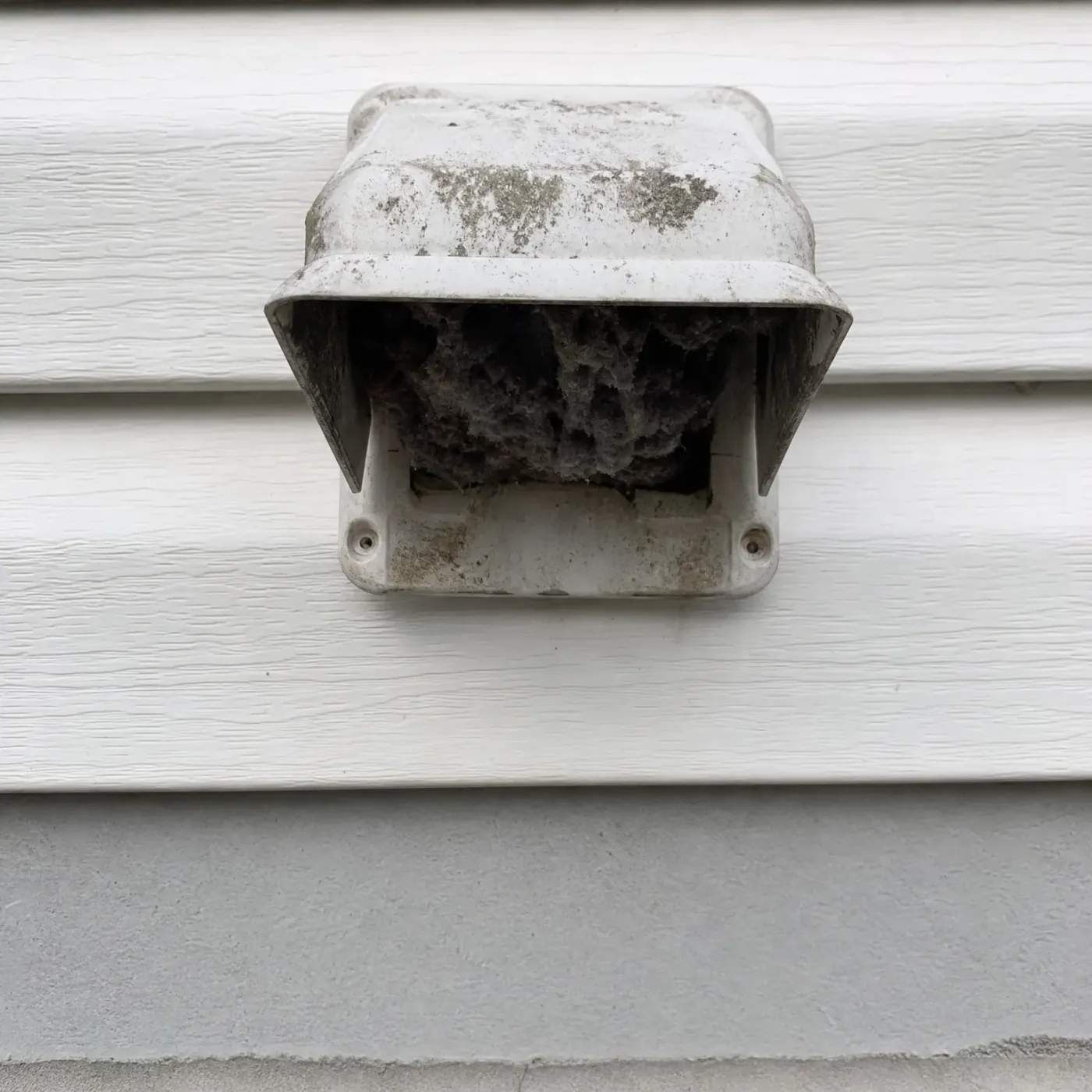
The flap can't shut because lint and twigs are jammed in the opening, and a tuft hangs out of the vent. Air from the dryer has to fight through all of it to get outside.
Check the vent hood on the outside of the house. If twigs or grass are poking out around the flap, or the flap won't sit flush anymore, that's your answer. Inside, you'll notice the dryer running hot to the touch, the cycle running long, and maybe a burning or musty smell when it's on. Some households catch it from the chirping before they ever look outside. Left alone, the blocked air has to go somewhere, and heat and lint building up behind a packed vent is how dryer fires start.
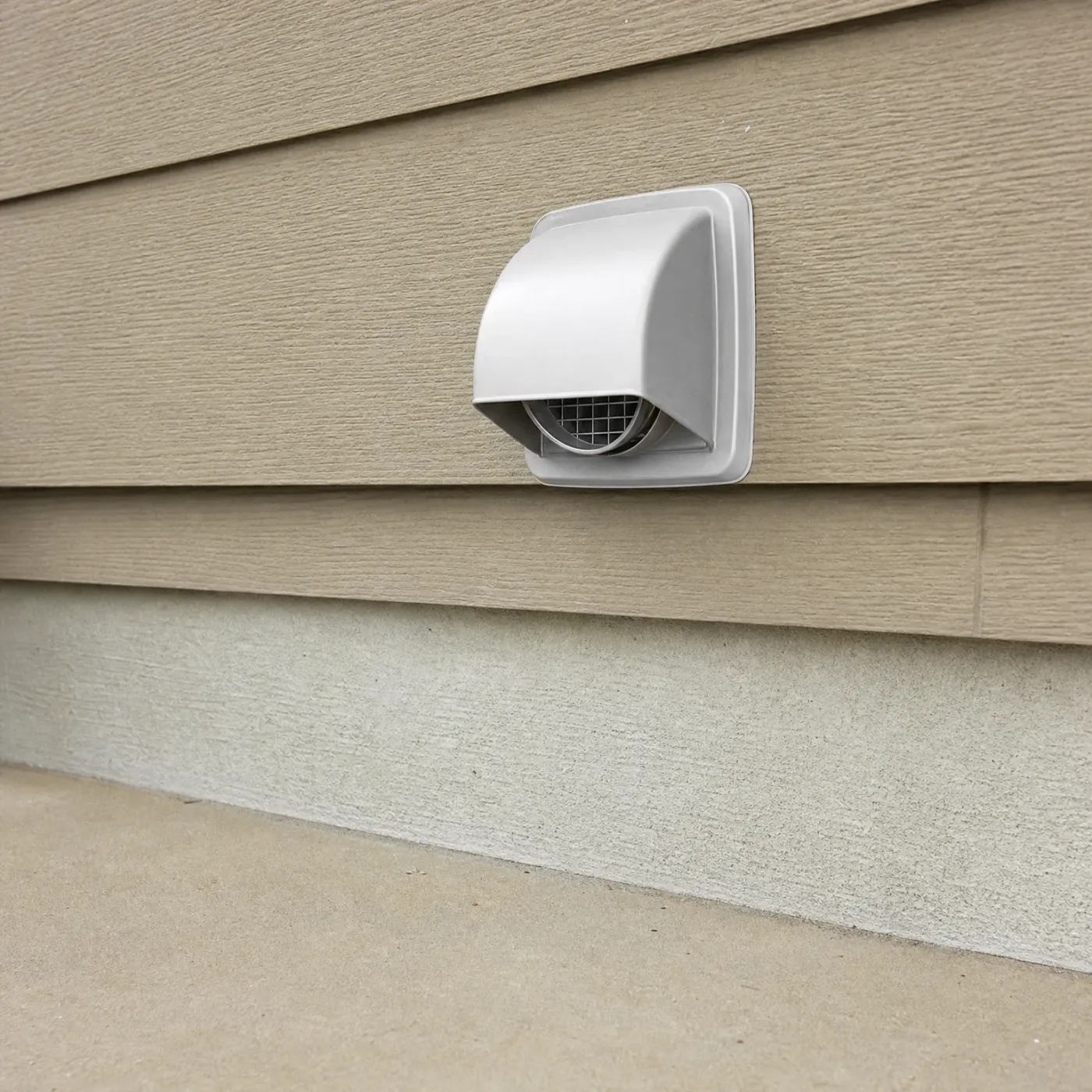
The hood sits flush against the siding with the mesh screen in place. The flap hangs shut when the dryer is off and lifts only when air pushes through it. Nothing is wedged in the opening, so the dryer vents outside the way it's supposed to.
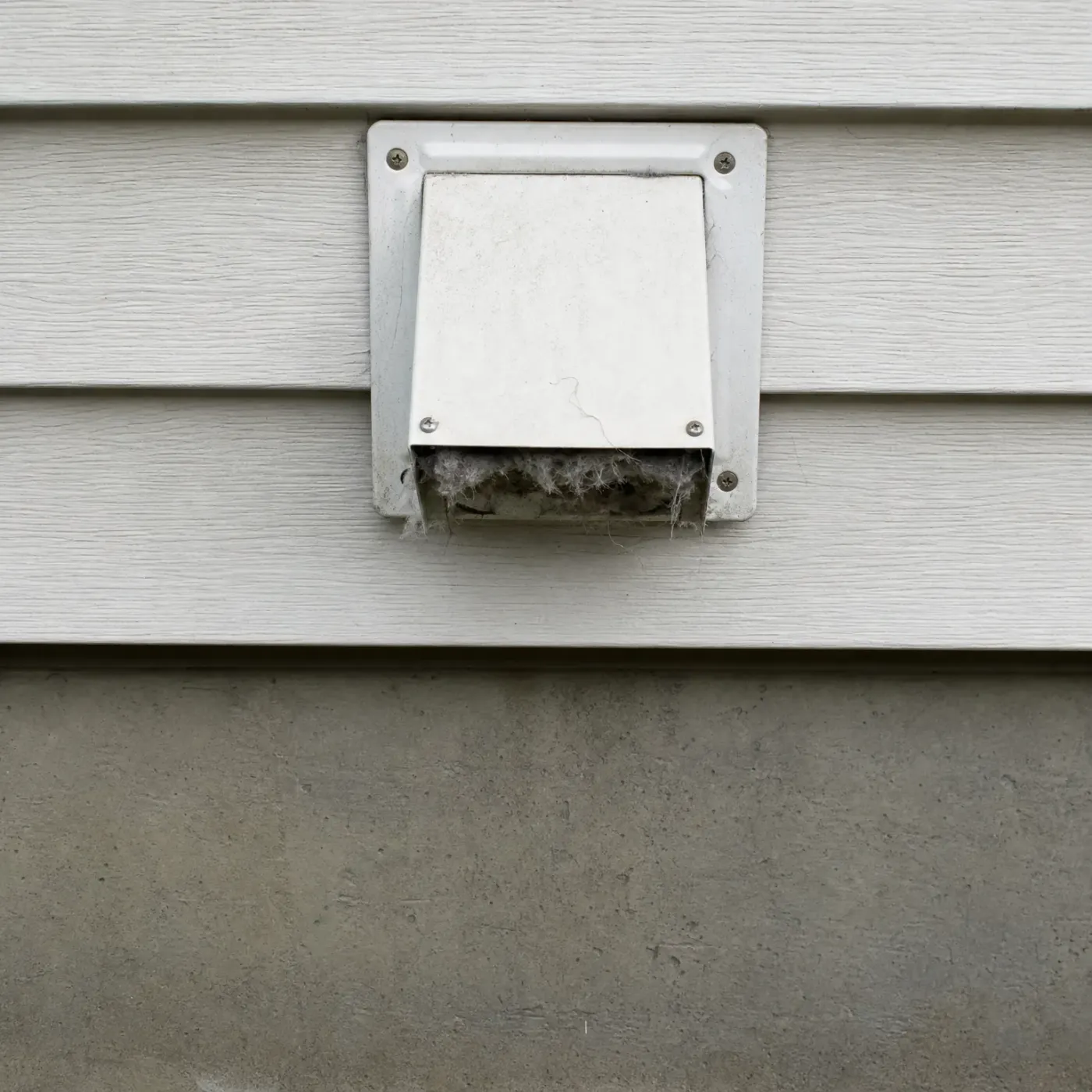
Lint has packed in around the flap until it can't close, propped open the way you see here. That gap is what let a bird get in and build in the first place. Once the duct is blocked like this, the dryer has nowhere to push the hot air it's pulling out of your clothes.
How did a bird even get into the vent in the first place?
Every vent hood has a flap that's supposed to hang shut when the dryer isn't running. Air pressure from the dryer pushes it open, then it falls closed on its own once the cycle ends. If the flap is bent, missing its spring, or propped open by old lint, it stays open a crack even with the dryer off. A bird checking the outside of your house for a place to nest finds that gap, pushes through, and starts building right inside the duct where it's sheltered from wind and rain. Once the nest is packed in, the flap can't close at all, which is usually how homeowners notice something's wrong.




A nest in the vent doesn't fix itself, and running the dryer with twigs and lint packed into the duct is what pushes things from an inconvenience to a hazard. Every cycle sends more heat into material that can't vent out, and that's how a slow-drying load turns into something worse. Clearing it means getting into the duct, not just the hood, and checking that the flap still seats right once the nest is out. That's a job for someone who opens up vents like this every week and knows what a packed duct looks like from a dryer that's merely dusty. Send the request and a licensed local contractor who works on Anaheim homes takes it from there, so you're not the one tracking down who's free or explaining the problem twice. You've already found the twigs or felt the heat. The next step is getting someone out to clear it before another load goes through.
A dryer vent flap is spring loaded or weighted so it only lifts when the dryer is pushing air out. At rest it's supposed to hang shut. That's the only thing standing between the duct and the outside. Once it won't close all the way, the opening stays exposed year round. Birds don't need much of a gap to start carrying material in, and once a few twigs catch on the edge, the flap has even less chance of sitting flush again.
In a lot of the country, a hard freeze keeps birds from nesting for a few months and gives a bad flap time to go unnoticed without consequence. Anaheim doesn't get that break. Mild winters mean nesting can start in late winter instead of spring, and a nest that would've been knocked back by weather elsewhere just keeps growing here. A vent problem that starts in January can be fully packed by the time anyone notices the dryer running slow.
At close to three people in the average Orange County house, there's a good chance laundry runs daily, not just on weekends. A nest blocking the vent means every one of those loads is pushing hot, damp air somewhere it shouldn't go.
ACS 2020-2024
A bird in the dryer vent almost always comes down to the flap. It is supposed to hang shut and only lift when the dryer pushes air through it. Once something, usually nesting material, keeps it propped open even a little, a bird has a sheltered spot and takes it. Anaheim's mild winters don't force the issue the way a hard freeze would elsewhere, so nesting can start early in the year and keep going for months instead of stopping cold.
Once the material is packed into the duct, the dryer is fighting it on every load. Airflow drops, heat has nowhere to go, and a load that used to take one cycle starts taking two. In a house running the dryer most days, that strain shows up fast. It's not a problem that waits quietly in the background. It gets tested every time someone does laundry, and a vent that's partly blocked tends to fail sooner rather than later.
The fix is straightforward. A technician clears the nest, checks that the duct is actually open end to end, and makes sure the flap itself still closes flush against the hood. If the flap is bent, cracked, or sitting loose, it goes back to propping open and inviting the same problem back in. Once it's sealed again, the dryer vents outside the way it was built to, and the house stops running hot air into a dead end.


A nest in the vent won't clear itself, and the longer it sits, the harder the dryer works to push air past it. A local contractor who deals with this every season knows what a packed vent looks like from the flap alone and goes in ready to clear it and check the duct behind it. Send the request and the search for someone qualified is off your plate. One contractor gets your information, not several, so you're not fielding a round of calls to sort out.
A licensed pro who works in Orange County gets your request.
It costs nothing to send, and you don't have to hire anyone.