Mini Split Installation in Sacramento, CA
A new system here will heat from November through April and cool from May through September every year. Tell us about the house, and a licensed contractor who covers Sacramento County will get in touch.
Tell us about the job
It takes about a minute.
Eleven months of work for a mini-split here
Sacramento asks a mini-split to run almost year round. Summer afternoons average 92°F from May through September, and the system has to hold indoor temperatures against that heat for five straight months. Then winter turns the job around. Nights average 40°F from December through February, and the same unit has to switch to heating for the other six months. Only one month goes by without a real call for either.
Any mini-split installed new has to clear the federal minimum for a split-system heat pump, 14.3 SEER2 for cooling and 7.5 HSPF2 for heating. With this much of the year spent on one mode or the other, sizing the unit correctly for both the summer heat and the winter lows matters as much as the rating on the box.
- 6 months
- November through April, your system heats
- 5 months
- May through September, it cools
- 40°F
- the average winter night it heats against
- 92°F
- the average summer afternoon it cools against
NOAA nClimDiv, 1991–2020 normals
California requires HVAC contractors to hold a state license.
The license sits with the contractor the Contractors State License Board has tested and recorded, not with the job itself. That record follows the business from one installation to the next. It covers the company doing the work, not a stamp of approval on your mini-split specifically.
In most cities and counties in California, installing a mini-split needs a permit from the local building office, along with an inspection once the work is done. That inspection is what checks the installation itself, the wiring, the line set, the mounting, after the licensed contractor has done the work.
Sources: California Legislative Counsel · Contractors State License Board
- Is a mini split worth it?
- For a lot of Sacramento homes, yes, especially for a room or addition that doesn't get good coverage from the main system. Summer afternoons here average 92°F, and a mini split handles that heat in one room without running ductwork through the whole house. It also covers winter, since it heats down through the 40°F nights that are typical here from December through February. Whether it's worth it for your house depends on what you're trying to fix, a contractor can look at the space and tell you if it's the right call.
- How many rooms can a mini split cover?
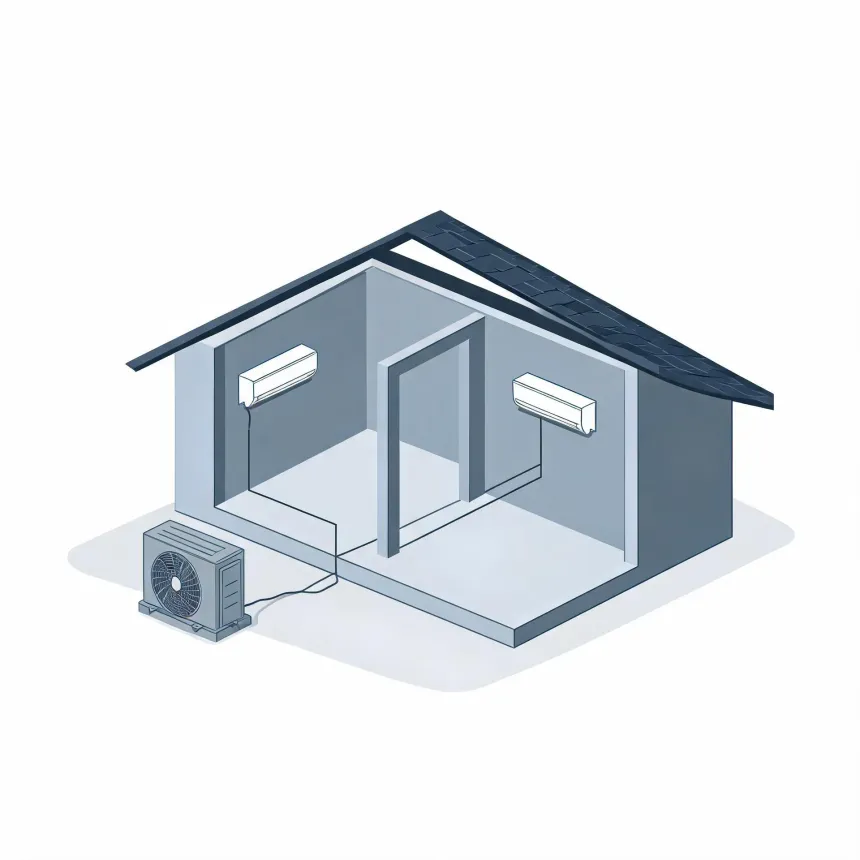
- A single outdoor unit can run one indoor head or several, depending on the system. Multi-zone systems are built to run more than one indoor head off the same outdoor unit, each one controlling its own room. The size of the outdoor unit has to match the total load of all the rooms combined, so more rooms means a bigger outdoor unit is needed. A contractor can size this out based on the square footage and layout of the rooms you want covered.
- Can a mini split heat a whole house?
- It can, if it's sized and placed for the whole house rather than just a room or two. That means enough indoor heads to reach every part of the house, and an outdoor unit sized for the full heating load, including the coldest nights in the 40°F range that show up here from December through February. Homes here need heat from November through April, so the system has to hold up for six months of the year, not just take the edge off. A contractor can work out whether whole-house coverage makes sense for your layout or whether it's better paired with existing heating.